
This analysis synthesizes 11 sources published the week ending Jul 10, 2026. Editorial analysis by the PhysEmp Editorial Team.
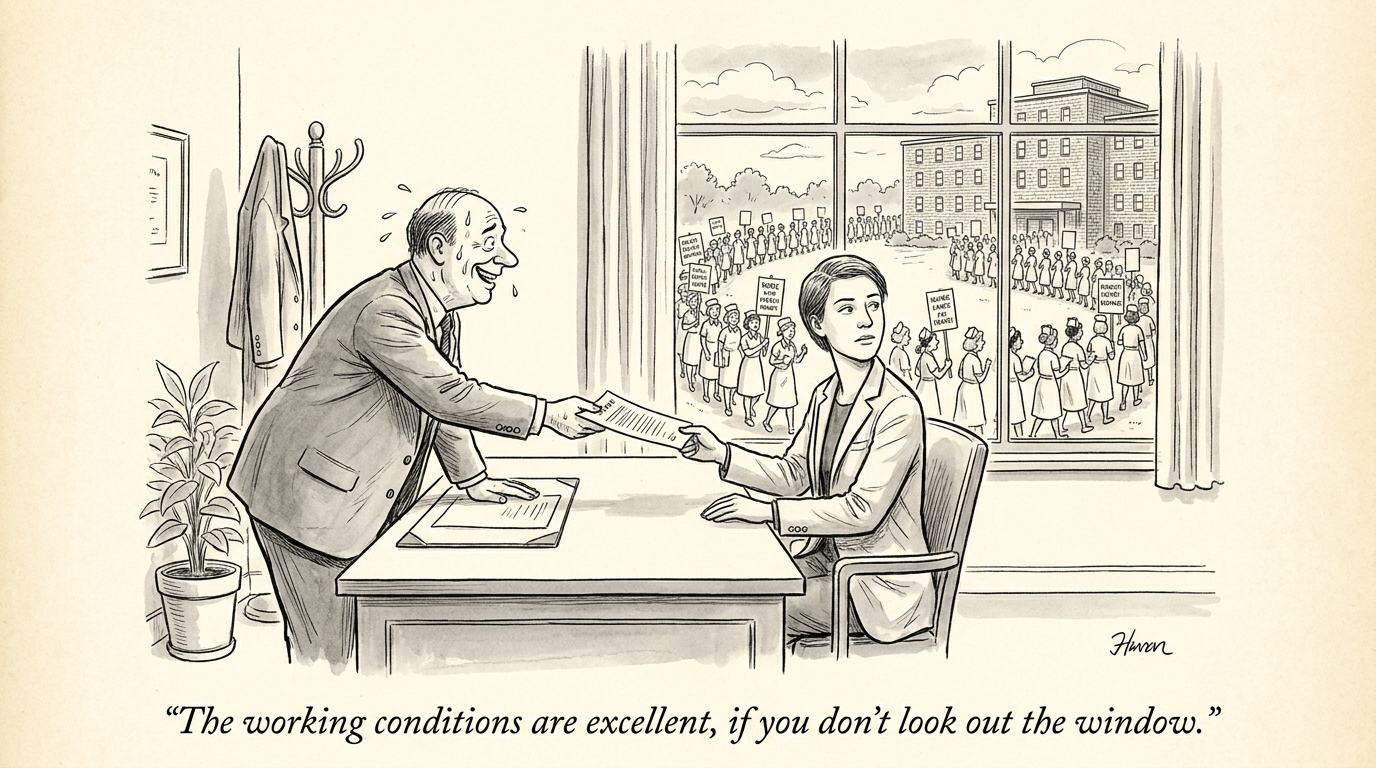
The largest nursing strike in Massachusetts history marks a turning point in how healthcare systems compete for clinical talent. When over 4,000 nurses walked out at Brigham and Women’s Hospital, they exposed fault lines that go beyond union negotiations — evidence of the structural imbalance driving the broader Healthcare Workforce & Labor Market. Staffing models, compensation, and employment conditions aren’t isolated hospital disputes anymore; they’re symptoms of demand outpacing supply across clinical roles. The strike’s effects ripple across recruitment and retention timelines for nurses, physicians, and advanced practice providers alike.
Staffing Crisis as Market Signal
The Brigham walkout centers on staffing ratios and workplace conditions, but beneath the headlines the balance of power between staff and management has shifted. Mass General Brigham, one of the nation’s most prestigious academic health systems, found itself unable to reach agreement with nurses who rejected what management called competitive offers. That gap suggests traditional compensation packages no longer match what clinicians prioritize.
Unionized nurses at Ascension St. Agnes in Baltimore launched a parallel strike over chronic understaffing and poor working conditions. The geographic spread shows this is not a regional fluke but a broader adjustment in clinician expectations. For physicians and advanced practice providers evaluating jobs, these strikes are early warnings: institutions with nursing instability often face similar problems hiring and keeping physician and APP staff.
Healthcare executives recruiting physicians and APPs should recognize that nursing stability ties directly to clinician satisfaction. Institutions that can’t retain nurses tend to show operational problems candidates will spot during hiring conversations.
What Mainstream Coverage Misses
Most reporting treats these strikes as routine labor-management fights focused on wages and union tactics. That misses the point: a significant portion of the workforce has lowered its tolerance for inadequate staffing and unsustainable workloads.
Coverage also often overlooks how nursing actions reshape physician and APP employment. When strikes win staffing minimums, hospitals must reorganize operations—expanding hospitalist coverage, lengthening emergency medicine hours, and adding psychiatric support to keep patient flow moving. Those operational shifts change how facilities deploy APPs and physicians day to day.
Compensation effects follow. Historical patterns show that after facilities settle on improved nursing conditions, they commonly adjust physician and APP pay within about 18 months to maintain internal equity and market competitiveness. Leaders who treat nursing strikes as isolated clashes risk being blindsided by broader recruitment and retention pressures.
Geographic Concentration and Opportunity Mapping
The concentration of strikes in Massachusetts offers useful intelligence for clinicians weighing offers. Boston’s academic centers have long relied on prestige and research opportunities to attract staff rather than top-of-market pay. The Brigham action suggests that model is under pressure as clinicians across roles demand better working conditions.
For hospitalists, emergency physicians, and psychiatrists, markets with nursing instability often mean stronger negotiating positions. Facilities coping with walkouts or post-strike changes commonly offer premium pay to keep physician coverage stable. Locum tenens demand rises in these windows, with rates often 25–40 percent above typical market levels.
Regional Market Implications
The Ascension St. Agnes strike in Baltimore shows these dynamics aren’t just a Northeastern story. As nursing actions spread, they create a patchwork of employment conditions clinicians can use when comparing offers. Places that recently settled strikes tend to show better working conditions and pay; others trying to avoid unrest may proactively strengthen physician and APP terms.
Physicians and APPs assessing opportunities should check prospective employers’ nursing workforce stability as a rough indicator of institutional attention to working conditions. Employers with recent nursing disruptions may pay more, but they can also come with ongoing operational headaches.
Contract Negotiation: Power Shifts
Governor Healey stepping into the Brigham talks—bringing management and union leaders together—underscores the political weight these disputes can carry. That sort of intervention signals workforce stability has become a public policy concern, which can tilt negotiations in clinicians’ favor.
For physicians and APPs negotiating contracts, the current wave of nursing actions opens up real bargaining space. Hospitals facing nursing shortages often adjust physician contract terms to keep services running. Expect productivity targets, call schedules, and administrative duties to become more negotiable when institutions confront wider staffing gaps.
Recruiters trying to place physicians and APPs need to talk credibly about workforce stability. Candidates now commonly ask about nursing turnover, staffing ratios, and any recent labor actions. Recruiters who can’t answer those questions lose credibility against employers that can show concrete workforce commitments.
Forward Implications for Clinical Employment
The Brigham strike and similar actions look less cyclical and more structural. Hospitals that ignore staffing and compensation problems will meet mounting hiring hurdles across clinical roles. Nursing stability and physician employment are linked; institutions can’t treat them as separate boxes to check.
In the short term, clinicians should expect more mobility and bargaining power. Employers competing for talent will need to show they can sustain workable conditions across roles, not just offer a higher base salary. That transparency gives candidates better insight into how a hospital runs.
Systems that invest across the workforce will gain an edge in recruitment. Others will find themselves scrambling—like trying to staff an extra unit on a holiday weekend, with half the usual crew and no clear plan for where the help will come from.
Sources
Mass General Brigham nurses, home care clinicians to strike July 8 – WCVB
Boston nurses strike at Brigham and Women’s Hospital – CBS News
Unionized nurses at Ascension St. Agnes go on strike again calling out staffing shortages – Baltimore Brew
What Nurses Win in Staffing Strikes – Nurse.org
Do Nurse Strikes Work? – Nurse.org
They don’t believe in giving us a fair contract: Over 4000 Brigham and Women’s nurses strike – WGBH
Brigham Nurses Strike Begins – Nurse.org
Brigham and Women’s Hospital nurses strike in Boston – CBS Boston
Largest ever nurses strike in Massachusetts begins; Healey convenes Brigham and Women’s management union – Boston Herald
Largest Massachusetts nursing strike: Why nurses walked out – Nurse.com
Mass. General Brigham nurses stage walkout – WCVB