
Anesthesia Provider Migration Reshapes Clinical Employment Models
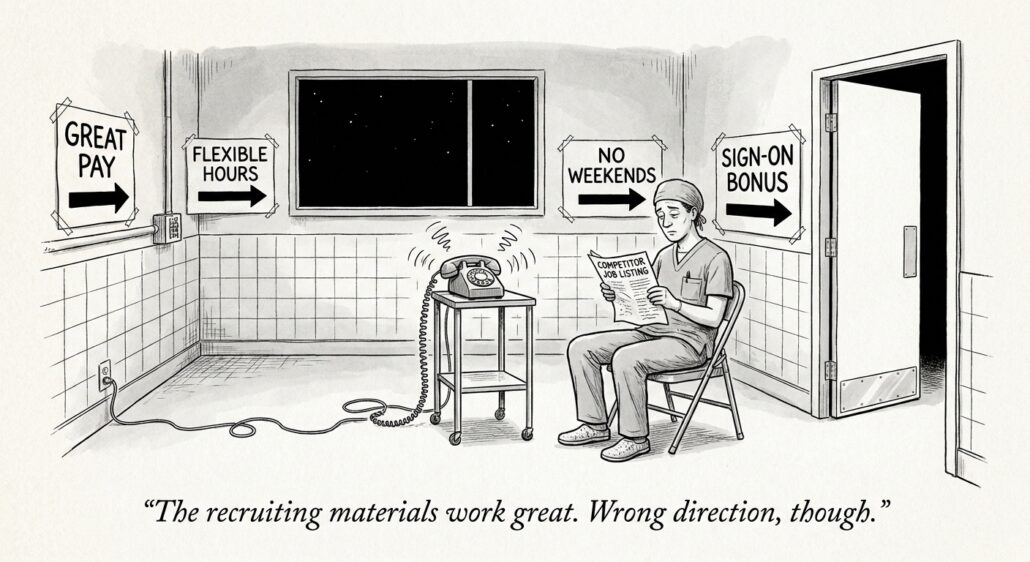
CRNAs are leaving hospital employment for ambulatory surgery centers and independent contractor arrangements offering better compensation and lifestyle flexibility, while employed physicians face layoff risks and contract disputes. These converging trends signal a structural realignment in clinical employment models that job-seeking anesthesia providers and healthcare recruiters must navigate strategically.
Creative Recruitment Rises as Retention Failures Accelerate
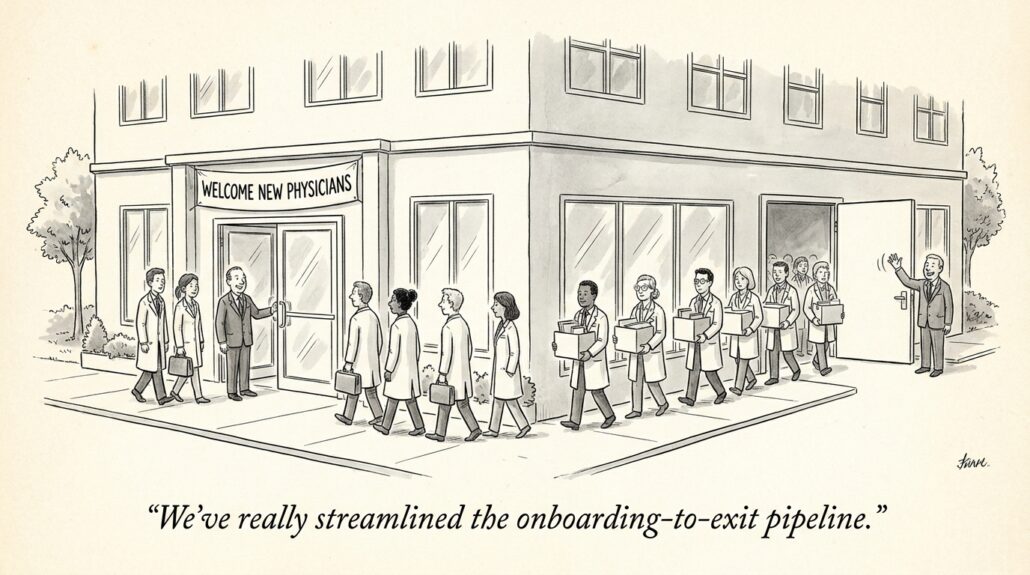
Health systems are deploying innovative recruitment strategies including statewide job boards and international physician pipelines, yet mass departures following contract changes reveal that recruitment innovation without retention infrastructure creates expensive talent cycling. Organizations winning the physician talent war are those integrating acquisition creativity with practice environment investments.
Nursing Crisis Demands Multi-Pronged Workforce Strategy
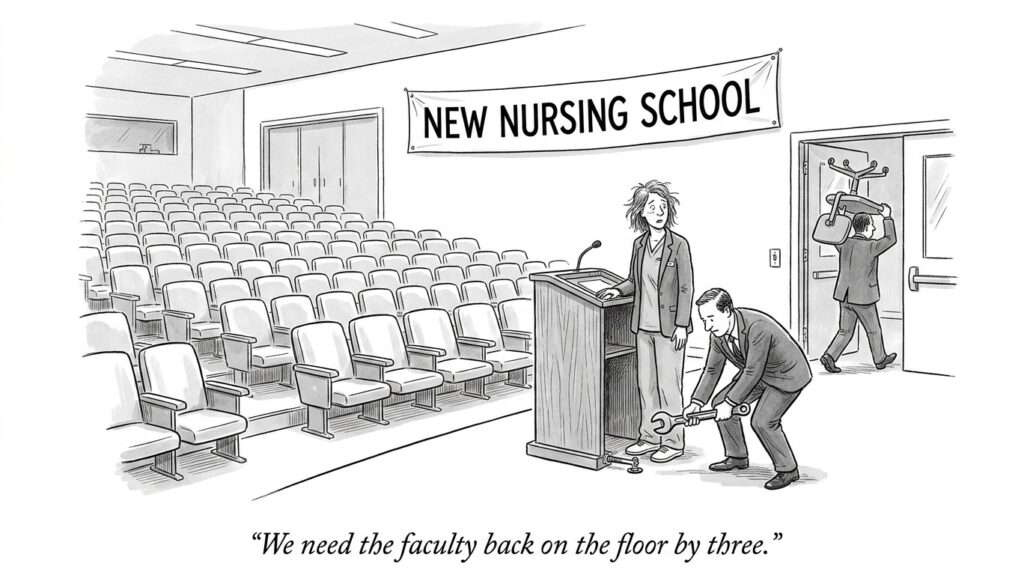
The nursing workforce crisis now demands comprehensive organizational strategy rather than isolated interventions, as academic pipeline bottlenecks, retention challenges, and geographic disparities converge. Health systems building academic partnerships and deploying predictive retention technology will outcompete those relying on transactional recruitment in an increasingly constrained labor market.
AI Redefines Physician Role From Clinician to Supervisor

As AI transforms clinical workflows from documentation to decision support, the physician’s role is shifting from autonomous clinician to algorithm supervisor. This structural change demands new training paradigms, liability frameworks, and compensation models—creating both risk and opportunity for physicians and health systems navigating the transition.
Physician Pay Outpaces Revenue: Health Systems Near Breaking Point
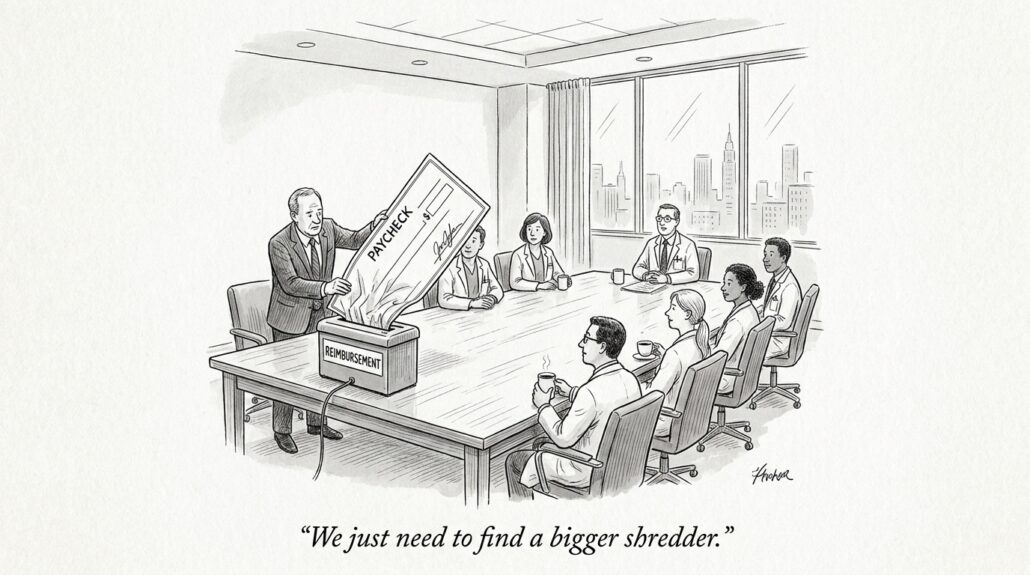
New data reveals physician compensation rose 4.3% in 2025 while reimbursements remained flat, creating an unsustainable gap forcing health systems toward hiring slowdowns and compensation restructuring. This divergence signals a coming recalibration of physician earning power and negotiating leverage across specialties.
Locum Tenens Shifts From Stopgap to Strategy

Health systems are transforming locum tenens from emergency coverage into deliberate workforce strategy, creating new competitive dynamics for physician and APP talent. This structural shift expands compensation leverage and career mobility options for clinicians while intensifying recruitment competition for healthcare organizations.
Pipeline Programs Reshape Physician Recruiting Economics

Health systems are shifting from reactive physician recruiting to long-term pipeline investments including endowment-funded programs, residency retention strategies, and regional collaboratives. This structural transformation is reshaping competitive dynamics and creating new advantages for organizations that treat talent acquisition as capital investment rather than operational expense.
Medicare GME Expansion Deepens Rural Physician Crisis
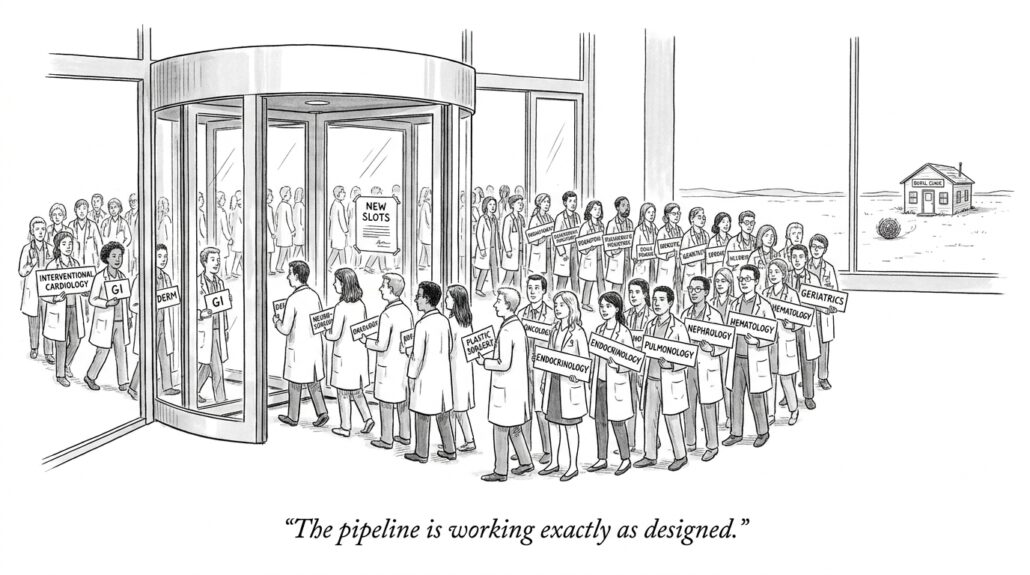
Despite federal investment in residency expansion, Medicare’s GME funding formula continues directing new training positions toward urban subspecialty programs while rural and primary care shortages persist. Alternative pipeline models and state-level initiatives are emerging as necessary workarounds, but sustainable workforce reform requires fundamental restructuring of how graduate medical education dollars are allocated.
Physician AI Adoption Doubles Amid Liability Paradox
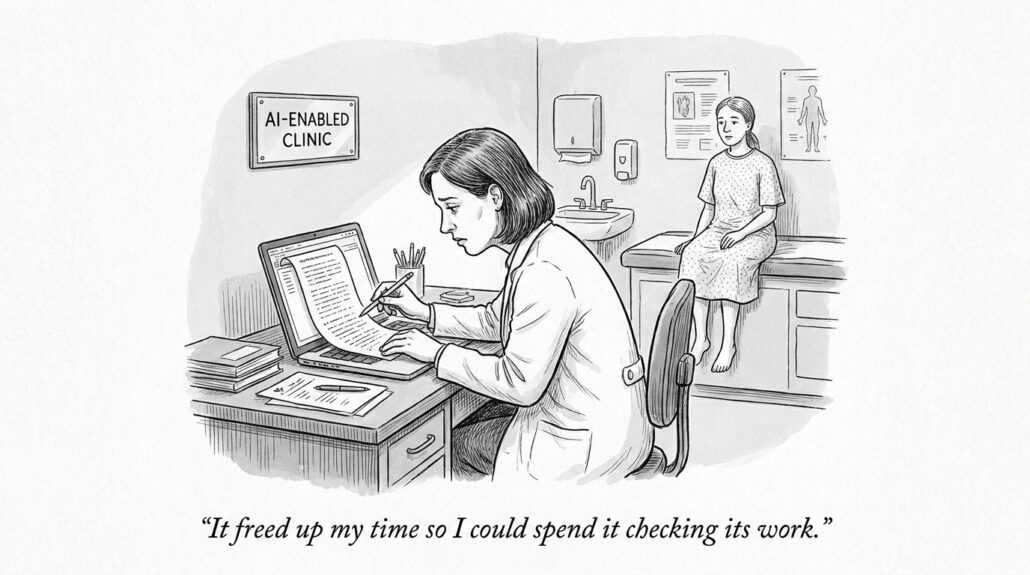
As physician AI adoption doubles and health systems scale ambient documentation enterprise-wide, new benchmarks reveal general-purpose chatbots outperforming FDA-cleared clinical tools—creating an urgent liability paradox where institutions capture productivity gains while physicians absorb diagnostic risk for technologies they neither selected nor validated.
Court Rulings Reshape RVU Compensation Compliance Landscape

A Fourth Circuit ruling validating wRVU-based hospital subsidies under Stark Law arrives as CMS proposes cuts threatening specialty compensation sustainability. This analysis examines how strengthened legal protections for productivity-based pay paradoxically benefit health systems while physicians face structural erosion of the underlying payment methodology.