
This analysis synthesizes 8 sources published the week ending Jul 2, 2026. Editorial analysis by the PhysEmp Editorial Team.
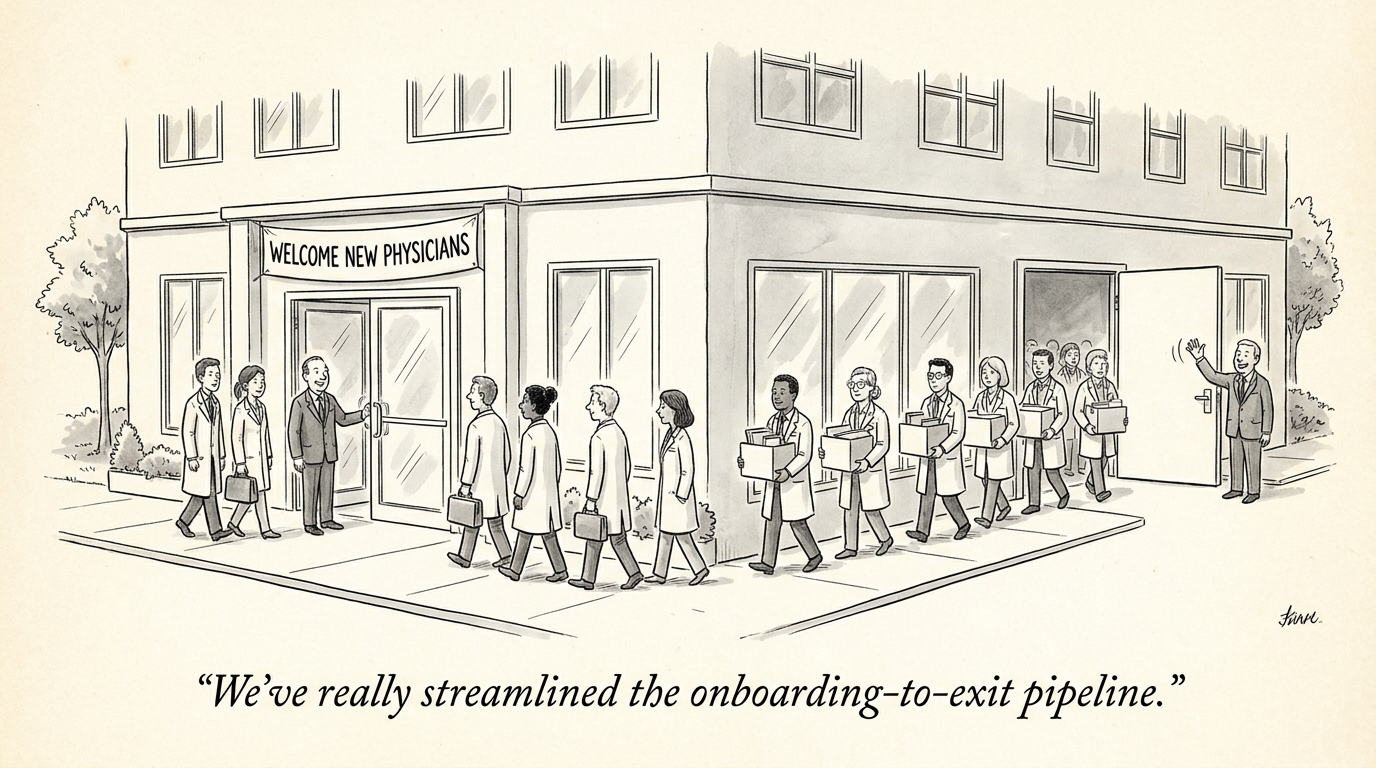
The physician recruiting market is splitting along two fault lines: organizations trying creative acquisition tactics while losing talent through preventable retention failures. This week’s moves show statewide job boards, international physician pipelines, and wellness programs can be recruiting advantages—yet mass departures after contract changes prove recruitment innovation is hollow without retention work. For stakeholders tracking Physician Recruiting & Staffing Insights, the message is simple: you have to work both ends of the physician lifecycle.
Statewide Coordination Emerges as Competitive Response
Iowa Medical Society’s statewide healthcare job board is a structural shift in regional recruiting. Instead of hospitals and clinics poaching the same small candidate pool, organizations are pooling visibility so they can compete with other states. Rural and community hospitals, which usually lack the marketing budgets of big systems, gain reach they didn’t have before.
Centralized platforms do more than list jobs. They let state societies present unified employer branding, standardize compensation transparency, and cut friction for candidates. For in-house recruiters that means access to broader pools—and more immediate visibility into competing offers inside the same state.
Statewide job board coordination changes regional recruiting dynamics. Organizations that relied on information asymmetry must now compete on offer structure, practice environment, and real career pathways—things that actually require investment, not just marketing.
International Pipelines and Subspecialty Pressure
Pediatric oncology highlights a recurring problem: domestic training pipelines aren’t keeping up, so systems turn to international recruitment. Gaps in one subspecialty ripple across other services that depend on referrals and backup. When a community lacks a pediatric oncologist, primary care physicians lose referral options and patients face long travel times for specialty care.
Rural areas feel this hardest. Bonner County’s situation shows how isolation turns a subspecialty shortage into an existential problem. Expect more hiring through international medical graduates, J-1 visa waivers, and loan repayment programs—these are moving from perks to baseline requirements in many markets.
Retention Failures Undermine Recruitment Investments
Dignity Health’s mass departures after contract changes are a blunt reminder: hiring is pointless if people leave. Replacement costs after sudden exits often dwarf any savings from revised contracts.
Studies of post-acquisition regret keep pointing to the same complaints—loss of autonomy, rising administrative burden, and changes to pay. Those drivers are visible ahead of time, so it’s a predictable problem when organizations change terms without addressing the work itself.
The AMA’s work on why physicians exit clinical practice—burnout, paperwork, lost autonomy, pay concerns—lines up with these findings. Recruiters should treat those measures as risk signals: candidates leaving for these reasons will prioritize different employers accordingly.
Every departure is also a recruiting failure. Organizations that pour resources into hiring while ignoring the practice environment effectively train and onboard people who will soon leave for better conditions.
Wellness Programs as Competitive Positioning
The residency wellness program at TTP El Paso shows that wellbeing programs can be a recruiting advantage. Residents who train in supportive programs are likelier to choose similar cultures when they look for jobs.
Hospital leaders need to stop treating wellness as a luxury. Programs that reduce burnout, manageable call schedules, and real administrative support are recruiting assets. A big signing bonus won’t overcome a reputation for crushing workloads.
Using locum tenens to cover gaps while permanent staff burn out is a temporary fix. Sustainable staffing requires changes to support staffing, patient volumes, and paperwork so permanent jobs look doable.
Implications for Recruiting Strategy
Physicians weighing offers should ask about retention data as much as pay. High turnover, recent mass exits, or looming contract changes raise real risks no matter how shiny the initial package looks. Ask for physician satisfaction survey results, departure rates, and any planned operational changes before signing.
Hospital executives and recruiters must invest in acquisition and retention at the same time. Statewide coordination, international pipelines, and signing incentives help fill seats—but without better practice environments, less paperwork, and stable compensation, hires won’t stick.
The market now rewards organizations that treat recruiting and retention as one function. Time-to-fill matters less than time-to-departure. Cost-per-hire calculations should include replacement costs from preventable turnover. Organizations that align hiring with workplace fixes will hold onto talent while others repeat the same expensive cycle.
Expect more job boards, more international pathways, and fancier employer branding. Whether that leads to lasting improvement depends on whether systems are willing to fix the daily work for physicians. Ask a recruiter in a far-flung county and you’ll hear that the answer is far from obvious.
Sources
Top 10 Physician Recruitment Trends – Conexiant
Iowa Medical Society launches statewide Iowa Health Care Job Board to support workforce – River Cities’ Reader
The pediatric oncology workforce shortage is widening – KevinMD
What hospital-employed physicians regret most after an acquisition: Study – Becker’s ASC Review
4 top factors that drive physicians to give up clinical practice – American Medical Association
Rubber meets the road when it comes to recruiting – Bonner County Daily Bee
Physicians leave Dignity Health en masse after contract change – Becker’s ASC Review
TTP El Paso at Transmountain Residents Launch Wellness Program to Reduce Physician Burnout – Newswise