
This analysis synthesizes 8 sources published the week ending Jul 9, 2026. Editorial analysis by the PhysEmp Editorial Team.
Rural health systems are abandoning traditional physician recruitment playbooks as sustained workforce shortages force structural change. From hospital partnership agreements to community-driven retention campaigns, the strategies unfolding across underserved markets change how organizations compete for physician talent outside metropolitan corridors. This week’s developments across Iowa, Maine, North Carolina, Colorado, and Montana reveal interconnected patterns that reshape the competitive picture tracked in our Physician Recruiting & Staffing Insights coverage.
The convergence of grant-funded service expansions, system consolidation partnerships, and grassroots retention efforts shows rural staffing crises moving beyond recruitment marketing into organizational redesign. For recruiting leaders, these signals require rethinking rural market tactics—and an appreciation that time-to-fill alone can misrepresent the difficulty of underserved placements.
Partnership Models Emerge as Recruitment Workarounds
Two partnership strategies stood out this week as health systems look for alternatives to direct hiring. In Iowa, Clarke County Hospital secured Rural Health Transformation grants to expand cancer care and advanced imaging—moves intended to reduce patient outmigration and create specialty practice settings that appeal to physicians who want rural impact without clinical isolation. In North Carolina, Onslow County commissioners approved a partnership between Onslow Memorial Hospital and UNC Health, explicitly linking system affiliation to physician recruitment.
The UNC Health model highlights how independent rural hospitals face structural disadvantages when recruiting. System ties can open residency channels and locum coverage while lending employer credibility that standalone facilities often lack. For recruiters, this signals that rural placement plans need to account for system affiliation dynamics as well as facility characteristics.
Rural hospital partnerships are becoming de facto recruitment infrastructure. Organizations that cannot win on pay alone are using system affiliations to access residency pipelines, shared locum networks and the credibility those relationships bring.
Coverage of these alliances usually focuses on financial stabilization and service expansion. What gets less attention is how partnerships change physician employment: recruiting, credentialing and retention duties can cross organizational lines, creating hybrid arrangements with competing incentives.
Community Retention Campaigns Signal Contract Fragility
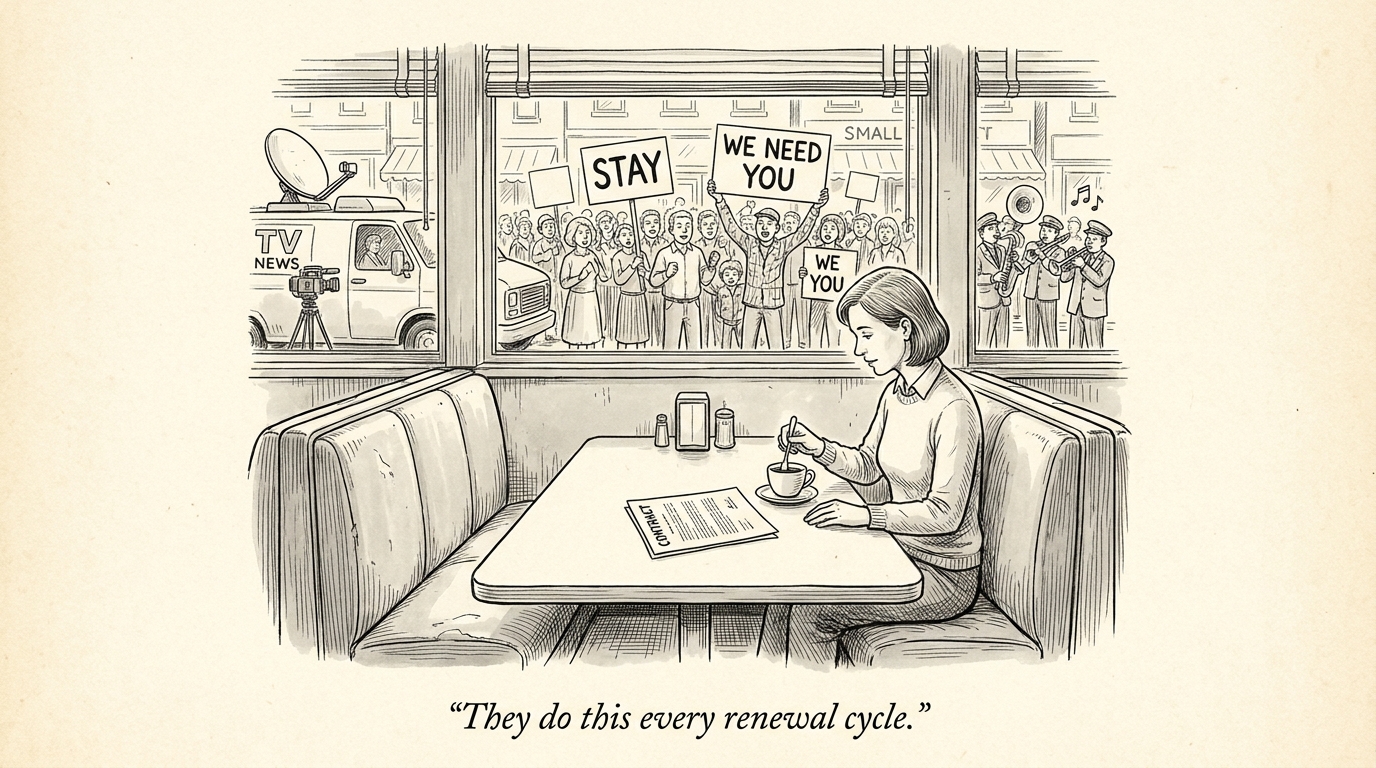
The most striking story this week came from Montana, where union members and patients rallied behind a primary care physician after Logan Health declined to renew his contract. Reporting from KPAX, the Daily Inter Lake, and the Flathead Beacon shows community mobilization turning a routine non-renewal into a public retention issue.
That pattern matters for hospital leaders and in-house recruiters. Contract actions that might pass quietly in a metro area can trigger backlash in rural towns where a single physician holds outsized sway. The Logan Health case shows retention depends as much on local relationships as it does on pay or practice conditions.
For physicians weighing rural roles, the Montana episode offers a paradox: deep community ties can strengthen bargaining power during negotiations while also creating expectations that complicate transitions or retirement planning.
Specialty Shortages Compound Primary Care Deficits
Colorado’s geriatric medicine shortage, covered this week by the Reporter-Herald, is a reminder that specialty gaps stack on top of primary care deficits. Demographic shifts increase demand for geriatric expertise, and the small fellowship pipeline leaves rural facilities unable to compete with standard recruitment tactics.
Specialty recruiting in underserved markets calls for different approaches than primary care placement. Loan forgiveness and visa options paired with academic affiliations may work better than blunt pay increases for attracting specialists. Recruiters should build specialty-focused plans rather than applying a one-size-fits-all rural model.
Specialty physician shortages in rural markets won’t be fixed by higher pay alone. Limited fellowship pipelines and lifestyle factors mean recruiters must offer clearer career pathways and academic ties that make rural practice viable.
Systemic Shortage Framing Gains Mainstream Traction
An Inc. feature this week argued that physician shortages are worse than commonly understood and presented a surgeon’s proposal to reform training and licensing. The piece’s placement in a mainstream outlet signals wider recognition that supply issues are structural, not merely cyclical.
As shortage narratives spread, candidates will show up with more bargaining power—especially in high-demand specialties and underserved regions. Hospital leaders should expect more negotiation around compensation and practice conditions as candidates reference public coverage of shortages.
The Portland Press Herald opinion piece from Maine pushed urgency further, arguing rural healthcare problems cannot wait for election cycles. That kind of political pressure could speed state-level moves—from scope of practice changes to funding for training programs—that alter the competitive field for recruitment.
Strategic Implications for Recruiting Leadership
This week’s developments suggest rural physician recruiting is in transition. Organizations that stick to search-and-place habits face disadvantages against competitors who pursue system affiliations, grant-funded service upgrades and deeper community ties.
For hospital executives, the Logan Health episode is a warning. Contract decisions in rural markets demand stakeholder analysis that goes beyond HR: community relationships and union dynamics, often amplified by local media, can turn routine staffing moves into reputation problems.
Physicians considering rural work should dig into affiliation agreements, funding timelines and local politics as part of due diligence. Employer stability increasingly hinges on partnership structures and the durability of grant funding as much as on base pay.
The shift toward partnership models, community retention campaigns and specialty shortages points to a rural recruiting reality that requires integrated work across organizational development, community relations and specialty pipelines. Expect more deal-making, town-hall meetings and local headlines—and a family physician sitting at a diner table, staring at a contract renewal while the county fair goes on outside.
Sources
Clarke County Hospital selected for multiple Rural Health Transformation grants expanding cancer care and advanced imaging – Osceola Iowa News
Rural Maine’s healthcare crisis cannot wait until November. Opinion – Portland Press Herald
County approves OMH UNC Health partnership – The Daily News (JDNews)
Colorado Geriatrics Medicine Shortage – Reporter-Herald
Patients supporters rally behind physician after Logan Health declines to renew contract – KPAX
Union Rallies Around Primary Care Physician After Logan Health Didn’t Renew His Contract – Daily Inter Lake
Union backs family physician after Logan Health lets contract lapse – Flathead Beacon
U.S. Doctor Shortage Is Worse Than You Think — This Surgeon Has a Radical Fix – Inc.