
This analysis synthesizes 5 sources published the week ending Jul 17, 2026. Editorial analysis by the PhysEmp Editorial Team.
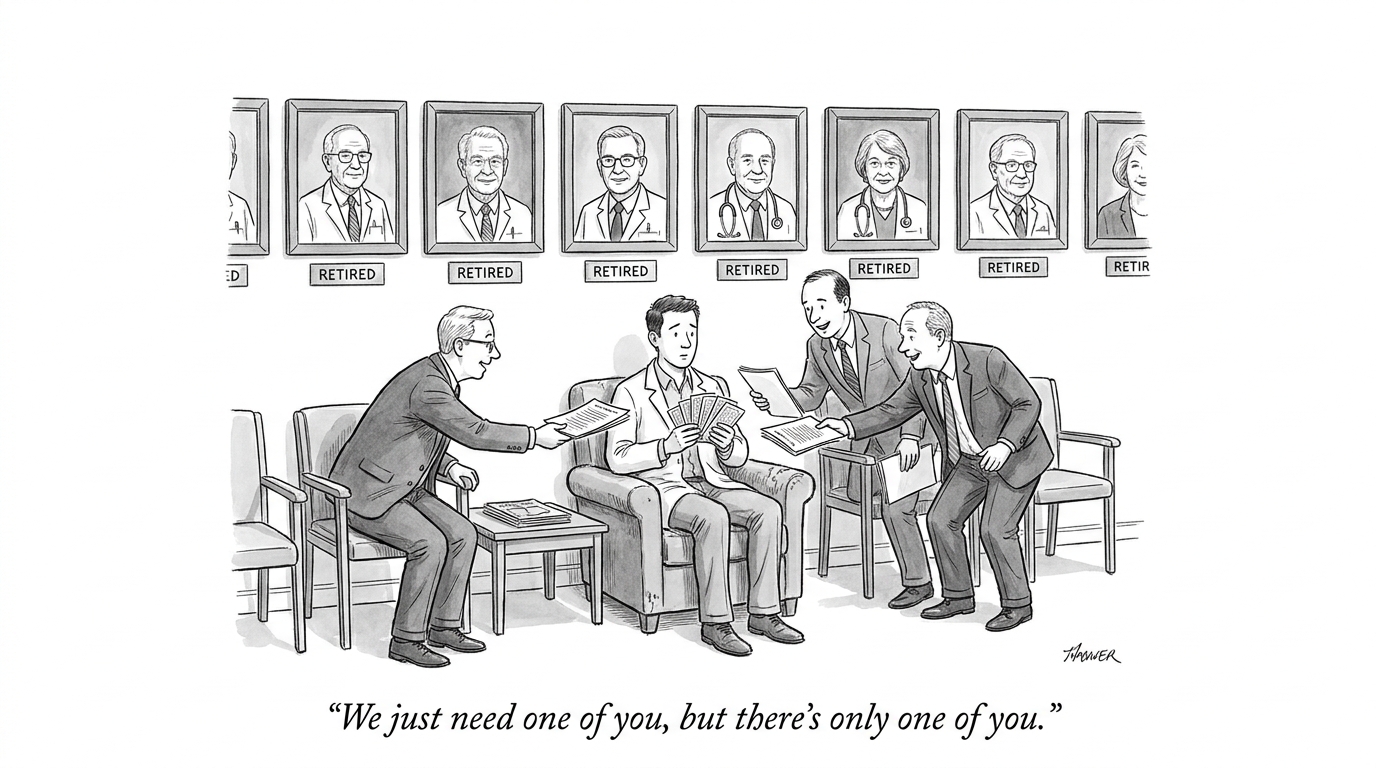
The family medicine workforce is fracturing along two fault lines at once: accelerating retirements among experienced physicians and declining interest among medical graduates entering the specialty. That dual pressure is creating immediate hiring urgency across health systems and reshaping where Physician & Advanced Practice Jobs are emerging in primary care. For physicians and advanced practice providers weighing career moves, the market now favors candidates willing to consider non-traditional markets and employment arrangements.
The Retirement-Burnout Convergence
U.S. News & World Report recently reported what many in primary care have been saying in hallways and on call: family physicians are leaving clinical practice faster than residue pipelines can refill. The reasons pile up—administrative burden, pandemic-era exhaustion that never fully healed, and a demographic bulge of physicians reaching retirement age at the same time. Those departures leave behind established patient panels and community ties that incoming clinicians can use instead of building from zero.
When experienced family physicians exit, health systems face coverage gaps that can’t wait for residency solutions. That urgency shows up as higher pay offers, signing bonuses, and flexible schedules that were rare in primary care markets even three years ago. In many areas replacement timelines now stretch 12–18 months, which means the negotiating leverage has shifted toward candidates who can relocate or take on non-metropolitan roles.
Training Pipeline Investments Signal Geographic Opportunity
Texas Governor Abbott’s announcement of $55 million to expand primary care training capacity is more than a policy line item — it signals where systems expect sustained demand. State investments of that size reflect a recognition that current training infrastructure won’t produce enough primary care physicians to meet population growth and replacement needs.
The Texas plan focuses on giving medical students more exposure to primary care. But the clock on that solution runs long: seven to ten years when you count medical school and residency. That gap means demand will stay high through the decade, even if the training investments eventually pay off.
Executives and recruiters should watch for the follow-on pieces that often accompany training investments: loan repayment programs, tax incentives, and practice support aimed at recruitment. Those elements can tilt compensation packages and make some markets more attractive.
Clinic Openings Versus Closures: Reading the Market Signals
The University of Iowa Health Care’s plan to open a family medicine clinic in Tiffin sits beside news of Dignity Health closing its Tehachapi clinic and layoffs in Bakersfield tied to CommonSpirit’s financial strain. Primary care is expanding in some places and contracting in others, depending on system finances, regional demographics, and strategic priorities.
For job seekers, that split matters. Health systems opening new sites tend to show financial stability, a growth mindset, and investment in ambulatory care—signs that correlate with better staffing and resources. Systems announcing closures or layoffs can be a warning sign that compensation, support staffing, and practice sustainability may be vulnerable.
Match Rate Decline: Structural Implications for Current Practitioners
KevinMD’s analysis of falling family medicine match rates points to a deeper supply problem. Fewer graduates choosing family medicine skews the specialty older and speeds up the retirement-driven loss already straining capacity.
One consequence is greater demand for advanced practice providers. Health systems are increasingly organizing primary care around physician–APP teams, with nurse practitioners and physician assistants carrying large patient panels under collaborative models. That shift expands job opportunities for APPs, especially in markets where recruiting physicians is hard.
For nurse practitioners and physician assistants, the physician shortage opens up broader scopes of practice, leadership roles on care teams, and rising compensation as systems compete for APP talent. Those opportunities are clearest in underserved areas or where APPs accept panel management responsibilities once held mainly by physicians.
Strategic Positioning for Career Mobility
The current market rewards people who look past the headline salary. Physicians with family medicine training face strong demand, but sustainable jobs depend on more than pay: panel size expectations, administrative support ratios, partnership or ownership pathways, and whether the system actually aims to reduce workload rather than just buy time.
Recruiters who only raise salary offers will keep spinning recruitment cycles. Systems that address workflow, cut unnecessary admin tasks, and offer real practice autonomy stand a better chance of retaining clinicians.
The mismatch between retirement and training capacity won’t vanish quickly. Training takes years, retirements and burnout continue, and that structural gap suggests favorable market conditions for physicians and APPs will persist for much of the decade. Picture a clinic waiting room with a sign that says “Hiring — $25K sign-on,” a framed photo of the retiring doctor on the shelf, and a message taped to the door with a number to call. The number rings; someone answers.
Sources
Why are family doctors leaving the workforce? Retirement, burnout creating a U.S. primary care brain drain – U.S. News & World Report
Family Medicine Match Rates Signal a Workforce Problem – KevinMD
Gov. Abbott announces $55 million to expand primary care training for Texas medical students – San Angelo Live
University of Iowa Health Care to open new family medicine clinic in Tiffin – University of Iowa Health Care
Dignity Health closing Tehachapi clinic and laying off 57 in Bakersfield amid CommonSpirit financial strain – TurnTo23 (KERO-TV)