
This analysis synthesizes 10 sources published the week ending Jul 16, 2026. Editorial analysis by the PhysEmp Editorial Team.
Health systems are announcing aggressive expansion—new specialty lines, regional network growth, and facility acquisitions—while the physician workforce needed to staff those plans remains constrained. That gap between institutional ambition and recruiting reality is reshaping how organizations approach hiring, and most coverage treats staffing like an afterthought. For those tracking Physician Recruiting & Staffing Insights, recent developments show expansion without a workforce plan is more liability than strategy.
The problem is simple: you can speed up construction and move money around, but you can’t conjure physicians overnight. Systems from Arkansas to North Dakota to Indiana are finding the bottleneck isn’t funding or approvals—it’s people.
The Expansion-Workforce Mismatch
Jefferson Regional’s network growth in Southeast Arkansas and Parkview’s push across Central Indiana are examples. Both have capital and leadership; both say physician availability is the blocker. Parkview even hired a former Community Health executive to shepherd expansion and hiring, a sign that standard recruiting playbooks don’t cut it when you’re trying to scale services.
Press releases highlight new service lines and ribbon-cuttings; they rarely explain how many months it will take to fill the physicians those services need. Increasingly, expansion timelines are being measured by time-to-fill for physician roles rather than by construction schedules.
Rural Markets Face Compounded Pressure
North Dakota’s rural overhaul shows this problem on steroids. Even with new funding, the main limit is workforce. Idaho’s recruiting struggles tell the same story: money helps, but factors like practice conditions, local pay, on-call burden, and lifestyle drive whether a physician will move to a rural community.
Signing bonuses and loan repayment are baseline offers now. Successful rural recruiters are the ones solving for day-to-day professional life—reasonable call schedules, meaningful clinical autonomy, and real help integrating a clinician into town and school systems.
Specialty-Specific Vulnerabilities
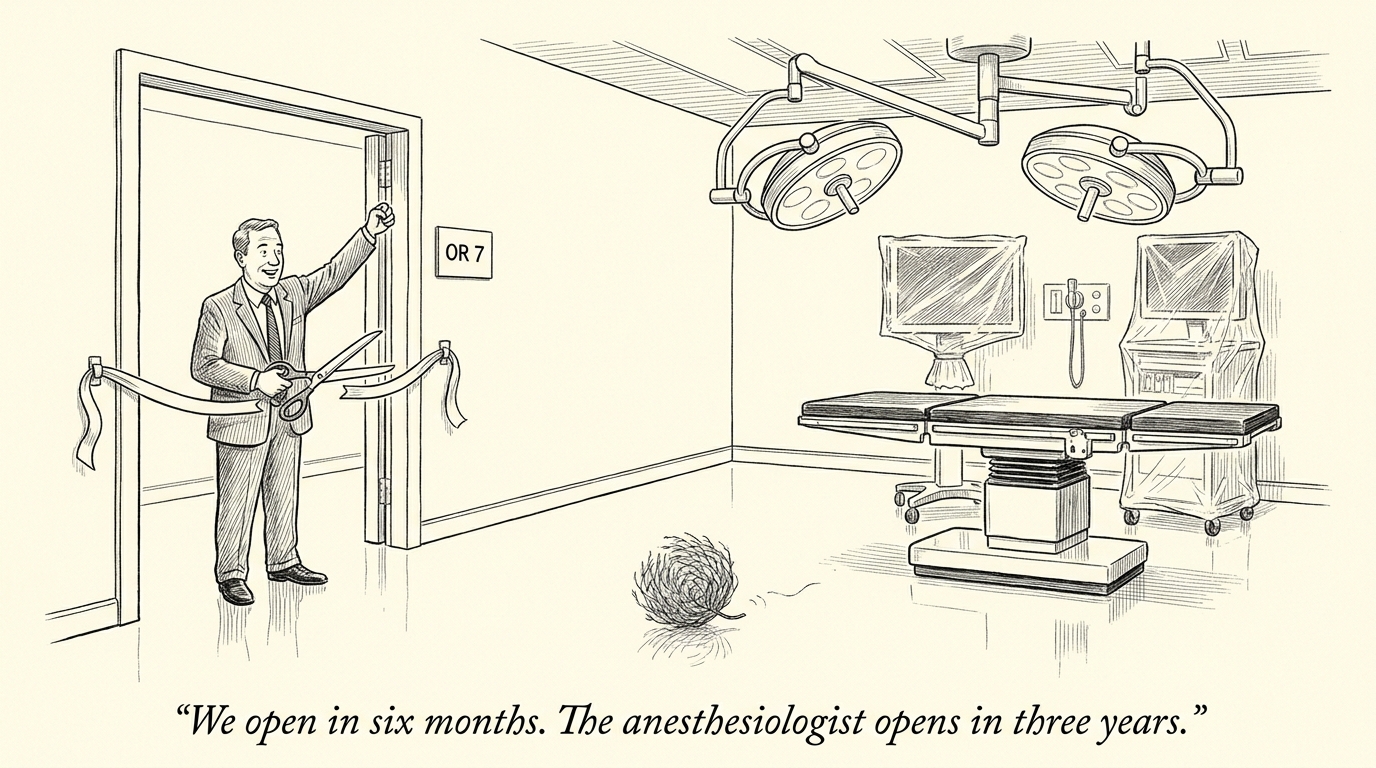
Anesthesiology stands out. Shortages in that specialty can make new ORs and procedure suites unusable. When a system expands surgical capacity without a plan for anesthesiology coverage, the result is operating rooms that sit idle or canceled lists that frustrate clinicians and patients.
That means recruiting must stop being one-size-fits-all. Some specialties need pipeline development and bespoke retention work. Treating every physician hire the same underestimates exposure in high-risk areas.
Pipeline Limits and Short-Term Fixes
Expanding medical school seats is part of the conversation, but the real constraint is residency slots. Garnet Health’s decade-long GME investments are the kind of long-game solution systems should consider if they want steady supply down the road.
GME is slow. For immediate gaps, systems increasingly plan for locum tenens as a component of staffing strategy rather than an emergency patch. Firms expanding locum offerings, such as Medix, are becoming part of how organizations keep services running while they pursue permanent hires.
Retention as Recruiting
Evidence that physician retention is broken reframes recruiting: losing a doctor isn’t a single vacancy, it multiplies the recruiting burden. Turnover adds recruitment fees, onboarding time, and lost productivity; it also forces organizations to hire from a weaker position.
Investing in retention—reducing administrative burden, adjusting compensation, improving culture—lowers future recruiting needs. For candidates, retention stats (when they’re available) say more about a workplace than glossy job descriptions do.
Technology Can’t Replace People
Automation and AI can boost productivity, but they don’t replace the need for physicians to interpret results, make judgment calls, and hold relationships with patients. Systems that digitize aggressively without matching workforce plans risk underusing expensive tools.
Recruiting and staffing remain foundational, even for organizations investing heavily in technology.
What Hiring Leaders Should Do
Plan expansion timelines around workforce acquisition, not the other way around. Announcing service growth without committed clinicians creates operational and reputation risk.
Build specialty-specific strategies for areas like anesthesiology and primary care. Use locum tenens deliberately to preserve service lines while you recruit, not as a reactive stopgap that forces bad permanent hires.
Shift budget toward retention measures that reduce churn. Organizations that keep clinicians need to recruit less and can be choosier when they do hire.
These are not quick fixes. Expect a multi-year mix of pipeline building, smarter short-term staffing, and cultural changes that make places where clinicians want to stay.
Picture a finished OR complex with fresh paint and new lights—and no anesthesiologist roster to staff it. That image is starting to appear in planning decks, hospital boardrooms, and recruiting reports. It isn’t dramatic; it’s practical, and it is forcing leaders to rethink what expansion actually means.
Sources
Jefferson Regional Expands Specialty Care and Physician Network Across Southeast Arkansas – DeltaPlex News
ND rural health overhaul: Big money workforce remains bottleneck – KFYR-TV
Parkview hires former Community Health exec to help guide Central Indiana expansion and hiring – Indianapolis Business Journal
Rubber meets the road when it comes to recruiting more doctors to Idaho – Coeur d’Alene Press
Why Expanding Medical Schools Is Not Enough – The Providence Journal
Medix Strengthens Healthcare Workforce Offering with New Locum Tenens Solutions – Business Wire
Physician retention is broken — here’s the data to fix it – Medical Economics
The human bottleneck in healthcare automation: Matching doctors to demand – Robotics and Automation News
Garnet Health marks 10 years of graduate medical education – SC Democrat Online
Anesthesiology Is Becoming One of Healthcare’s Biggest Strategic Risks – Morningstar