
Research, QI, Committees, or Advocacy: Choosing the Non-Clinical Work That Actually Moves Your Career
Residency programs tell you to “do something scholarly” without explaining the tradeoffs. Original research, QI, case reports, medical education, and committee work each have different time costs and appeal to different audiences. Choosing deliberately based on your career goals and available resources matters more than checking a box.
AI Governance Clauses Emerge as Contract Leverage
Simultaneous moves by the AMA, ACP, and Congress to define AI boundaries in clinical practice create new leverage for physicians negotiating employment contracts. Physicians can now demand explicit language preserving clinical authority, liability indemnification for AI-generated documentation, and definitions of AI as supervisory tool—backed by institutional frameworks that employers cannot easily dismiss.
Who Covers? The Hidden Economy of Vacation, Sick Days, and Favoritism in Residency Schedules
Every day off a resident takes is paid for by a co-resident, but programs rarely acknowledge this ledger—so it gets settled through favoritism, guilt, and the residents who never say no. This piece names the coverage economy, explains how to read your program’s actual policy, and offers strategies for making reciprocity explicit rather than resentful.
Doctors Who Never See a Doctor: Sick Days, Screen Strain, and Actually Using Your Benefits During Residency
Residents have world-class access to medicine but struggle to access care for themselves. This guide covers the practical infrastructure you’re not using: managing EHR-related eye strain, navigating employee health versus your own insurance, understanding sick leave policies and ACGME requirements, accessing mental health care without licensing fears, and locking in disability insurance while you’re still a trainee.
AI Proficiency Becomes New Physician Pay Battleground

Doximity’s 2026 Physician Compensation Report reveals physicians overwhelmingly believe they should capture AI-generated productivity gains, with 44% saying they should be the primary beneficiaries. As AI proficiency becomes a hiring criterion and 23% of physicians expect AI to boost their pay within 12 months, the unresolved question of who owns AI efficiency gains is creating a new compensation battleground that will reshape physician contracts and employer negotiations.
Case Logs, Attestations, and Deadlines: The Board Certification Paperwork Residents Are Never Taught to Manage
An OB/GYN resident spends a weekend trying to reconstruct an entire certification case list, unable to get Epic to produce it, facing possible job consequences over a Monday deadline. Nobody taught them how to pull this data, nobody taught them to log it as they went, and by the time it became urgent, it had […]
186 Days to Fill: Physician Hiring Costs Reshape Leverage
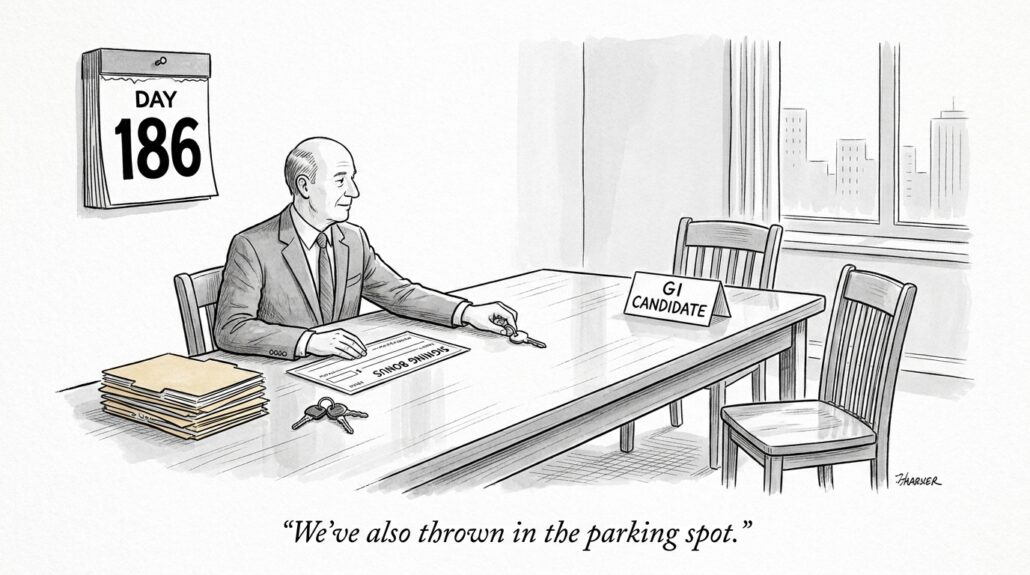
Extended physician hiring timelines—186 days and $46,000 for GI physicians—combined with specialty-specific compensation surges in interventional radiology create quantifiable negotiating leverage for job-seeking physicians. Understanding vacancy cost economics and contract provision flexibility separates candidates who accept posted terms from those who capture market-rate value.
When the Fellowship You Want Doesn’t Exist: How to Build a Subspecialty Niche in Psychiatry and Beyond
A psychiatry resident asks whether fellowship tracks focused on maternal mental health or bipolar II disorder exist — or should. It’s a small question with a large implication: what do you do when your clinical interest is narrower, or newer, than the accredited training pipeline has caught up to? This isn’t rare, and it isn’t […]
APP Permanence Redefines Physician Recruiting Economics
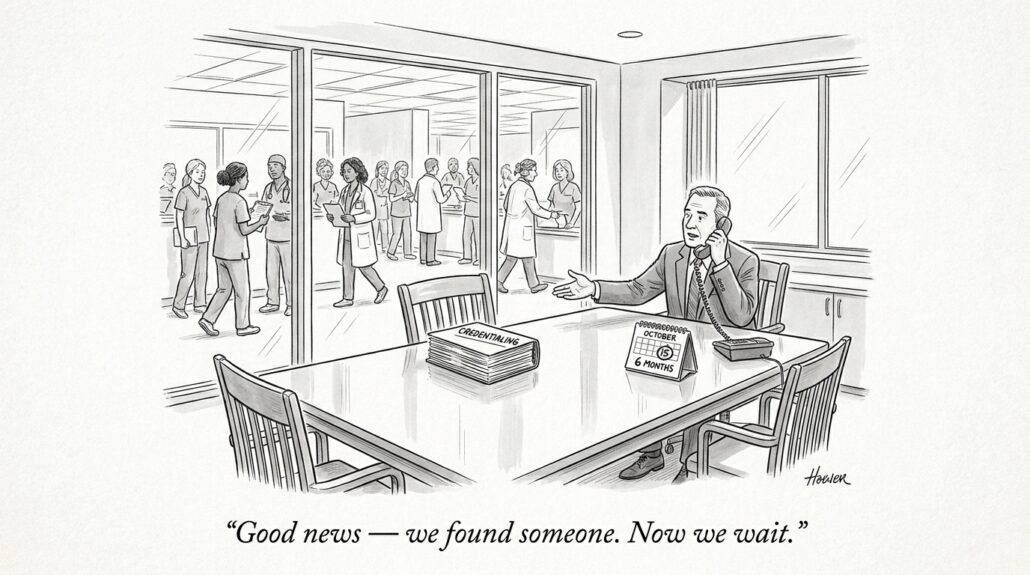
Hospitals’ permanent commitment to APP staffing is restructuring physician recruitment economics, extending time-to-fill beyond 180 days in high-demand specialties while creating compounding acquisition costs from credentialing delays and Medicare enrollment gaps. Organizations competing for physician talent must now measure total acquisition cost—not just vacancy duration—and deploy non-compensation retention tools to remain competitive.
Residency Is Hard on Relationships: What Residents and Their Partners Both Need to Understand
A resident describes relationship stagnation — limited couple time, a partner planning month-long trips during the resident’s already scarce free time, unresolved trust issues left over from med school that never got addressed. A non-physician partner of a first-year resident asks, genuinely, how to tell overwhelm from disinterest when a text goes unanswered for six […]