
This analysis synthesizes 6 sources published the week ending Aug 31, 2026. Editorial analysis by the PhysEmp Editorial Team.
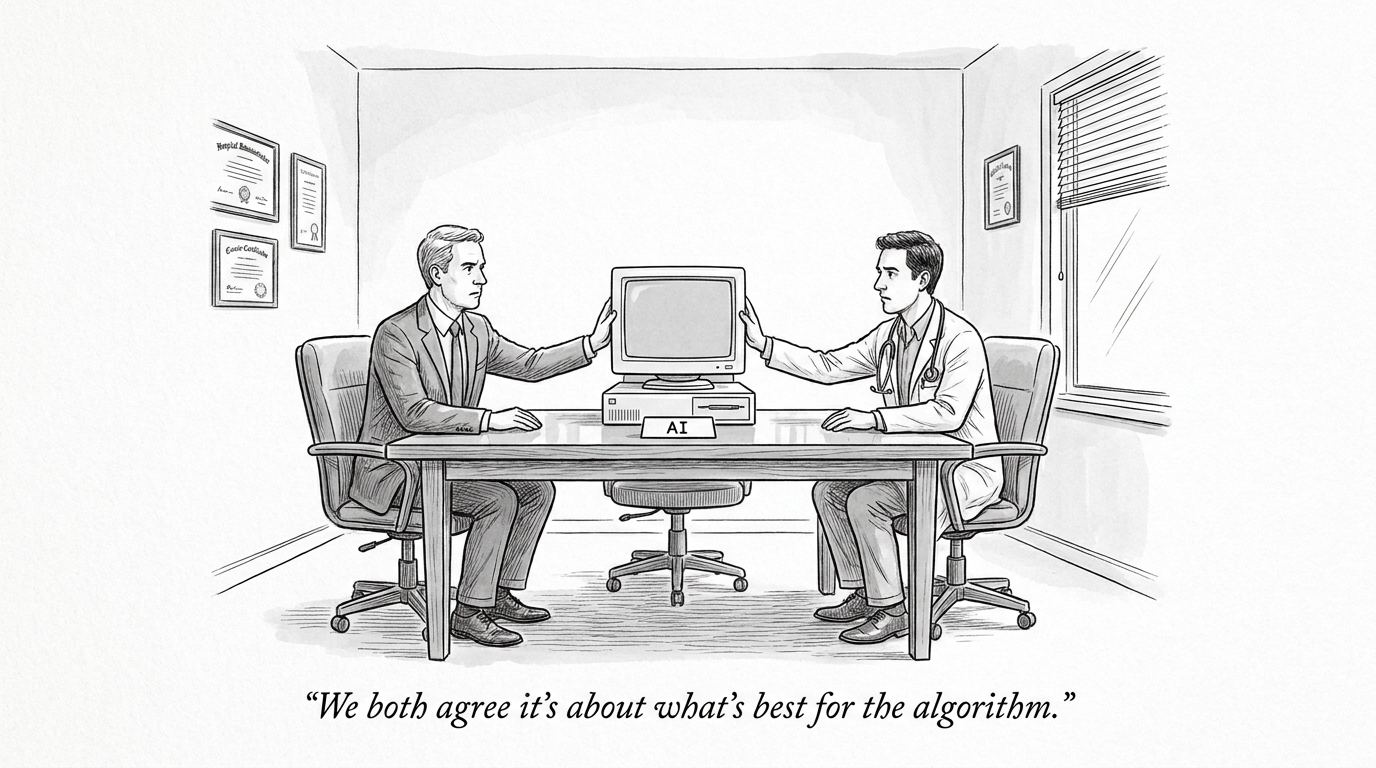
Physicians are no longer asking whether AI will change their compensation—they’re asking who captures the gains. Doximity’s 2026 Physician Compensation Report reveals that 44% of physicians believe they should be the primary financial beneficiaries when AI enables them to complete more clinical work in the same amount of time. Only 17% think patients should benefit through lower costs, and a mere 2% believe payors deserve the upside. This emerging dispute over AI-generated productivity gains marks a structural shift in Physician Compensation & Demand dynamics, and it will affect contract negotiations, hiring criteria, and the economics of physician labor.
The Productivity Surplus Nobody Planned For
Two-thirds of physicians now use AI daily or weekly for clinical and administrative work, with adoption highest among physicians in their 30s (73% weekly use versus 52% among those in their 60s). Twenty-six percent of physicians in their 30s report AI is actively reducing their workload. That matters because pay models are still anchored to legacy productivity metrics.
The numbers expose a clear disagreement about how to resolve this. Thirty-six percent of physicians say compensation for a service should change if AI substantially reduces time or effort. Forty-three percent say it should stay the same. The tension comes from decoupling inputs (time, effort) from outputs (services delivered, outcomes achieved)—something RVU-based models never anticipated.
Eighty-two percent say they’re overworked; 46% are considering early retirement (up from 34% last year). Employers that try to capture all AI gains may be bargaining with clinicians who are already making exit plans.
AI Fluency as Hiring Currency
AI proficiency is already a hiring and promotion factor for many specialties: 39% of physicians report it’s now considered, and 15% call it a “major” or “moderate” factor. That creates a two-tier market—doctors who can use AI well get preference, while those who can’t lose bargaining power.
Younger physicians drive the shift. They’re more likely to adopt AI, more likely to say it reduces their workload, and more likely to expect it to boost pay within 12 months (23% overall). For recruiters, AI fluency is becoming a quick signal of adaptability and productivity potential; in some competitive specialty markets it will matter alongside board certification.
Primary care physicians are especially convinced. Sixty-seven percent believe that staying current with AI tools will give them an earnings edge over colleagues who don’t, versus 55% of surgeons. That fits: primary care carries the heaviest administrative burden and stands to gain the most from documentation and workflow tools.
The Contract Negotiation Horizon
If physicians expect higher pay and employers expect lower labor costs, contract talks turn zero-sum. Doximity’s data shows physicians preparing for that fight: nearly a quarter expect pay to rise within 12 months, even as average physician compensation growth slowed to 2% in 2025 (down from 3.7% the year before) and trailed inflation.
The balance of power may tilt toward physicians more than employers expect. Sixty-six percent are considering career changes, and 44% say they’re somewhat or very likely to leave clinical practice entirely within two years. Pushing to capture every AI efficiency could speed up attrition among the clinicians most skilled at using the tools.
Seventy-six percent of physicians would accept lower pay for greater autonomy or better work-life balance. If AI gains only increase patient volume instead of reducing load, employers may win on paper and lose in practice.
Reimbursement Models Under Pressure
The compensation debate sits inside a reimbursement system that often prices physician time—RVUs, fee-for-service, or capitated payments assume certain productivity baselines. When AI shortens documentation or decision time, those assumptions wobble.
Employers haven’t agreed on how to measure AI’s return on investment, which makes fair sharing of gains harder. Without clear metrics, negotiations default to power. Physicians who can use AI and will walk away if underpaid hold stronger cards than those who can’t.
Specialty differences matter. Surgical specialists now earn 90.1% more than primary care physicians, up from 87.3% the prior year, reversing three years of narrowing. If AI boosts primary care productivity while surgical pay keeps rising through other channels, the pay gap could widen even as primary care gets more efficient.
The Unresolved Variable
Doximity’s report asks a simple but unsettled question for 2027 contracts: who owns AI time savings—the physician who uses the tool, the employer that bought it, or the payer that bills? Current compensation structures weren’t designed for this, and the 36% versus 43% split shows there isn’t even agreement inside the profession.
AI fluency is moving from optional to a credential that affects pay. Recruiters will weight it, negotiators will cite it, and employers who try to seize every efficiency gain risk losing the clinicians who produce them. Expect crowded hiring boards, terse bargaining sessions, and more than one clinic with an empty chair on a Monday morning.
Sources
Overworked Doctors Bet on AI to Boost Their Pay – Morningstar
If AI Makes Physicians Faster, Who Gets Paid for the Time It Saves? – Medical Economics
Physicians say they should benefit financially from AI’s time savings: Doximity – Healthcare Dive
AI proficiency becomes factor in physician hires, promotions: Doximity – Becker’s Hospital Review
10 standout findings from Doximity’s latest physician compensation report – HealthExec
Docs Want AI Comp, Oura in the Hot Seat — and the Evidence on OpenEvidence – Digital Health Wire