
Signs You’re in a Toxic Residency Program — and the Options Residents Actually Have
An open letter to a program director alleging falsified educational hours, denied breaks, racial favoritism, and repeated ignored complaints. A resident facing possible job loss over a certification case list that the institution’s own EHR tooling won’t produce. A PGY-1 with no consistent onboarding, learning expectations only through repeated, unwritten mistakes. A resident with severe […]
FDA AI Testing Rules May Reshape Physician Authority
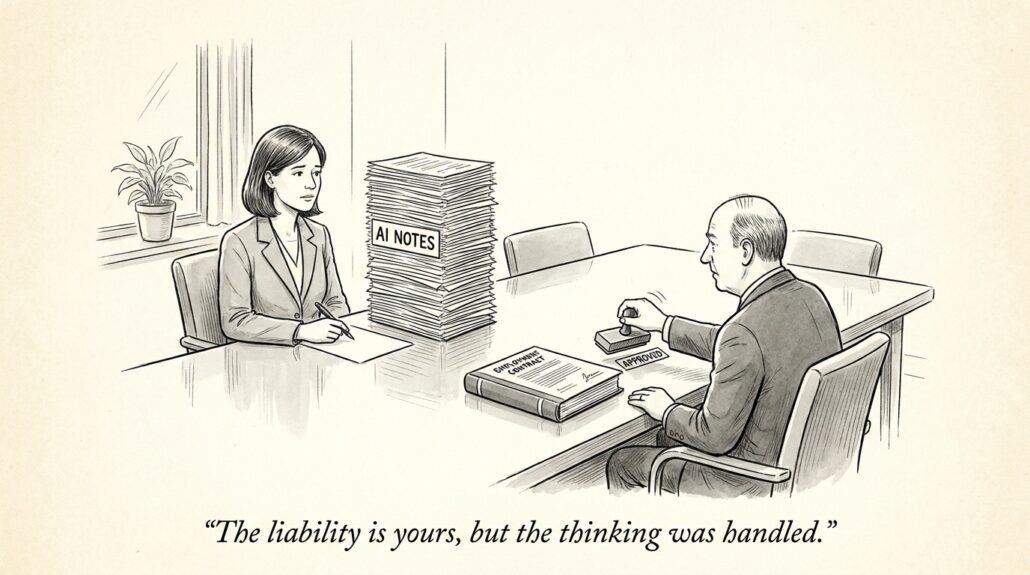
The FDA’s proposal to test generative AI medical devices against physician competency standards creates a regulatory framework with direct implications for physician compensation models. As health systems gain defensible benchmarks for comparing AI and physician performance, contract structures and specialty valuations face restructuring pressure that will reshape employment negotiations for years.
Teaching While You Still Feel Like a Learner: How New Senior Residents Build Real Confidence
A new PGY-2, anxious about teaching interns and students, describes their own knowledge base as “superficial.” Another resident describes feeling like “a nobody” next to a high-performing peer, questioning whether they’ve earned the right to be called a doctor. An ID fellow openly names feeling behind relative to their new environment. Different training levels, same […]
Retention Ownership Gaps Fuel Physician Unionization Wave
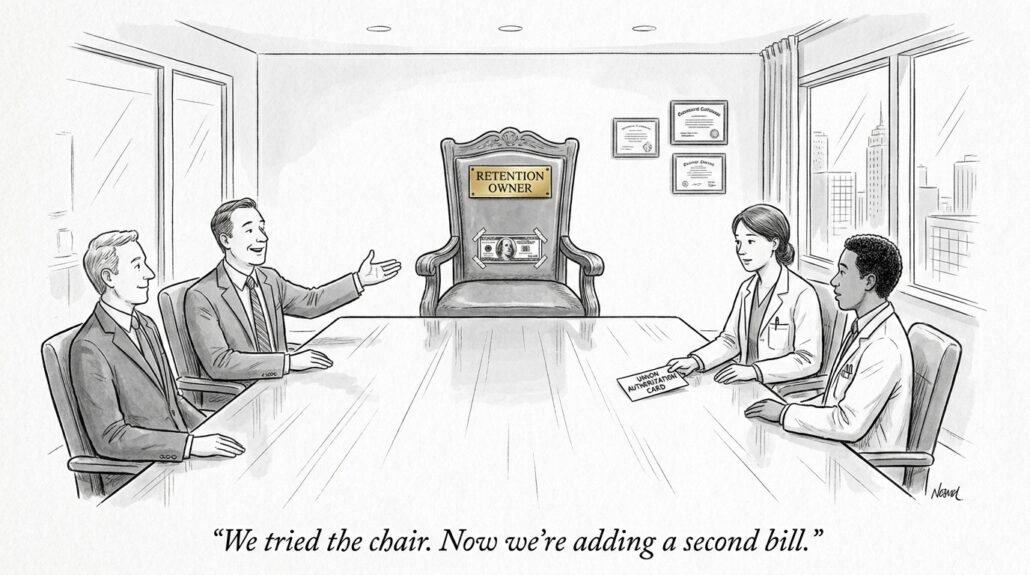
Only 39% of healthcare organizations have formal retention strategies, yet 47% of physicians now consider unionization viable—with the UC system’s 10,000-physician campaign and Banner Health’s September vote marking inflection points where compensation-only approaches collide with demands for operational voice and clinical autonomy.
How to Get Up to Speed Fast on a New Service: A Resident’s System for Learning Guidelines, Workflows, and Unwritten Rules
An ID fellow two months into a move from community residency to an academic center, drowning in consult volume and guideline lookups. A PGY-1 describing service switching as harder than the hours themselves — “six operating manuals with no tabs.” A resident hunting for a nuclear medicine atlas, trying to build knowledge from zero. Different […]
PMHNP Demand Outpaces Staffing Market Recovery Rates
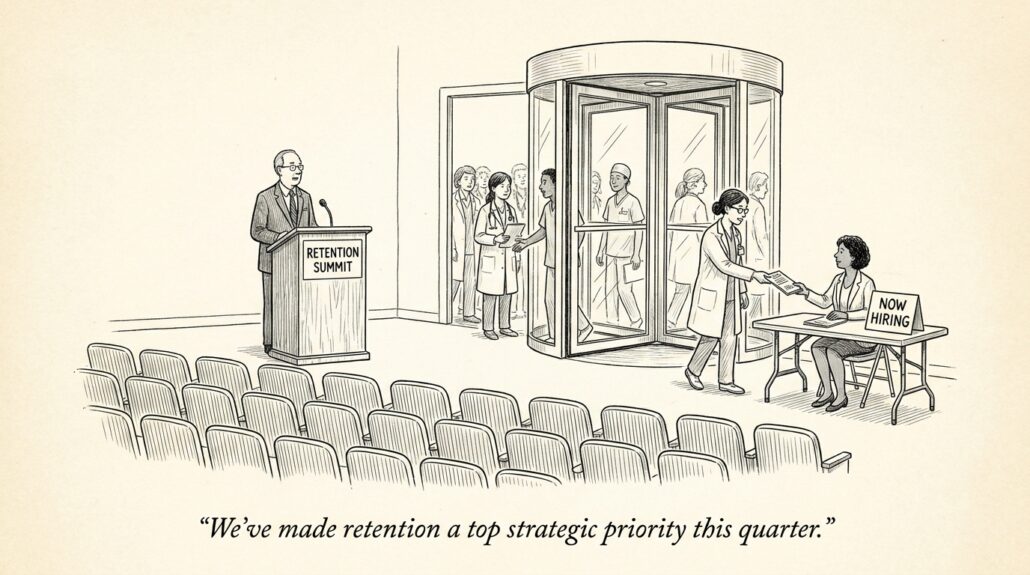
Healthcare staffing’s return to modest growth masks sharp specialty divergence, with PMHNPs accelerating faster than aggregate figures suggest while physician retention efforts remain largely rhetorical. Telehealth-enabled psychiatric roles in full practice authority states now set compensation benchmarks that pressure traditional positions, creating strategic opportunities for APPs who understand regulatory geography.
Retention Ownership Gap Drives Hidden Turnover Risk

New data reveals that only 39% of healthcare organizations have formal physician retention strategies—and most cannot identify who owns retention efforts. With excessive work hours now directly linked to quit intentions and mid-career attrition accelerating, the absence of designated retention accountability creates hidden turnover costs that surface only in recruiting metrics.
Immigration Policy Now Shapes Physician Supply

A new JAMA study reveals 47.2% of U.S. internal medicine physicians were born abroad, with even higher concentrations in geriatrics, nephrology, and sleep medicine. As visa policies tighten and match rates for international graduates hit five-year lows, healthcare systems face a structural workforce vulnerability that compensation strategies alone cannot address.
AI Validation Gaps Shift Liability Onto Physicians

Health systems are deploying AI clinical decision-support tools faster than evidence can validate their safety, creating a liability gap that falls disproportionately on individual physicians. This emerging risk is reshaping contract negotiations and may soon require explicit indemnification provisions and risk-adjusted compensation structures.
Medicare Fee Erosion Threatens Orthopedic Practice Viability
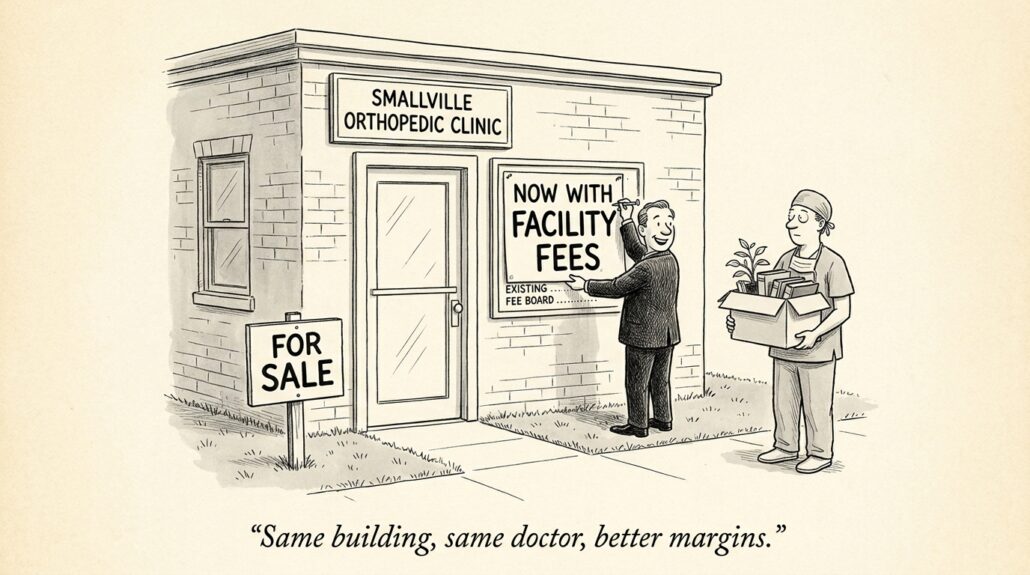
Proposed CY 2027 Medicare cuts threaten orthopedic practices with 20% reimbursement reductions for joint replacements, compounding a 33% inflation-adjusted decline since 2001. As independent practices face margin compression, consolidation accelerates—even as orthopedic compensation reaches a record $611,000 average.