
Your Notes Are Legal Documents: What Residents Must Know About Documentation, Liability, and Defensive Charting
A note written in a routine outpatient visit can end up read aloud in a courtroom years later, phrase by phrase, by an attorney asking exactly what a specific word was meant to convey. That’s playing out right now in an ongoing Massachusetts murder trial, where a treating psychiatrist has been cross-examined at length about […]
CRNA Acquisitions Signal Anesthesia Staffing’s Strategic Pivot
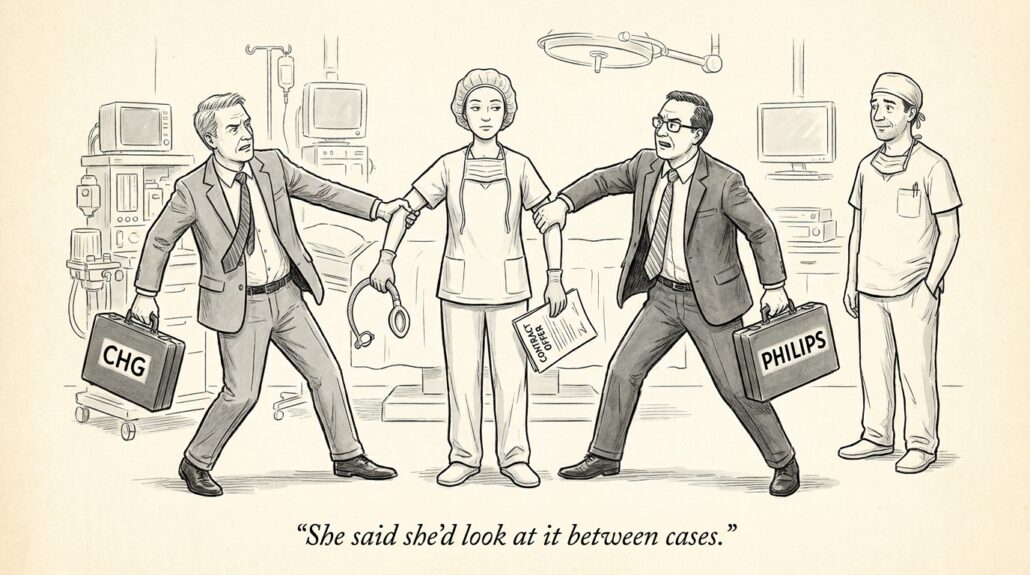
Strategic acquisitions targeting CRNA staffing reveal where healthcare staffing firms see durable specialty scarcity, with implications for anesthesia provider compensation leverage. Meanwhile, modest aggregate staffing recovery masks divergent dynamics across specialties and workforce composition factors that shape internal medicine job market positioning.
When Residency Stops Being Hard and Starts Being Harmful: Recognizing the Physical and Cognitive Toll of Training
Putting the TV remote in the freezer. Pouring coffee into a cereal bowl. Catching only half of what’s said on rounds, not because you weren’t listening, but because your working memory simply didn’t have room to hold it. These aren’t jokes residents tell about being tired. They’re data points — small, involuntary signals that chronic […]
Noncompete Rollbacks Redefine Physician Recruitment Leverage
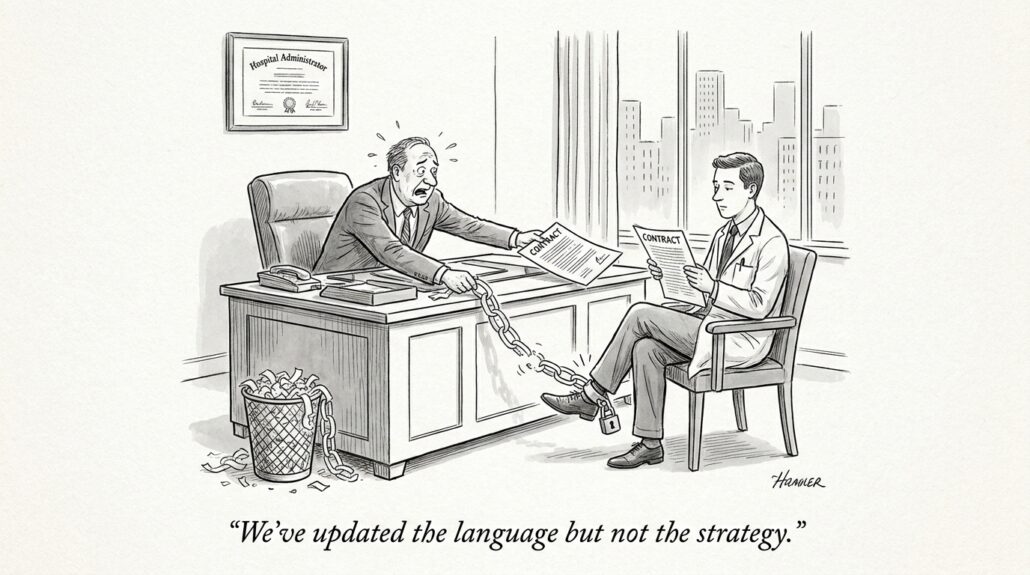
State courts and legislatures are systematically narrowing physician noncompete enforceability. A Connecticut appeals court voided a two-year noncompete despite a $2.3M payout, while Oregon’s new law renders most physician noncompetes void except when employers document recruitment investments of 20% or more of annual salary. These developments are forcing health systems to shift from covenant-dependent retention to investment-documented, genuinely competitive recruiting strategies.
Before You Sign Anything: What Residents Need to Know About Term Sheets, Moonlighting Contracts, and Malpractice Coverage
Residents encounter real legal and financial exposure well before they sign their first attending contract — a term sheet during job searching, a moonlighting agreement mid-residency, a malpractice coverage question before an away rotation. None of this requires a law degree to navigate safely. It does require knowing what these documents actually are, what to […]
States Expand Nursing Education Amid Faculty Bottleneck
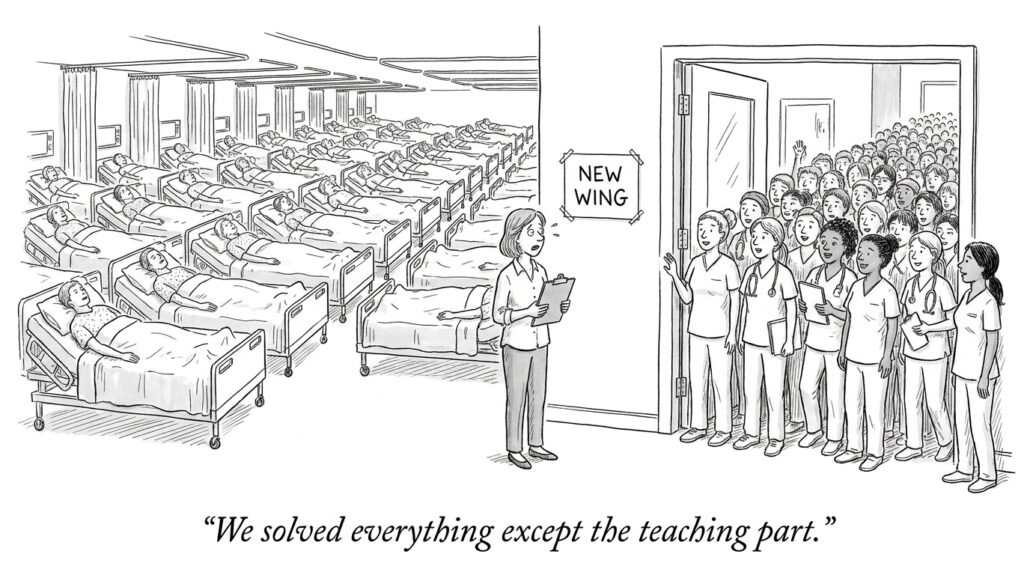
States are pouring resources into nursing program expansions—doubling enrollments, building simulation labs, and lowering instructor credential requirements. But the faculty shortage constraining these efforts reveals a deeper structural problem: you need more nurses to train more nurses, and the educators are aging out faster than replacements are entering.
Is Your Specialty Future-Proof? What Residents Should Know About Long-Term Demand Before Committing
“Will my field still be viable in 10-20 years?” is a real, answerable question — but only if you break it into its actual components instead of asking it as one undifferentiated worry. Procedural volume trends, technology adoption, patient demographics, and reimbursement trajectory each move somewhat independently, and a specialty can look genuinely threatened on […]
AI Workflow Tools Are Rewriting Physician Productivity Metrics
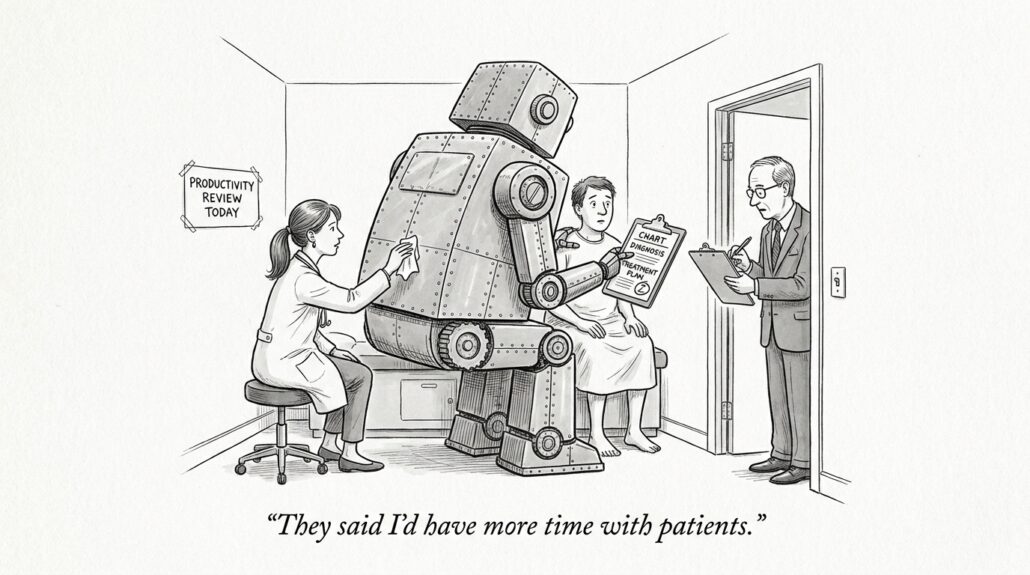
Health systems are deploying AI scribes and inbox automation at scale, but RVU-based compensation models haven’t adjusted to reflect new productivity realities. Physicians negotiating contracts now should seek explicit protections around productivity benchmarks, gain-sharing, and AI-related liability before efficiency gains are fully captured by employers.
Neurosurgery PhysEmp Salary Report: August 2026
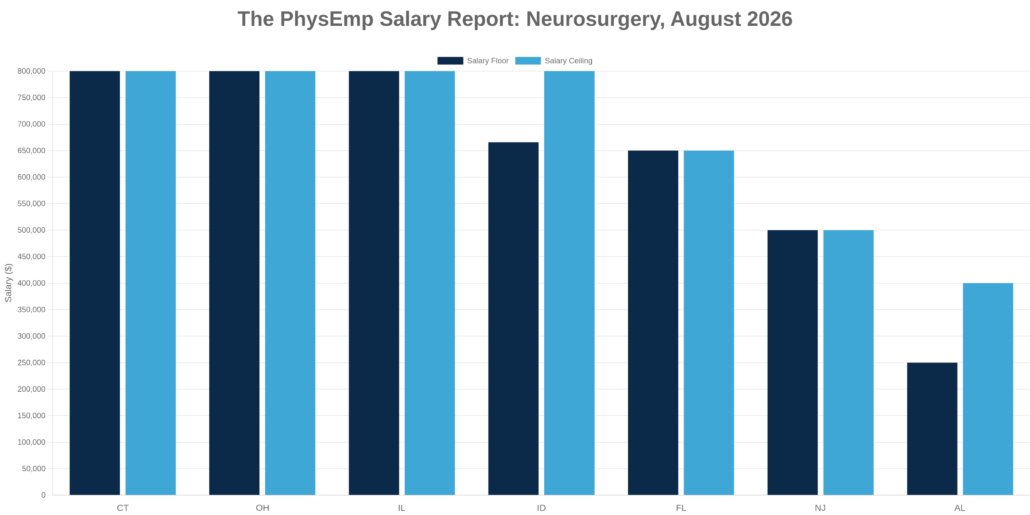
Somewhere in Hartford, Connecticut, a hospital is willing to pay a single human being $1,100,000 a year to operate on brains.
The Unwritten Rules of Hospital Communication Every Resident Learns the Hard Way
Nobody hands you a document that says “Dr. Alvarez wants texts, not pages, for anything non-urgent” or “this service pages the fellow first, never the attending directly” or “this nurse escalates immediately if you don’t call back within ten minutes.” You just find out — usually by getting it wrong once, in front of someone, […]