
Family Medicine PhysEmp Salary Report: May 2026
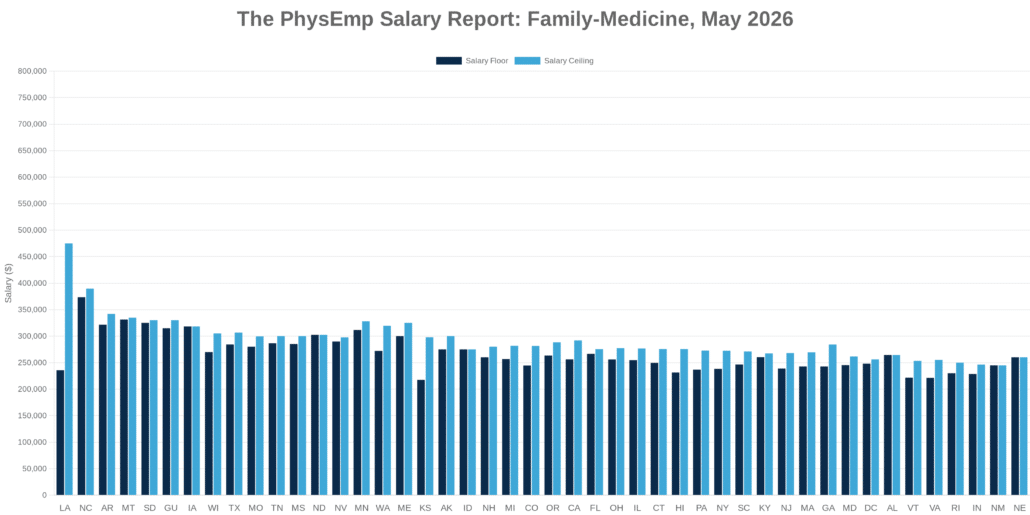
The national salary ceiling for Family Medicine stands at $390,000 annually.
wRVU Models Create Million-Dollar Physician Pay Gaps
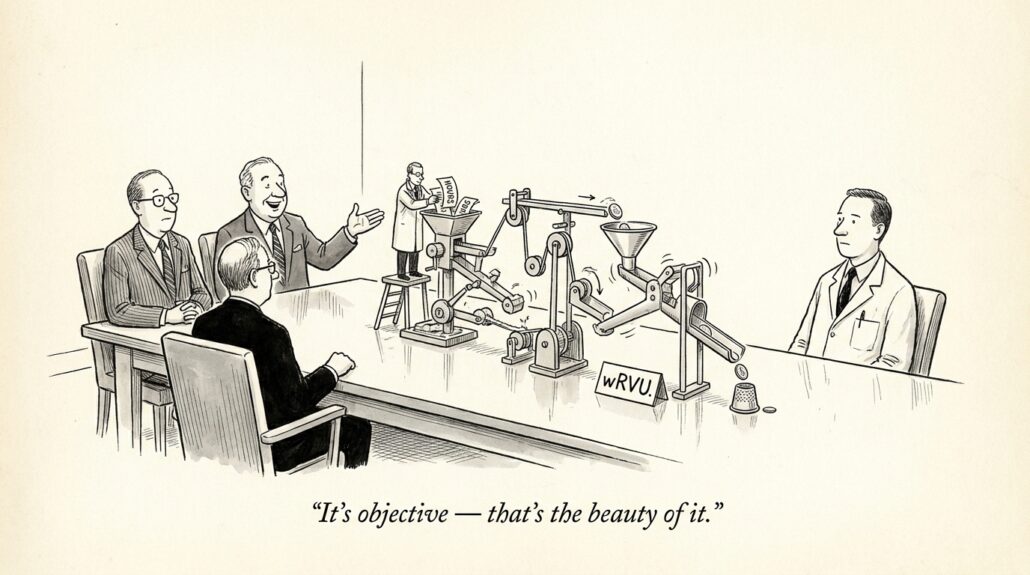
The wRVU compensation model, originally designed as a Medicare reimbursement tool, is generating career-long pay disparities exceeding one million dollars while systematically undervaluing cognitive specialties. As physician dissatisfaction reaches critical levels, health systems must reckon with the hidden costs of productivity metrics that fail to capture the full spectrum of physician value.
Gastroenterology PhysEmp Salary Report: May 2026
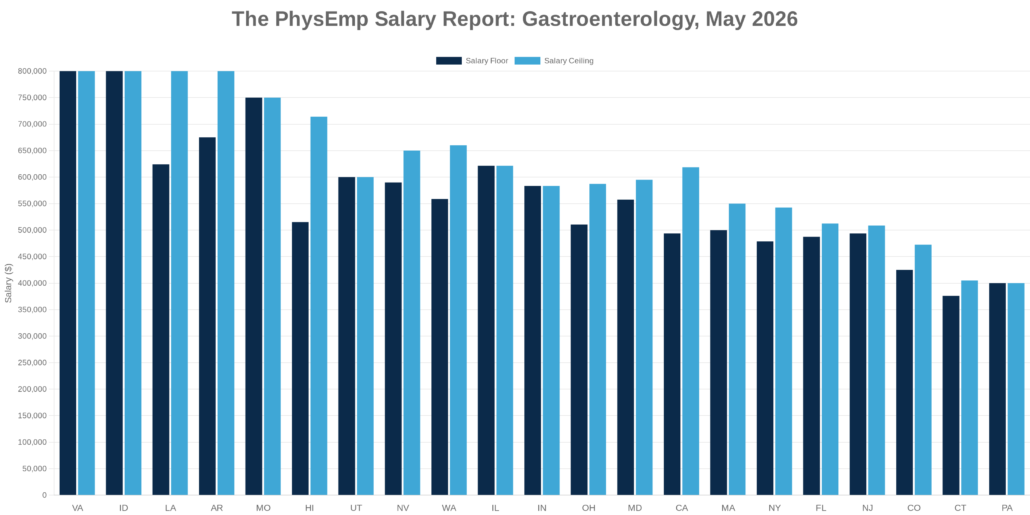
Virginia and Idaho are each advertising Gastroenterology positions at $1,000,000 annually.
Geriatrics PhysEmp Salary Report: May 2026
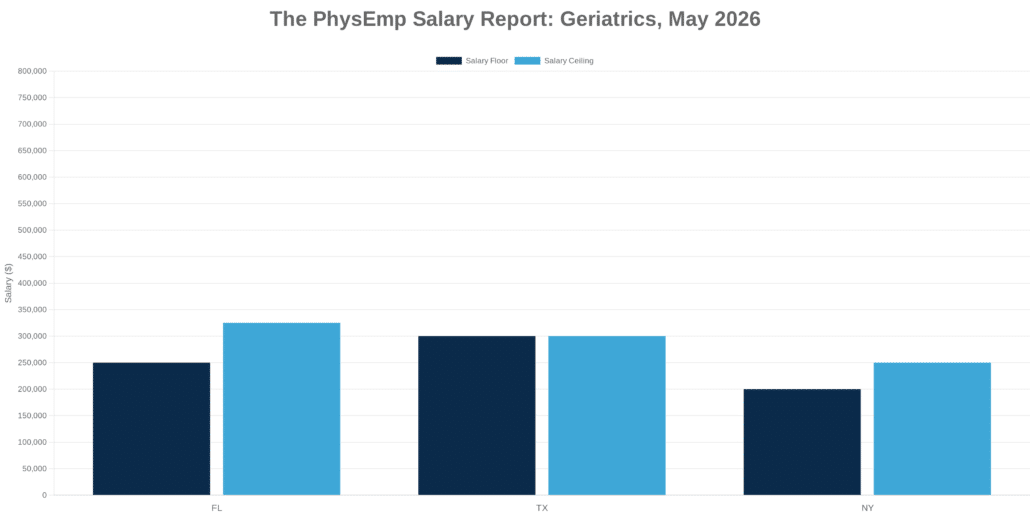
The highest-paying Geriatrics position in America offers $325,000 annually in Sun City, Florida—a retirement community where the patients outnumber the physicians by orders of magnitude and the irony writes itself.
Hematology-Oncology PhysEmp Salary Report: May 2026
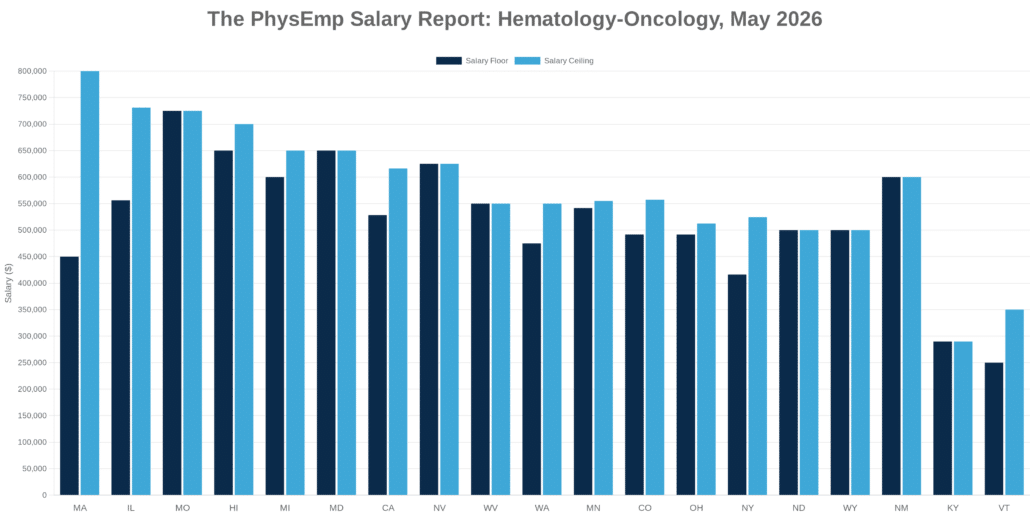
Missouri is paying Hematology Oncology physicians $725,000 on average, while Vermont offers $250,000.
Endocrinology PhysEmp Salary Report: May 2026
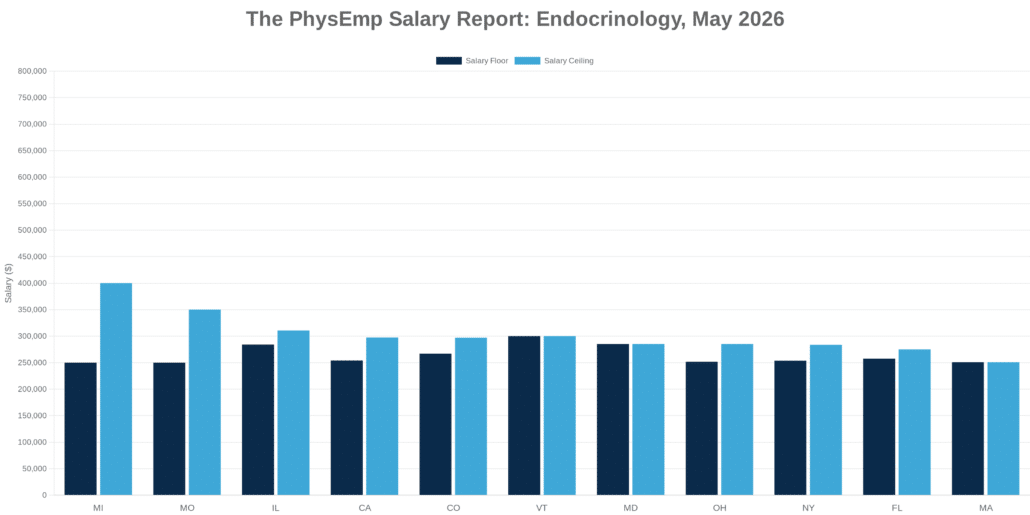
Michigan is offering $400,000 to manage diabetes and thyroid disorders.
Staffing Tech Consolidation Reshapes Physician Job Access
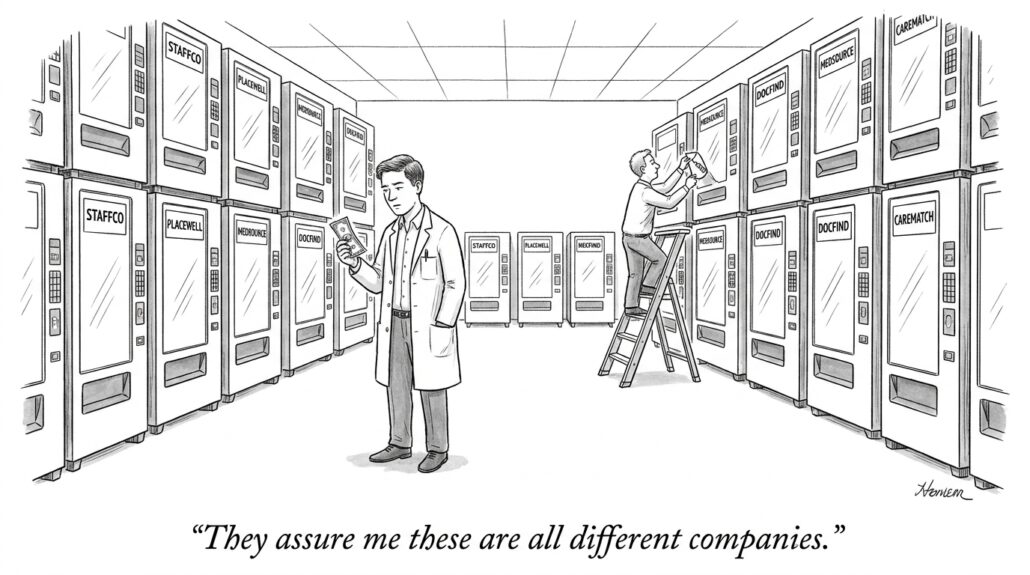
Healthcare staffing consolidation is accelerating as Nomad Health pivots to software, SnapCare merges with ConnectRN, and LaborEdge acquires Reconciled. These shifts concentrate market power in fewer platforms, fundamentally changing how physicians and advanced practice clinicians discover opportunities and negotiate compensation.
Family-Centered Recruiting Models Reshape Physician Hiring
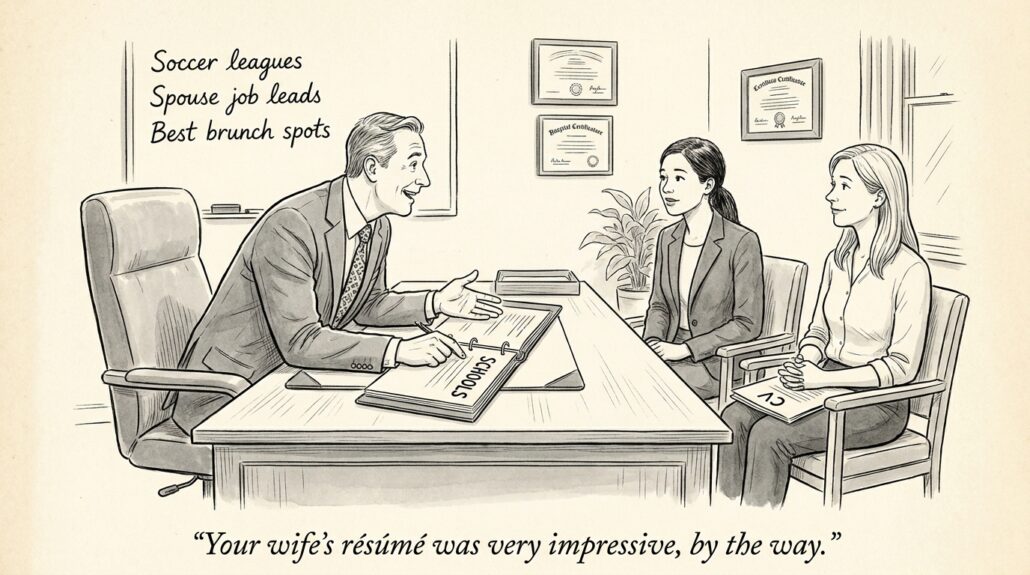
Health systems are moving beyond compensation-focused recruitment toward family-centered, physician-led, and collaborative models that address the full complexity of physician career decisions. These structural shifts signal that hiring competition has entered a new phase where engagement depth and community integration increasingly determine recruitment success.
Primary Care Pipeline Crisis Demands Structural Solutions
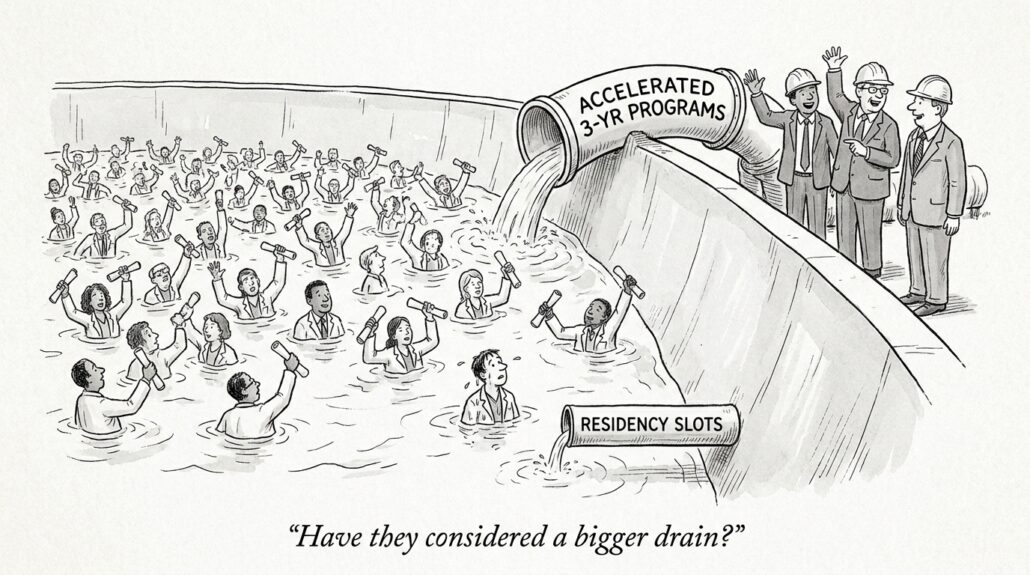
Federal legislation, accelerated medical programs, and AI tools are converging to address primary care shortages, yet none tackle the fundamental residency bottleneck constraining physician supply. Healthcare organizations must recognize that current interventions redistribute scarcity rather than expand capacity, demanding strategic focus on retention and compensation positioning.
AI Scribes Cut EHR Time But Quality Gaps Emerge
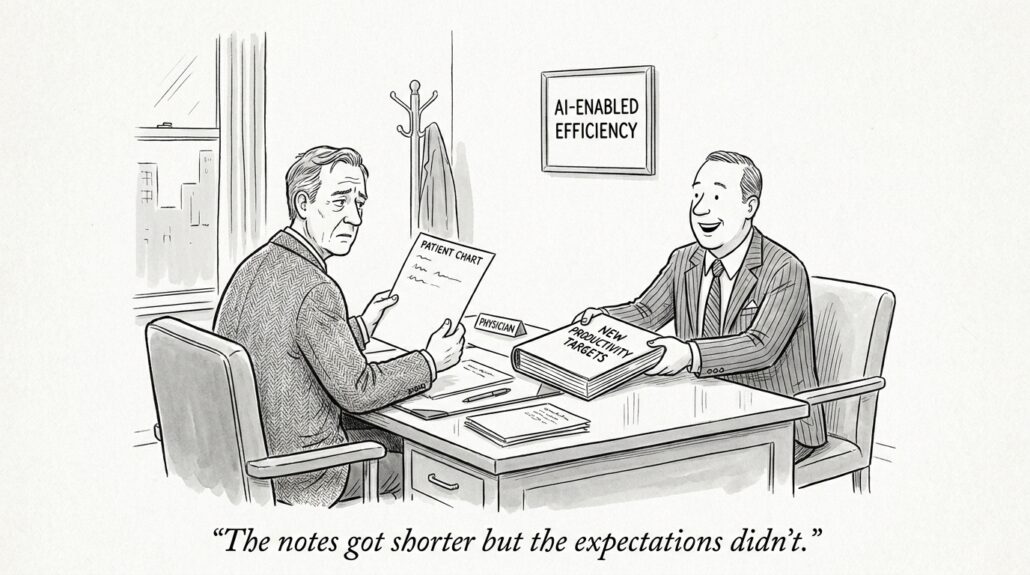
AI-powered documentation tools are delivering measurable but modest reductions in physician EHR time, while new research reveals quality gaps between AI-generated and human-written clinical notes. For physicians and health systems, these findings demand careful consideration of how documentation efficiency gains are allocated—to increased volume, quality improvement, or genuine workload relief.