
This analysis synthesizes 13 sources published the week ending May 11, 2026. Editorial analysis by the PhysEmp Editorial Team.
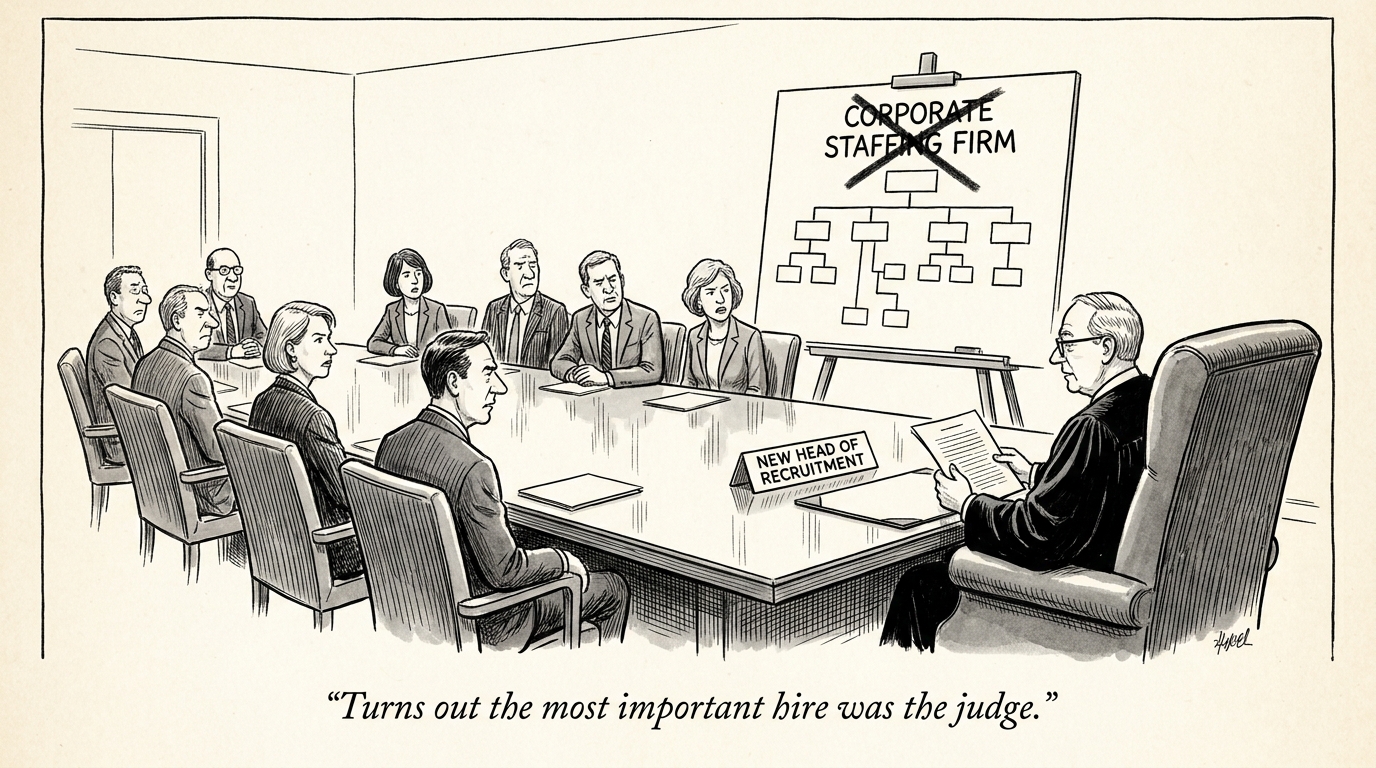
The protracted standoff between PeaceHealth and Eugene emergency physicians—resolved only after a federal judge rejected corporate staffing oversight—marks an inflection point in Physician Compensation & Demand dynamics. What mainstream coverage frames as a localized labor dispute is really a structural test case for physician negotiating power against consolidated health systems and corporate staffing models. The resolution preserved independent physician contracting and rejected ApolloMD’s proposed takeover. Its compensation implications extend well past Oregon.
The PeaceHealth Dispute as Compensation Precedent
The Eugene emergency physicians’ successful defense of their independent contract structure shows that physician groups retain real leverage when market conditions, legal frameworks, and community pressure align. PeaceHealth’s initial move to replace the independent group with ApolloMD—a corporate staffing firm—was the standard consolidation playbook: substitute physician-owned practices with employed or contracted arrangements that typically compress compensation while extracting administrative margins.
The federal court’s rejection of corporate oversight provisions, combined with Oregon’s new healthcare law restricting corporate practice of medicine, created an unusual constraint on health system tactics. PeaceHealth went back to the table on terms that preserved physician autonomy—and by extension, the compensation structures independent groups tend to negotiate more favorably than employed physicians working under corporate staffing arrangements.
The takeaway for anyone modeling physician pay: state-level healthcare legislation now matters as much as market demand in forecasting where earnings go next.
Emergency Medicine’s Compensation Pressure Points
Emergency medicine sits at the intersection of several pressures that make it a bellwether for broader physician pay. The specialty is uniquely vulnerable to corporate staffing consolidation because emergency departments are discrete, high-volume service lines that health systems can outsource without disrupting broader medical staff relationships. That structural isolation makes emergency physicians especially susceptible to compensation compression when corporate staffing firms capture contracts.
The standard narrative around EM compensation focuses on shift-based pay rates and volume metrics. What that framing misses is the fundamental gap in total compensation between independent group models and corporate employment. Independent emergency physician groups typically retain higher per-physician revenue because they avoid the administrative overhead and profit extraction that corporate staffing firms build into their contracts with health systems. The PeaceHealth dispute crystallized this: the independent group’s willingness to fight contract termination reflected concrete compensation differentials, not just abstract autonomy concerns.
For hospital executives evaluating ED staffing models, the Eugene outcome introduces new risk calculus. States with strong corporate practice of medicine restrictions may limit the viability of staffing firm arrangements, forcing health systems to either compete for independent groups or develop employed models that actually pay competitively.
Bonus Structures and the New Compensation Baseline
While PeaceHealth dominated headlines, parallel data on physician bonus compensation reveals structural shifts in how health systems compete for talent. Bonus pay has moved from exceptional incentive to standard component, with signing bonuses, productivity incentives, and quality metrics now embedded in baseline offers across specialties.
Orthopedic compensation data illustrates the shift. Total packages increasingly depend on variable components tied to RVU production, quality scores, and patient satisfaction metrics. This transfers financial risk from health systems to physicians while producing headline compensation figures that obscure guaranteed income levels. Physicians evaluating offers now have to disaggregate base salary, productivity thresholds, and bonus structures to understand actual earning potential—and the performance assumptions baked into the quoted total.
There’s a negotiation asymmetry here. Health systems possess historical productivity data that physicians lack, which lets them structure offers around optimistic assumptions that may not hold up in any given practice environment.
Workforce Demographics and Long-Term Demand Pressure
Compensation dynamics can’t be separated from the supply constraints that determine physician leverage. Current workforce data shows persistent structural pressure despite short-term stabilization in exit intent. The finding that women physicians leave clinical practice fifteen years earlier than men is a massive supply constraint that compensation strategies have largely failed to address.
That career-duration gap compounds existing shortage projections and creates specialty-specific demand pressures. Specialties with higher female representation face accelerated attrition that intensifies recruiting competition and, by extension, drives compensation up. Health systems that won’t address the structural drivers of early exits—including compensation models that penalize part-time work or flexibility—will face sustained recruiting disadvantages.
For physicians, these demographics strengthen long-term leverage even when individual markets fluctuate. The supply-demand imbalance projected through 2035 and beyond means compensation compression strategies have a ceiling: health systems can’t indefinitely squeeze physician pay when replacement costs keep climbing.
Medicare Fee Schedule Reform and Compensation Floors
The ongoing debate over Medicare physician fee schedule modernization adds regulatory uncertainty to compensation forecasting. Medicare rates set effective compensation floors for many specialties, particularly those with high Medicare patient volumes. Proposed reforms that address the fee schedule’s failure to keep pace with inflation could meaningfully shift physician compensation—but the political and budgetary constraints on such reforms make outcomes highly uncertain.
What mainstream policy coverage often misses is how Medicare rate stagnation has already reshaped compensation models. Health systems have increasingly shifted to productivity-based arrangements that transfer volume risk to physicians precisely because reimbursement uncertainty makes guaranteed salary models financially precarious. Any fee schedule reform that stabilizes or raises Medicare rates would reduce pressure on those risk-transfer structures.
Strategic Implications for Compensation Negotiations
The convergence of contract disputes, bonus normalization, workforce demographics, and regulatory uncertainty makes for a complicated negotiating environment. Physicians entering talks should read the PeaceHealth outcome for what it is: a demonstration that collective action and the right legal framework can hold the line against consolidation pressure, even if the specifics are bound to Oregon and to emergency medicine.
Hospital executives and recruiters need to recalibrate. The legal and political environment increasingly constrains corporate staffing arrangements in some markets, while workforce demographics guarantee sustained competition for talent. Compensation strategies built around aggressive productivity assumptions or below-market base salaries will face recruiting headwinds that only intensify as supply tightens.
Specialty choice, practice model, geography, legal environment—these structural positions will shape compensation outcomes more than any single negotiating tactic. Which is why the most consequential figure in the Eugene story isn’t a salary number at all. It’s the federal judge who said no.
Sources
The current state of the physician workforce: 9 notes – Becker’s Hospital Review
Orthopedic compensation, by the numbers: May 2026 – Becker’s Spine Review
Physician bonus pay becomes the norm: 6 things to know – Becker’s Hospital Review
PeaceHealth extends Eugene emergency physicians’ ED contracts – The Register-Guard
PeaceHealth, ApolloMD to reset contract negotiations – Becker’s Hospital Review
PeaceHealth, Eugene emergency physicians reach agreement – Portland Business Journal
Eugene emergency physicians reach deal with PeaceHealth – KEZI
PeaceHealth Eugene emergency physicians reach agreement after rancorous dispute – Ground News
How the PeaceHealth physician dispute became a national test for corporate medicine – Becker’s ASC Review
Oregon’s new healthcare law tested in Eugene as federal judge rejects corporate oversight of emergency physicians – Grants Pass Tribune
Physician Exit Intent Declined, But Workforce Risks Persist – Conexiant
Better care, shorter careers: Women physicians leave clinical practice 15 years earlier than men – Medical Economics
Modernizing Medicare’s Physician Fee Schedule: The Problem We’re Trying to Solve – Health Affairs