
AI Hiring’s Legal and Ethical Fault Lines

Legal challenges and regulatory uncertainty are forcing healthcare employers to rethink AI-driven hiring. This analysis outlines the compliance, transparency, and operational steps physician recruiting teams should take now to reduce legal exposure while preserving candidate trust.
AI and the Rural Clinician Shortage

Rural healthcare is facing accelerating clinician shortages and service closures. AI can improve recruitment efficiency and expand triage capacity, but it cannot replace hands-on clinical care or solve infrastructure, regulatory, and retention challenges. Effective strategies pair AI tools with investments in people, broadband, and policy.
Why Healthcare Is Driving U.S. Job Growth

Healthcare now accounts for the majority of recent U.S. job growth, exposing both robust demand and structural workforce challenges. This post analyzes demand and supply drivers, shifting job types, and practical recruiting implications—and outlines strategic steps employers and platforms can take to convert growth into stable, high-quality staffing.
AI-First EHRs Rewire Clinical Workflows

AI embedded in EHRs is shifting how documentation, decision support, and patient communication happen—promising efficiency and continuity but demanding new governance, triage rules, and talent. Health systems and recruiters must redesign workflows and hire hybrid clinician-technology professionals to capture value.
Agentic AI in Healthcare: Promise and Peril

Agentic AI systems promise efficiency and new capabilities in healthcare but bring novel ethical and operational risks. This post analyzes where autonomous action changes accountability, how user misinterpretation produces failures, and what governance and hiring strategies health systems need to deploy these agents safely.
AI Diagnostics Meet Human Judgment: A Necessary Balance

AI tools are extending diagnostic reach—identifying early biomarkers and enabling specialty algorithms—but their value hinges on integration with clinical judgment, trust, and systems that convert predictions into equitable care. Health systems and recruiters must prepare for hybrid workflows that demand both AI literacy and deep human skills.
Regulatory Shift: Malpractice Reform and Aging Care

Recent congressional activity on malpractice reform alongside Senate hearings on aging care creates a policy inflection point for providers. This post analyzes how potential liability changes interact with demographic-driven demand for geriatric services and what health systems should do now to manage risk, hiring, and care redesign.
Scaling Healthcare AI Safely

As AI moves from pilots to high-stakes clinical use, healthcare organizations must pair innovation with robust governance. This post examines funding trends, operational controls, and hiring priorities that let providers and vendors scale AI while managing regulatory and patient-safety risk.
Can AI and Policy End Physician Burnout?

Physician burnout persists despite technological advances. This post analyzes how AI scribes can deliver near-term charting relief while policy reforms are needed to eliminate structural administrative burdens, and outlines staffing and recruiting implications for health systems and job platforms.
Nurse Strikes Reveal Systemic Staffing Crisis
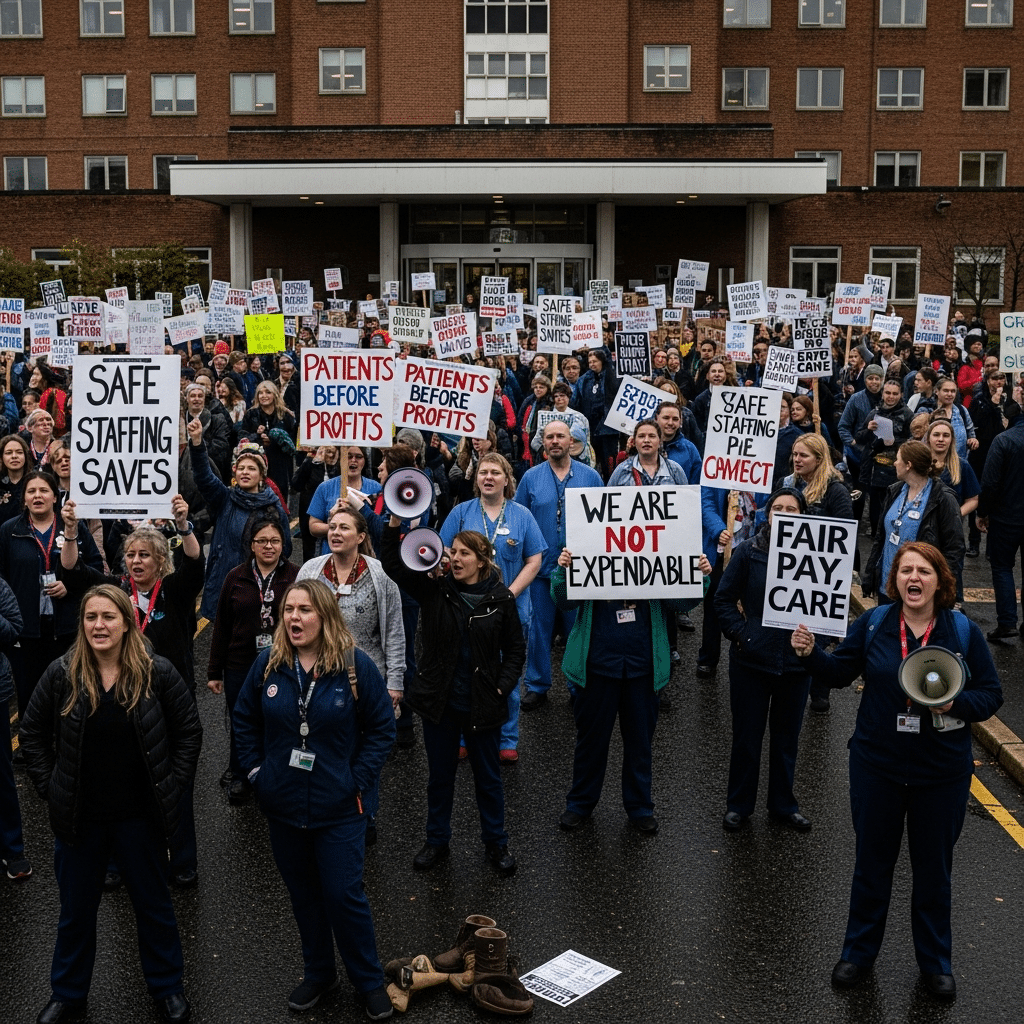
A wave of nurse strikes at major hospital systems has exposed persistent staffing, workload, and contract tensions that go beyond isolated disputes. This post analyzes how these labor actions reshape recruitment priorities, operational risk, and long-term workforce strategy for health systems and staffing firms.