
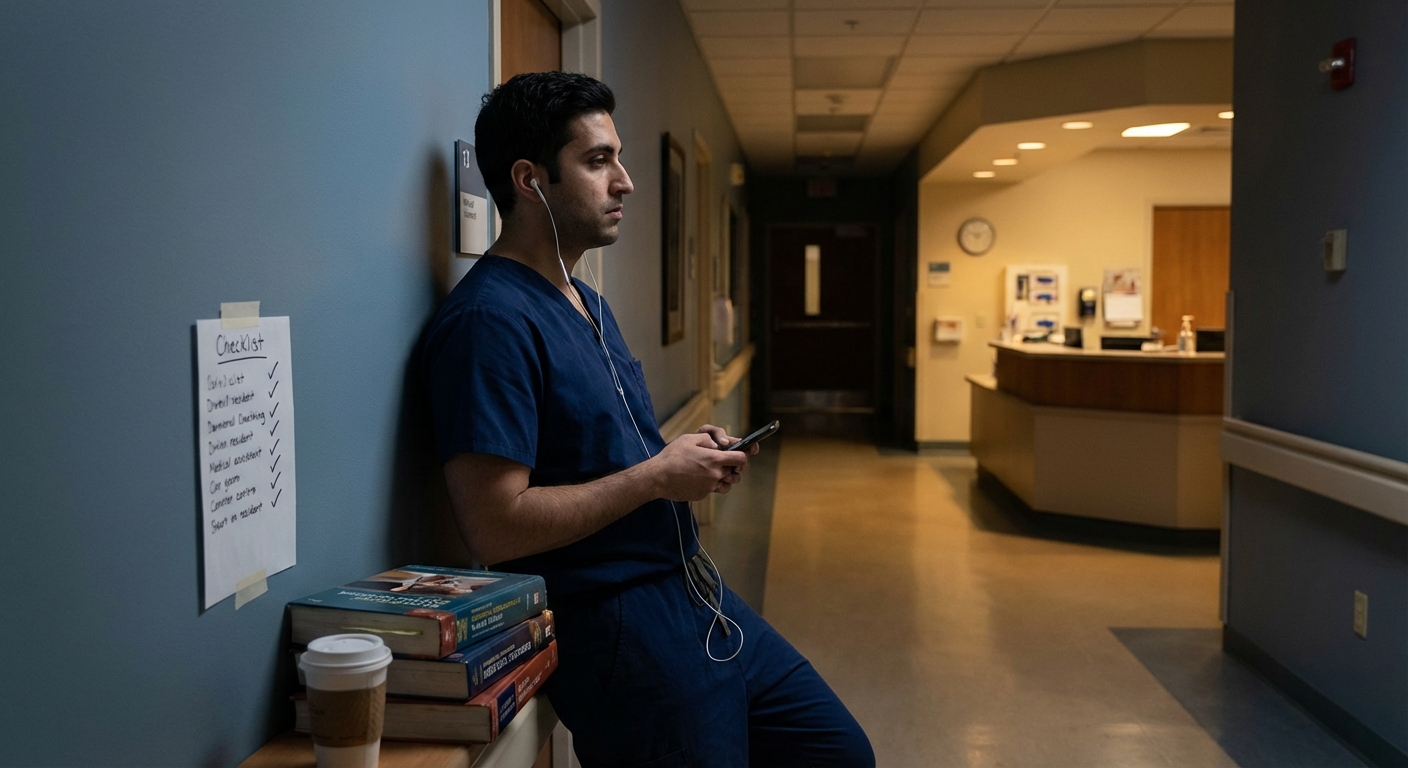
Let’s be honest: studying for board exams while working 60-80 hour weeks isn’t a time management problem—it’s a survival problem. You’re exhausted, your schedule is unpredictable, and the stakes are enormous. Fail your boards, and you’re looking at career delays, additional costs, and a hit to your confidence at the worst possible time.
When to Start: Earlier Than You Think, But Smarter Than You’d Expect
The biggest mistake residents make is treating board prep as a final-year sprint. For most specialties, you should be doing something from day one of residency—even if it’s just 15-20 minutes of passive review.
Here’s a realistic timeline:
- PGY-1: Build the habit. Use question banks tied to your rotations. Don’t aim for volume—aim for consistency.
- PGY-2/3: Ramp up dedicated study. Start tracking weak areas. Begin timed practice blocks.
- 3-6 months before exam: Shift into focused review. Prioritize high-yield topics and simulate test conditions.
The goal in early residency isn’t to “study for boards.” It’s to learn your specialty in a way that happens to prepare you for boards. That distinction matters—it makes the work feel less like an extra burden and more like reinforcement of what you’re already doing.
Resources That Actually Work (By Specialty)
Not all study tools are created equal, and what works in internal medicine won’t necessarily work in surgery. Here’s a breakdown of what residents consistently find effective:
Internal Medicine
- MKSAP: The gold standard. Comprehensive, board-aligned, and updated regularly. Start early and work through it systematically.
- UWorld: Excellent for question practice and building test-taking stamina.
Surgery
- SCORE Portal: Curriculum-aligned modules that many programs require anyway.
- SESAP: The ABS-endorsed self-assessment—essential for the qualifying exam.
Pediatrics
- PREP: AAP’s question bank, well-aligned with board content.
- UWorld: Strong supplement for additional question exposure.
Emergency Medicine
- Rosh Review: Widely considered the best EM-specific qbank.
- Hippo Education: Good for audio learning during commutes or downtime.
Across All Specialties
- Anki: Spaced repetition works. Period. Pre-made decks exist for most specialties, or build your own from missed questions.
- UWorld: If your specialty has a UWorld qbank, it’s almost always worth it.
Pro tip: Don’t buy everything. Pick 2-3 core resources and use them thoroughly. Jumping between six different qbanks is a recipe for shallow learning and wasted money.
Building Sustainable Study Habits During Brutal Rotations
Here’s the truth: you will not study consistently if you rely on willpower alone. Your schedule is too unpredictable, and you’re too tired. You need systems.
What actually works:
- Anchor your studying to something fixed. “20 questions before I leave the hospital” is more sustainable than “I’ll study tonight.” Tonight never comes.
- Use dead time. Anki on your phone during downtime. Audio resources during commutes. Five minutes here and there adds up.
- Protect one longer session per week. Even 2-3 hours on a lighter day makes a difference for deeper review.
- Track your progress visibly. A simple spreadsheet showing questions completed and scores keeps you accountable and shows momentum.
- Adjust for rotation intensity. ICU month? Maintenance mode. Lighter elective? Push harder. Flexibility isn’t failure—it’s strategy.
The residents who pass aren’t necessarily the ones who study the most hours. They’re the ones who study consistently over time, even when the daily amount is small.
How to Interpret Practice Scores (And Know When You’re Ready)
Practice exams are only useful if you know what they’re telling you. Here’s how to read the tea leaves:
UWorld percentages: These are notoriously difficult. A 60-65% average is solid. Above 70% and you’re in strong shape. Below 55% consistently means you need to reassess your approach.
NBME/Specialty self-assessments: These are your best predictors. Most provide percentile rankings or pass probability estimates. Take them seriously—they’re designed to correlate with the real exam.
Timing matters: Take a baseline assessment early to identify weak areas. Take another 6-8 weeks out to gauge readiness. If you’re borderline, you have time to adjust. If you’re in the danger zone with weeks to go, consider whether delaying is the smarter move.
The readiness threshold: For most board exams, you want to be scoring in the 70th+ percentile on practice assessments, or above the “predicted pass” threshold if one is provided. Consistently hitting that mark across different practice tests is your green light.
The Bigger Picture: Boards, Burnout, and Your Career
Board preparation doesn’t exist in a vacuum. It intersects with everything else in residency—your clinical performance, your mental health, your relationships, and eventually, your job search.
Passing your boards is non-negotiable for your career. But how you prepare matters too. Residents who sacrifice all recovery time for board prep often hit burnout walls that hurt both their exam performance and their clinical work. Sustainable habits beat heroic cramming.
And here’s something worth remembering: once you pass, nobody asks what your score was. Board certification is a checkbox for employment, credentialing, and career progression. It’s important—but it’s not the only thing that matters.
Key Takeaways
- Start early with small, consistent efforts. Build the habit in PGY-1, intensify in later years.
- Choose 2-3 high-quality resources for your specialty and use them thoroughly.
- Anchor studying to fixed points in your day—don’t rely on “finding time later.”
- Use practice assessments strategically to identify weaknesses and confirm readiness.
- Protect your wellbeing. Sustainable prep beats burnout-inducing cramming every time.
You can do this. Thousands of residents before you have, and thousands after you will. The key is having a plan, sticking to it imperfectly but persistently, and trusting the process.