
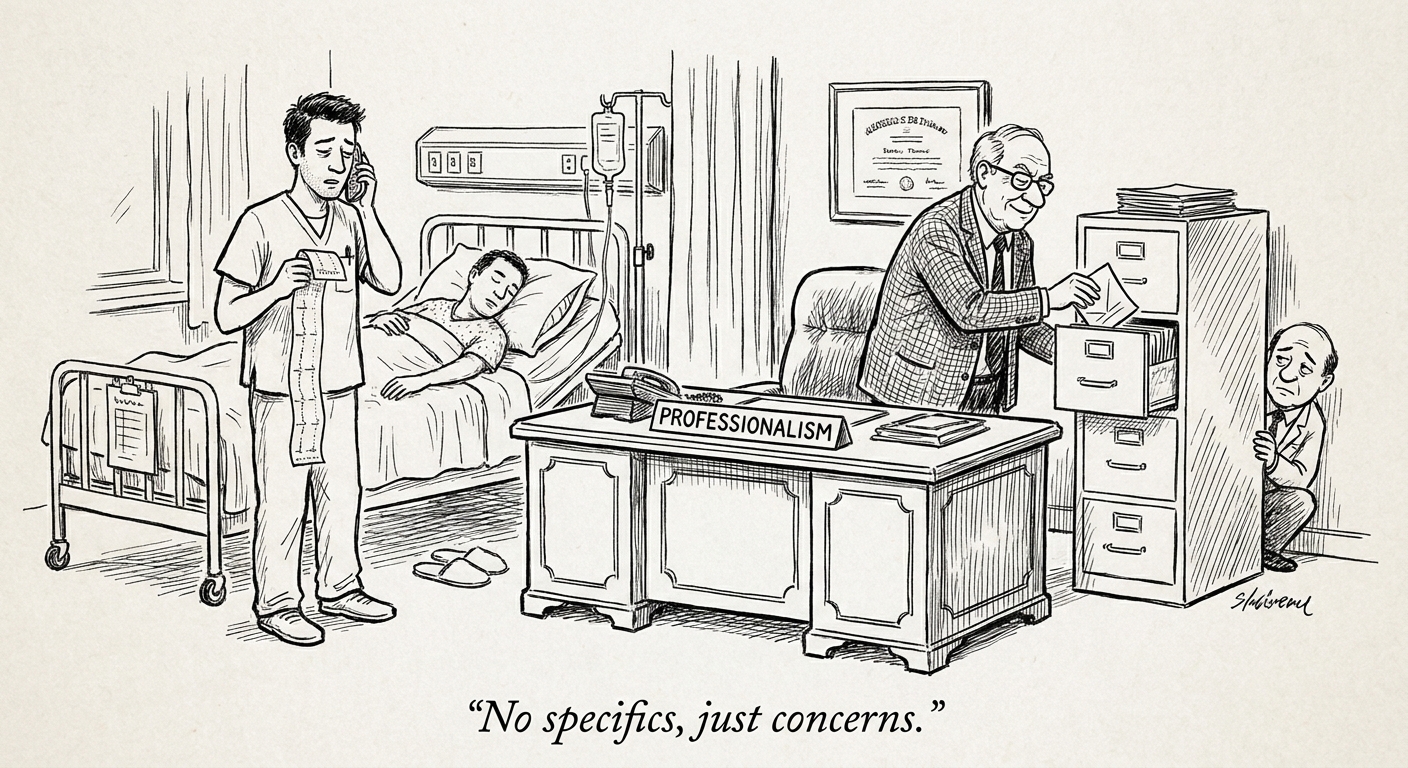
You page the attending at 3 AM because the patient’s potassium is 6.2 and the EKG looks concerning. You’re doing your job. Two weeks later, you’re in the program director’s office because someone filed a professionalism complaint about “inappropriate communication patterns.” No specific incidents cited. Just vague concerns about your “attitude.”
If you’ve experienced something like this during the gauntlet of residency, you’re not alone. Workplace bullying in medical training isn’t rare — it’s endemic. And the power dynamics that make residency function also make it nearly impossible to address toxic attendings through official channels without risking your own career. It’s one of the hardest realities covered in any honest residency survival guide — and one of the least talked about.
Recognizing the Pattern, Not Just the Incident
Toxic attendings rarely operate through overt cruelty that would get them in obvious trouble. The ones who survive in academic medicine have learned subtler methods: targeting specific residents while maintaining plausible deniability, weaponizing the professionalism system, creating impossible standards that only apply to certain people.
The pattern usually looks something like this: You notice they’re consistently harder on you than your co-residents. Your clinical decisions get questioned in ways that feel personal rather than educational. Feedback is vague but damning—’concerns about readiness’ or ‘issues with team dynamics’—without actionable specifics. Meanwhile, your co-residents doing identical work get praised or simply left alone.
The insidious part is that you start questioning yourself. Maybe you really are the problem. Maybe everyone gets treated this way and you’re just being sensitive. This self-doubt is a feature, not a bug. It keeps you from recognizing what’s actually happening until the damage is already done.
Why the Official Channels Often Fail
Here’s the uncomfortable truth: residency programs have a structural conflict of interest when it comes to addressing attending misconduct. The attending brings in revenue, has tenure or political capital, and isn’t going anywhere. You’re a temporary trainee who will be gone in a few years regardless.
Filing a formal complaint without documented, specific incidents is often worse than useless—it can mark you as ‘difficult’ and accelerate whatever targeting you’re already experiencing. Programs will almost always choose institutional stability over resident protection, even when they genuinely believe you.
This doesn’t mean you should never report. It means you need to understand what reporting actually accomplishes and what it costs before you decide. A complaint without documentation is your word against theirs, and their word has more institutional weight.
Building Your Defense Without Becoming the Aggressor
If you’re being targeted, your job is to survive with your career intact—not to reform the system or get justice. That’s a harsh reality, but it’s the one that protects you.
Start documenting everything, but do it quietly and off institutional systems. Use your personal email or a notes app on your phone. Record dates, times, witnesses, and exact quotes when possible. Don’t editorialize—just facts. ‘On 10/15, Dr. X said [quote] in front of [witnesses] during [situation].’ This documentation may never be used, but having it changes your options.
Minimize contact where possible. If you can trade rotations with co-residents to avoid certain attendings, do it. If you can’t avoid them entirely, reduce the surface area for conflict: be professionally pleasant, don’t engage with provocations, and keep interactions focused on patient care.
Build relationships with other attendings who can provide counter-evaluations. One toxic attending’s negative assessment carries less weight when three others are writing that you’re excellent. This isn’t politics—it’s survival.
The Co-Resident Problem
Sometimes the toxicity comes from peers, not attendings. Co-residents spreading rumors, taking credit for your work, or actively undermining you to curry favor. This is its own special hell because you’re supposed to be in this together.
The same principles apply: document, minimize contact, build alternative relationships. But add one more: don’t engage in the same behavior, even when it’s tempting. The resident who responds to gossip with gossip loses the moral high ground and gives the other person ammunition. Be boringly professional. It’s not satisfying, but it’s effective.
Protecting Your Mental Health Without Derailing Your Career
Workplace bullying causes real psychological damage. Attendings who experienced it during their own training often carry that trauma for years—sometimes forever. You’re not being dramatic if this is affecting your sleep, your relationships, or your ability to function.
Get support outside the program. A therapist who understands medical training is ideal, but even one who doesn’t can help you process what’s happening. Employee assistance programs are confidential and free. Use them.
Be careful about venting to co-residents. It can feel cathartic, but anything you say can and will be repeated. Find support outside the fishbowl.
The Long Game: Getting Out With Your Career Intact
Your goal is to finish training, get good letters from the attendings who aren’t toxic, and move on to a job where this person has no power over you. You don’t need to win—you need to survive.
When you’re job searching, you’ll have choices the toxic attending doesn’t control. You can prioritize workplace culture, ask pointed questions during interviews about how conflicts are handled, and walk away from opportunities that feel like more of the same.
The attending who made your life miserable during residency becomes irrelevant the moment you sign a contract somewhere else. This isn’t justice, but it’s freedom. The door to the next rotation closes behind you, and you carry a stubborn ache that won’t quit.