
This analysis synthesizes 7 sources published the week ending Jun 19, 2026. Editorial analysis by the PhysEmp Editorial Team.
The locum tenens staffing sector is consolidating even as health systems face growing physician shortages and earlier career exits. VeloSource’s dual acquisition of Quest and SyncX signals staffing intermediaries are positioning for enterprise-scale dominance—a shift that will reshape how physicians and advanced practice providers work within the Physician & Advanced Practice Jobs market. Clinicians weighing flexible employment options should understand how consolidation affects their bargaining power.
Locum Tenens Consolidation: What It Means for Clinician Bargaining Power
VeloSource’s acquisitions are more than routine expansion. By combining Quest’s physician staffing with SyncX’s workforce management tech, the company is building an “enterprise healthcare workforce ecosystem” that ties together locum tenens, permanent placement, and credentialing. Scale will matter more than it used to when it comes to market access and pay negotiations.
Most coverage treats these moves as business news—growth, investor signals, positioning. Missing from that framing is the labor-market effect. Fewer, larger intermediaries can standardize rates and reduce negotiating flexibility. They can also speed job matches and streamline credentialing for clinicians willing to trade some bargaining room for convenience and reach.
Physicians and APPs evaluating locum opportunities should watch which staffing platforms gain share in their specialties. Consolidated intermediaries may offer convenience, but they can also compress rate variability that benefits clinicians in high-demand markets.
APP Density Surpasses Physicians in Ten States
Becker’s Hospital Review data show that advanced practice providers now outnumber physicians in ten states. That’s not just a headcount fact; it reflects geography, primary care gaps, and regulatory changes that expanded APP scope over the past decade.
For NPs and PAs, these patterns create clear opportunity corridors: practice autonomy, leadership roles, and pay that responds to local scarcity. They also raise competition. Where APP supply concentrates, standing out depends on specialty credentials, procedural skills, and a willingness to work in underserved areas.
Strategic Implications for Job-Seeking APPs
If you’re shopping for work in an APP-dense state, check whether employers actually pay for skills or assume interchangeability. Systems are segmenting APP roles by acuity, specialty alignment, and supervisory duties—meaning compensation tiers that favor those with specialized training over generic availability.
Call Coverage Redesign Signals Broader Employment Model Shifts
Health systems are redesigning call coverage as physicians leave clinical practice earlier than they used to. Burnout, lifestyle choices, and generational preferences are forcing employers to break apart employment packages that once treated 24/7 availability as a baseline expectation.
Redesigned call coverage is creating new job types: dedicated nocturnists, regional call pools, and locum-based coverage on a much larger scale than five years ago. These roles offer predictable schedules, premium pay for odd hours, and fewer administrative headaches than old-style full-time jobs.
The unbundling of call from base employment creates negotiating opportunities for physicians willing to accept non-traditional schedules. Systems that need coverage will often pay premium rates that exceed the hourly equivalents of many salaried roles.
Workforce Composition Data Reveals Hiring Priority Shifts
An analysis of 41 hospital job categories shows where systems are putting hiring energy. Registered nurses remain the largest group in absolute terms, but growth among hospitalists, intensivists, and procedure-focused specialists outpaces their share of the workforce.
That pattern undercuts simple stories about physicians being replaced by APPs. Systems are expanding capacity while redrawing role boundaries. Your specialty and practice setting now matter more for bargaining power than a generic label like “physician” or “APP.” Generalists face different markets than subspecialists; APPs with procedural skills compete in different segments than chronic-care-focused APPs.
The Workforce Crisis Framing Problem
Much commentary leans on shortage language—there aren’t enough physicians, not enough training slots, bad distribution. Those problems exist, but the framing often hides the employment dynamics clinicians care about.
Shortage framing helps employers press for policy fixes (visa changes, training money, scope expansion) and can weaken pay negotiations. When every market is labeled undersupplied, employers can justify below-market offers as sacrifices for mission-driven care. Clinicians should learn to tell genuine scarcity—rural ER coverage, behavioral health deserts—from manufactured urgency in places that actually have adequate supply but different preferences.
Forward-Looking Implications
The mix of staffing consolidation, APP growth, and new employment models favors clinicians who position themselves smartly. Those who read geographic demand, pick specialties with clear leverage, and understand emerging role categories will be better placed to find the right roles than those leaning on old assumptions.
For recruiters and executives the market tightens. Large staffing platforms bring scale but risk commoditizing talent. Organizations that win will be the ones offering real schedule flexibility, creative call solutions, and clear, honest compensation. Treating clinician hiring as a transaction will stop working; seeing workforce strategy as a differentiator will pay off.
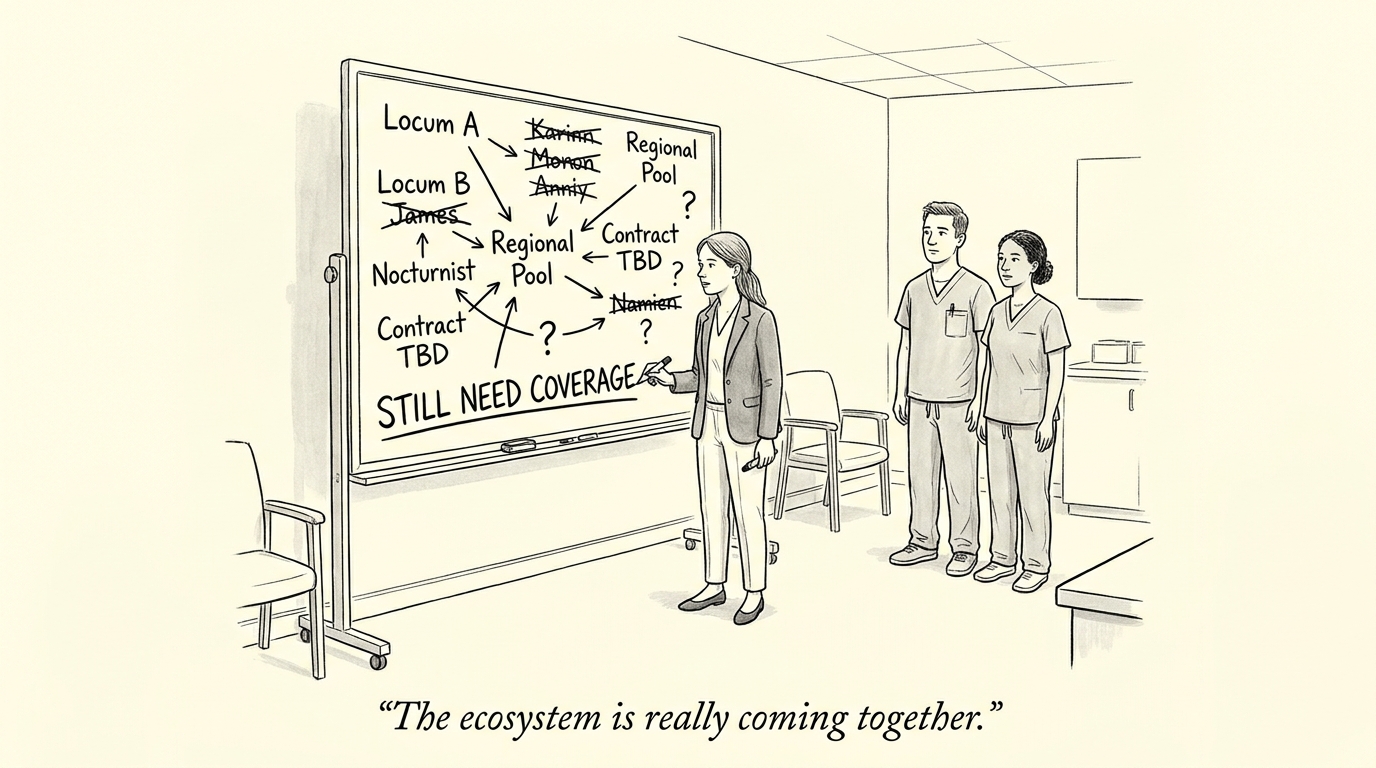
Expect more job ads, more contract variations, and more weird middle-ground roles. Keep a copy of your last contract, a calculator, and a healthy dose of skepticism. In five years the clinic whiteboard might show three different locum numbers, a nocturnist roster, and someone scribbling “still need coverage” in red marker. That image feels unfinished—and that’s the point.
Sources
Locum Tenens Staffing Leader VeloSource Announces Strategic Acquisitions of Quest and SyncX to Build Enterprise Healthcare Workforce Ecosystem – PRWeb
Locum tenens provider VeloSource acquires two firms – Staffing Industry
VeloSource Acquires Quest and Syncx to Build Healthcare Workforce Solutions Platform – Pulse2
10 states where APPs outnumber physicians — 6 notes – Becker’s Hospital Review
Health Systems Redesign Call Coverage as Physicians Exit Earlier – Becker’s Hospital Review
41 Hospital Jobs Ranked by Share of Healthcare Workforce – Becker’s Hospital Review
The Health Care Workforce Crisis We Keep Ignoring – KevinMD