
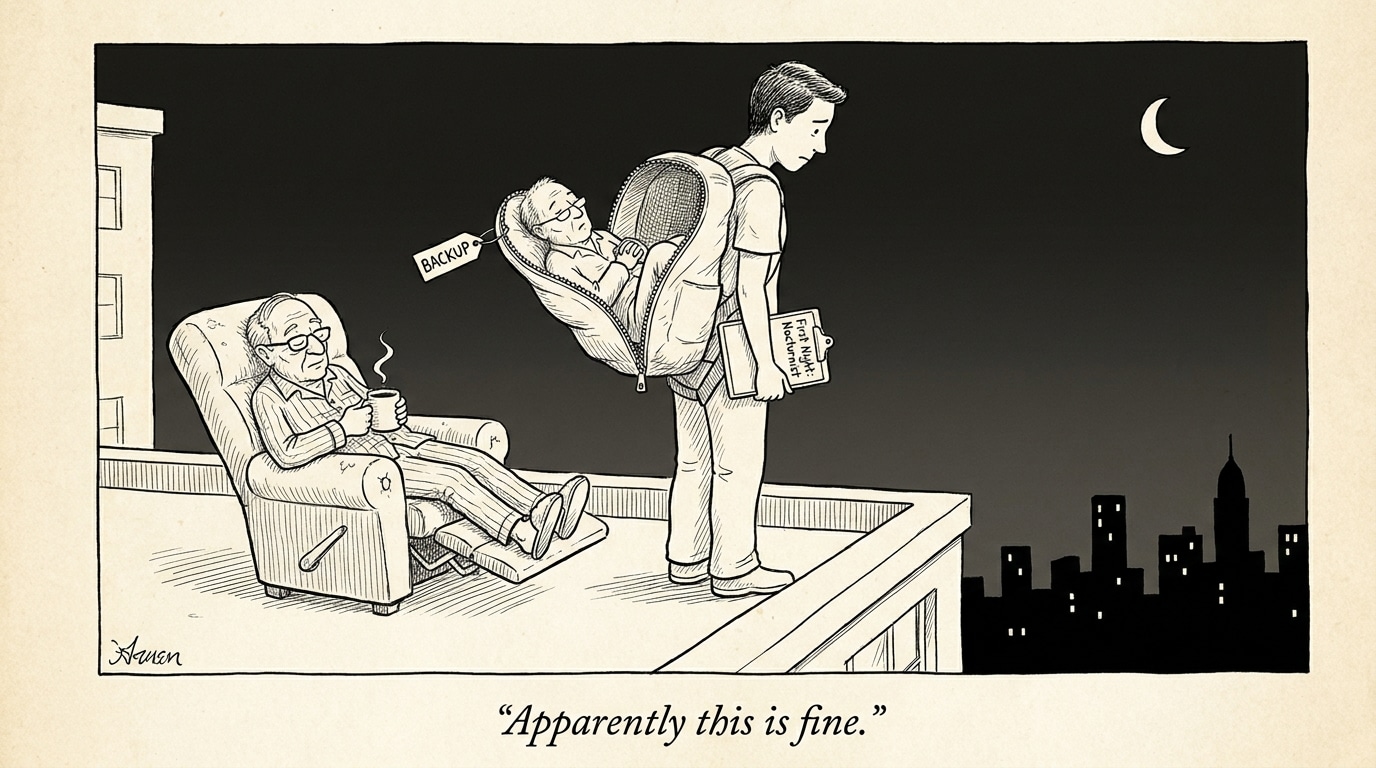
You’re a PGY3 about to start your first nocturnist job in two months, and you’re lying awake at 2 AM wondering if you actually know anything. You’ve passed your boards. You’ve survived thousands of patient encounters. You’ve made decisions at 3 AM with an attending who was technically supervising you from home but definitely asleep. And yet the thought of doing this without a safety net makes you want to throw up.
Here’s what nobody tells you: almost everyone finishing residency feels this way. The fear of independent practice isn’t a bug in your training—it’s a feature of being someone who actually understands what’s at stake. The problem is that medicine doesn’t leave much room for admitting you’re scared, so everyone assumes they’re the only one.
Why This Fear Is Different From Medical School Anxiety
In medical school, you were afraid of looking stupid. In residency, you were afraid of missing something. As a new attending, you’re afraid of being the last line of defense—and that’s a different kind of fear.
The difference matters because the solution isn’t more studying. You could read another 500 UpToDate articles and still feel unprepared, because the anxiety isn’t about knowledge gaps. It’s about identity. For years, your professional identity has been ‘trainee.’ Someone else was ultimately responsible. Now you’re the someone else.
This shift hits hardest for residents who trained at academic centers where attendings were always nearby, or in specialties where you rarely made truly independent decisions. If you spent three years with someone always available to bail you out, the prospect of flying solo feels like jumping without checking if your parachute is packed.
The Imposter Syndrome Trap
Here’s the thing about imposter syndrome: it’s not entirely irrational. You are going to be less experienced than the attendings around you. You will encounter situations you’ve never seen before. The question isn’t whether you’ll feel like an imposter—it’s whether you let that feeling paralyze you.
The trap is thinking that confidence comes before competence. It doesn’t. Confidence comes from doing the thing, surviving it, and realizing you didn’t kill anyone. Then doing it again. And again. Until one day you realize you’re not pretending anymore.
New attendings who struggle most are often the ones who expect to feel ready before they start. They keep waiting for a moment of clarity that never comes. Meanwhile, the ones who do fine are the ones who accept that the first six months will be uncomfortable and plan accordingly.
Practical Strategies That Help
Build your backup network before day one. Identify 2–3 colleagues you can call when you’re stuck. This isn’t weakness—it’s smart practice. The attendings who’ve been doing this for 20 years still call colleagues for second opinions. The difference is they don’t feel guilty about it.
Negotiate structured support in your contract. Some jobs offer formal mentorship, reduced patient loads for the first few months, or guaranteed backup coverage. These aren’t perks for weak doctors—they’re signs of an employer who understands transitions. If your contract doesn’t include any ramp-up period, ask why.
Create decision frameworks for your most common scenarios. The anxiety spikes when you’re facing an unfamiliar situation at 3 AM with no one to ask. Build mental algorithms for the bread-and-butter cases in your specialty. You won’t eliminate uncertainty, but you’ll contain it.
Accept that your first year will be harder in some ways. In residency, the hours were brutal but the cognitive load was shared. As an attending, the hours might be better but the mental weight is all yours. Budget for this. Don’t sign up for a brutal schedule thinking it’ll feel like residency. It won’t.
What Your Job Choice Has to Do With It
The transition anxiety isn’t just about clinical skills—it’s also about whether your first job sets you up for success or failure. Some positions are better for new graduates than others, and this has nothing to do with prestige.
A high-paying rural job with no backup and 24/7 solo coverage might look great on paper, but it’s a terrible first job if you’re anxious about independent practice. Conversely, a slightly lower-paying position at a community hospital with experienced colleagues and reasonable backup might be worth the salary difference in reduced stress alone.
When evaluating offers, ask specifically about new physician support. How many new graduates have they hired? What happened to them? Is there someone you can call at 2 AM, or are you truly alone? The answers tell you whether this employer understands the transition or just needs a warm body.
The Fear Doesn’t Fully Disappear
A year from now, you’ll be more confident. Two years from now, you’ll handle situations that would have terrified you today. But the baseline anxiety of being responsible for patients’ lives? That doesn’t go away entirely. It just becomes manageable.
The attendings who seem unflappable aren’t fearless. They’ve just learned to function with the fear instead of being paralyzed by it. That’s the actual goal—not eliminating the anxiety, but building a professional life where you can do good work despite it.
Your training prepared you better than you think. The fear you’re feeling is evidence that you take this seriously, not evidence that you’re not ready. The residents who should worry are the ones who feel no anxiety at all—they’re the ones who don’t understand what they don’t know.
Start the job. Make the calls. Ask for help when you need it. When the pager finally fires and the unit lights flicker in the quiet pre-dawn, what will you do next?