This analysis synthesizes 4 sources published February 2026. Editorial analysis by the PhysEmp Editorial Team.
Why this matters now
The accelerated $50 billion federal rural health transformation program marks one of the most substantial federal investments in rural care in decades. By shifting funding authority and execution responsibility toward state-led implementation, the initiative creates both concentrated opportunity and structural risk for workforce expansion and access stabilization in geographically isolated communities.
As state coalitions and private partners mobilize to operationalize funding, the central question is whether these resources will translate into durable workforce capacity or short-term project cycles. The policy design and execution decisions made over the next 12–36 months will directly influence rural clinician supply, recruitment pipelines, compensation pressures, and long-term care access.
These developments sit squarely within the broader dynamics of the Healthcare Workforce & Labor Market, where federal funding structures and state-level implementation choices shape physician distribution, staffing economics, and the stability of rural care delivery systems for years to come.
Program architecture and state-led execution
The program’s design emphasizes state-level plans and alliances to translate federal funding into local projects. That architecture encourages innovation through diversified implementation models but also requires advanced project management capabilities at the state and system levels. States will act as conveners and allocators: they will decide which service lines, facilities, and workforce initiatives receive sustained investment.
For healthcare organizations and state health agencies, this design means capability gaps—especially in program management, cross-sector contracting, and metrics-aligned governance—will determine which communities realize benefits. Standalone rural hospitals, public health departments, and local clinics will need to partner with entities that can execute complex capital and service transformation plans at scale.
Financial stewardship and the CFO perspective
From a finance leadership standpoint, the program is both opportunity and puzzle. Funding can underwrite capital upgrades, telehealth infrastructure, and retention incentives, but it will also bring new reporting requirements, matched funding expectations, and the need to align investments with measurable outcomes.
CFOs must weigh one-time infusion benefits against recurring operating costs. Projects that increase service volume or reduce avoidable transfers may strengthen margins; projects that are capital-heavy but do not address downstream staffing and referral flows risk creating unfunded cost centers. Financial leaders will need new forecasting models that incorporate workforce recruitment timelines, licensure and credentialing delays, and variable patient utilization in dispersed populations.
Workforce development: recruitment, retention, and role redesign
The most direct pathway from funding to improved access runs through the workforce. Dollars can fund education pipelines, loan repayment programs, and retention bonuses; however, scaling clinician supply in rural markets requires sustained attention to career development, scope-of-practice optimization, and team-based care models.
Successful workforce strategies will combine short-term incentives with long-term structural changes: expanded roles for advanced practice providers, investment in community health worker programs, and partnerships with academic centers for rural training tracks. Importantly, workforce investments must align with service-line redesign so that newly recruited clinicians have the clinical and operational support to practice effectively.
Call Out: Workforce alignment matters more than incentives alone. Funding that prioritizes integrated training, supervisory capacity, and role redesign yields higher clinician retention and better patient access than incentive-only approaches.
Access models and technology-enabled care
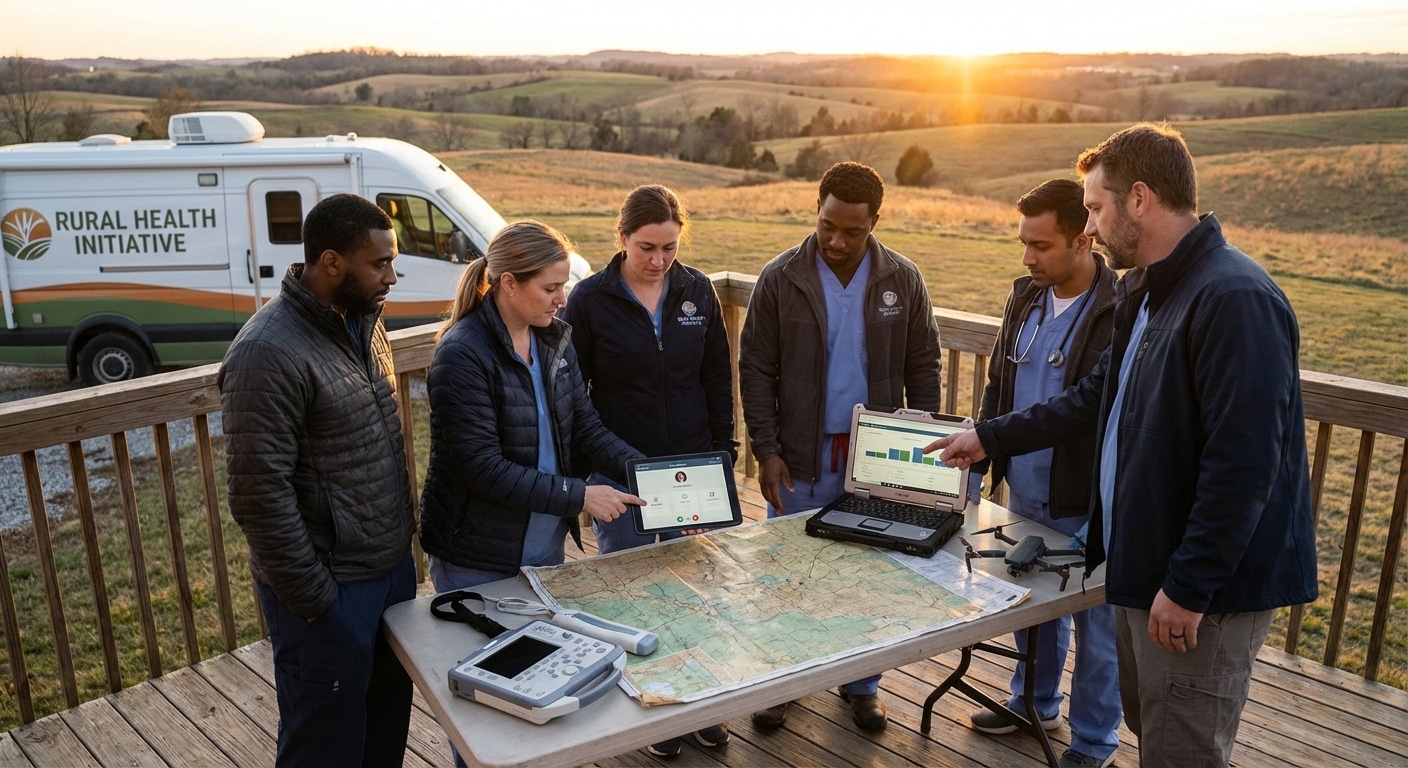
The program incentivizes varied access models—telehealth expansion, mobile clinics, and hub-and-spoke regional networks. Technology is a multiplier but not a panacea: broadband gaps, digital literacy, and reimbursement alignment remain barriers. Effective deployments will pair telehealth with in-person capacity-building and clear clinical pathways for escalation and referrals.
Regional coordination can reduce unnecessary transfers and concentrate specialty care in designated hubs while enabling local sites to manage primary and urgent needs. That requires interoperable data flows, shared quality metrics, and agreements that allocate responsibility and revenue across partners.
Implementation realities and governance risks
State-led execution introduces governance complexity. Decision-makers must balance equitable geographic distribution against return-on-investment criteria. There is a real governance risk that well-resourced regions or influential systems capture disproportionate funding, leaving the most isolated communities under-resourced.
Transparent criteria, community engagement, and robust measurement frameworks are essential to mitigate capture risk. Additionally, private partners and consortia engaged to accelerate deployment bring execution capability but also require oversight to ensure public-interest objectives remain central.
Call Out: Strong governance and transparent allocation criteria reduce the risk that program dollars entrench existing inequities. Measurement frameworks tied to access, workforce stability, and patient outcomes are critical success levers.
Implications for healthcare organizations and recruiting
For employers, recruiters, and workforce planners, the program changes the playing field. Expect elevated competition for clinicians willing to work in rural settings, but also new funding streams to underwrite recruitment and retention. Organizations that proactively redesign roles, invest in local training pipelines, and offer structured career progression will be more successful in attracting talent.
Recruiting strategies should emphasize community integration, flexible employment models (part-time, shared regional roles), and investment in non-clinical supports—housing, spousal employment assistance, and continuing education. For health systems and staffing firms, there is an opening to offer turnkey workforce solutions that combine recruitment, onboarding, and ongoing professional development aligned with funded transformation projects.
Conclusion: strategic choices will determine lasting impact
The $50 billion rural health transformation program is an inflection point. Its state-focused execution and reliance on cross-sector alliances create opportunities to rewire rural care delivery and clinician labor markets, but success is not automatic. Strategic alignment across finance, workforce development, technology, and governance is necessary to translate funds into durable access improvements.
Health systems, state agencies, and recruiters should treat the program as a multi-year change program that requires rigorous project management, transparent allocation rules, and workforce strategies rooted in role redesign and local training. Where those elements converge, the investment can move from one-time projects to lasting improvements in rural health access and workforce stability.
Sources
Alliance companies will help accelerate $50 billion rural health programs – Healthcare Finance News
Assessing Rural Health Transformation Program Through CFO Lens – HealthLeaders
Fairbanks eyes federal rural healthcare funding – News-Miner
SAIC launches alliance to accelerate state-led execution of $50B rural health care transformation program – Drug Store News