
Time-to-Fill and Cost-to-Hire: Where Recruiting Breaks Down

Every open role on a staffing report tells a story — and more often than not, it isn’t a story about a scarce labor market. It’s a story about internal friction that nobody has bothered to fix.
AI Scribes: Solving Burnout or Shifting It

AI scribes lower documentation time but often reallocate cognitive and supervisory burdens to clinicians. The net effect on burnout depends on workflow redesign, governance, and new role definitions. Recruiters and executives must measure outcome-based metrics and update hiring profiles; physicians should probe verification expectations and support structures.
After 39 Days: What NYP’s Deal Signals

The NYP tentative agreement that ended a 39‑day nurses strike resolves immediate disruption but exposes structural workforce problems—chronic understaffing, reliance on agency labor, and misaligned incentives. Hospitals must convert negotiated gains into measurable staffing reforms; physicians should evaluate offers by staffing metrics as well as pay.
States Rewire Licensing to Recruit Immigrant Doctors

States are altering licensure and immigration pathways to accelerate hiring of internationally trained physicians, creating both near-term staffing opportunities and new operational demands for recruiters. Success hinges on integrating immigration case management, state-specific licensure navigation, and structured onboarding into recruitment strategies while pairing these efforts with long-term investments in local training.
Who Is Responsible for Clinical AI?

Legal and ethical stakes for clinical AI are rising. This piece analyzes liability dynamics, how blame may be attributed among clinicians, vendors, and institutions, documentation best practices, and the ethical question of whether clinicians may be expected to use reliable AI—arguing governance is the practical solution.
Rural Health Transformation: Workforce, Access, and Policy

The $50B federal rural health transformation program is shifting execution to state-led alliances, creating both opportunity and risk for rural workforce development and access. This analysis examines program architecture, CFO considerations, workforce strategies, access models, governance risks, and recruiting implications. Success will depend on aligned financing, role redesign, and transparent governance to turn funding into durable improvements.
States Tighten AI Oversight in Healthcare

State pilots are bringing AI into live clinical workflows while federal agencies build dedicated digital health capacity. This post examines how state experimentation and federal institutionalization are reshaping governance, operational requirements, and recruiting priorities for health systems adopting AI.
Nurse Protests and Systemic Strain
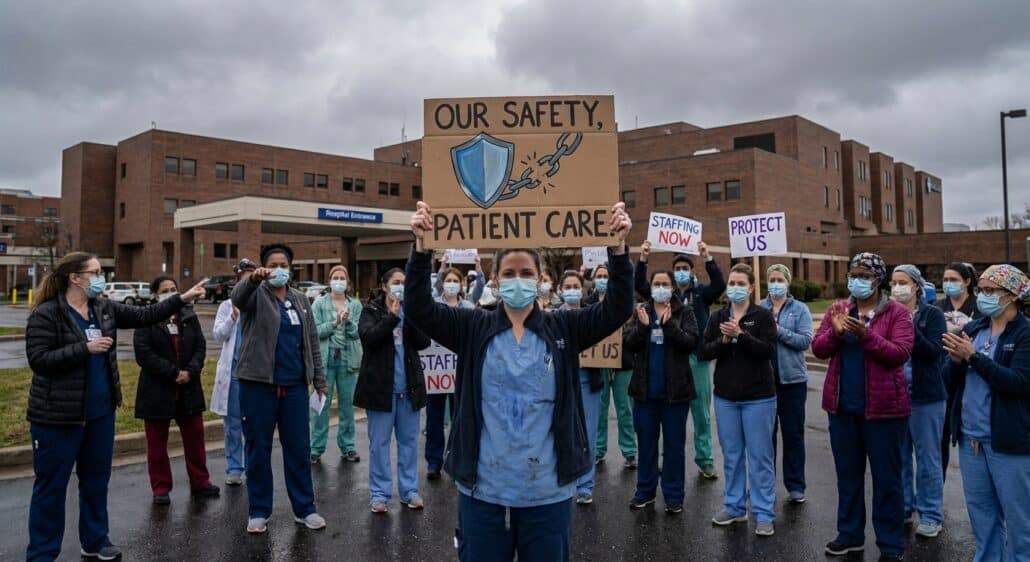
A growing wave of nurse protests is signaling deeper staffing and governance failures in hospitals. Health leaders must pair predictive workforce analytics with enforceable governance, transparent remediation, and clinician participation to restore trust, reduce turnover, and protect patient safety.
Reframing Physician Burnout: Leadership, Flexibility, Retention

Organizations can reduce physician burnout and improve retention by combining relational leadership, schedule flexibility (including locum tenens), operational redesign to cut administrative load, and cultural investments that rebuild peer support. Recruitment should highlight autonomy and predictability as core benefits.
Bridging Rural Physician Shortages

An analytical synthesis of recent efforts to address rural physician shortages: funded training pipelines, preference-matching hiring tech, and vendor coalitions offer complementary benefits, but funding instability threatens sustainable impact. Recruiters should pair data-driven sourcing with community investment and advocate for multi-year financing tied to retention outcomes.