Why this theme matters now
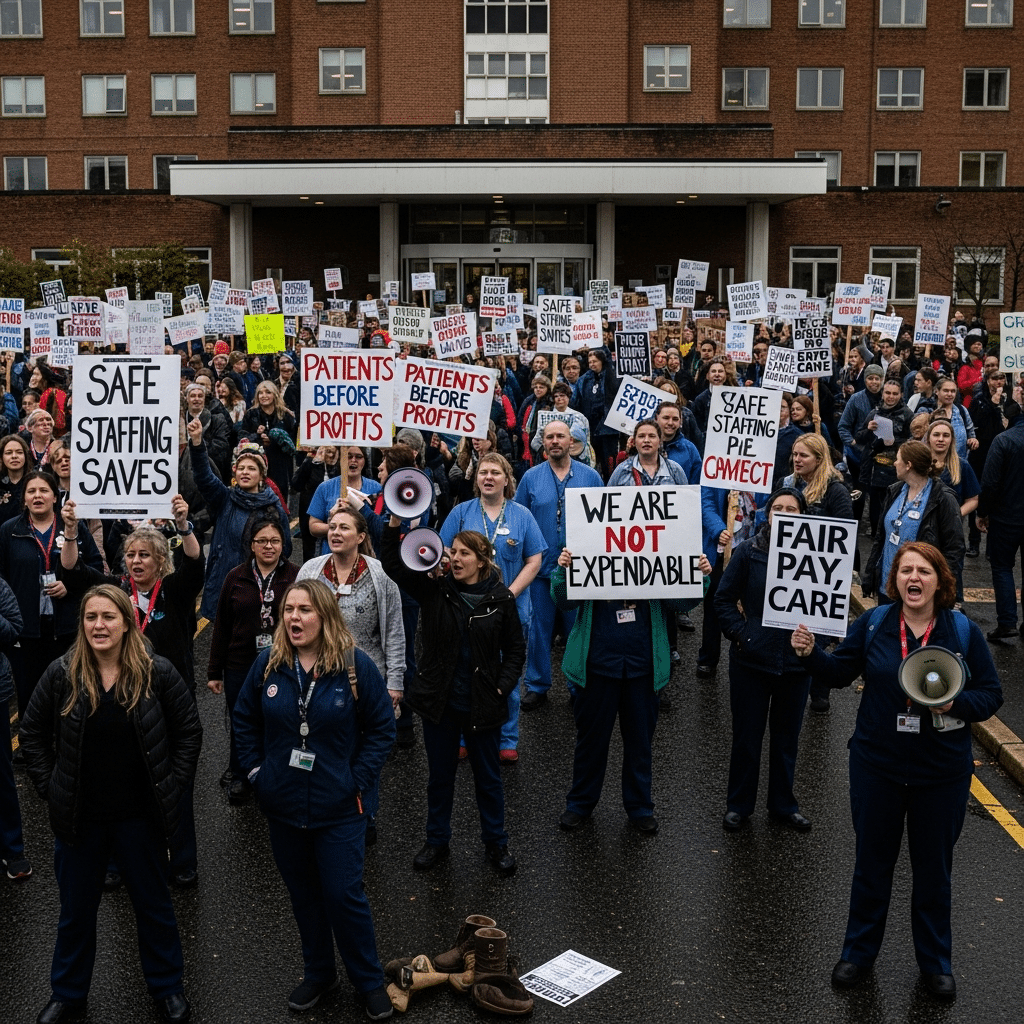
Over the past months, coordinated labor actions at several high-profile hospital systems have moved beyond isolated grievances to a broader expression of workforce unrest. These events are not limited to a single city or employer; they mark a moment when staffing ratios, workload, contract terms, and retention have become bargaining-table priorities visible to the public, regulators, and the health-care labor market. For health systems, payors, and staffing firms, the patterns of these actions signal structural strain across the healthcare workforce and labor market that will shape hiring, contracting, and long-term workforce planning.
Strike geography and bargaining outcomes: a new patchwork
What we’re seeing is a geographically heterogeneous response: some facilities have reached settlements while others—often the most prestigious or resource-rich complexes—remain focal points for labor pressure. That patchwork produces uneven operational disruptions and creates local precedents that ripple outward. Where contracts settle quickly, employers adopt terms that will influence bargaining expectations elsewhere; where negotiations stall, high-visibility actions draw political and media attention that can strengthen bargaining leverage for other groups.
Staffing ratios, workload, and the economics of retention
At the core of these labor actions are persistent complaints about unsafe or unsustainable workload. Nurses point to the time required per patient, administrative burdens, and insufficient backfill for absences. From a systems perspective, those conditions exacerbate turnover, increase reliance on agency labor, and raise per-patient costs over time. The short-term use of travel nurses may stabilize staffing metrics but also elevates margins for third-party providers and increases expense volatility for hospitals—creating a feedback loop that makes long-term workforce planning harder.
Call Out: When hospitals lean on temporary staffing to mask shortages, they increase operational cost and weaken institutional knowledge—reducing patient continuity and raising future recruitment costs.
Public perception and political leverage
Large-scale pickets and multi-day strikes convert internal bargaining disputes into public narratives about patient safety and workforce dignity. That visibility invites local political actors to intervene, either through public support for workers or pressure on institutions to restore services. Political attention can accelerate contract resolution or, conversely, harden positions if institutions view concessions as precedent-setting. For health systems, reputational risk—measured in community trust and patient volume—becomes an implicit currency in negotiations.
What this means for recruitment and workforce strategy
Recruiters and talent teams must operate in an environment where candidate expectations shift rapidly. The demand side now includes explicit non-compensation factors: predictable scheduling, transparency on staffing ratios, and clear pathways for professional development. Job postings that emphasize competitive pay but ignore workplace design will underperform. Additionally, employers should expect increased candidate and employee due diligence: clinicians will evaluate not only compensation but employer responsiveness to staffing crises and the presence of credible labor relations strategies.
Call Out: Recruiting in this climate requires articulating how the employer protects clinician workload—clear policies on staffing ratios, float-pool design, and mental health supports are recruitment differentiators.
Operational and financial implications for health systems
Financially, extended bargaining and strikes produce direct costs (overtime, agency staffing, legal fees) and indirect costs (post-strike recruitment, potential loss of elective volume, and long-term wage inflation). Operationally, systems must balance short-term continuity with long-term cultural repair. Successful strategies tend to combine targeted investments in retention (education, schedules, safe staffing practices) with transparent communication and measurable workforce metrics tracked by leadership. Failure to adopt these approaches risks cyclical churn and recurrent labor actions.
Strategic considerations for employers and recruiters
For hiring leaders and staffing firms, this wave of labor actions is a strategic inflection point. Short-term tactics—like premium pay—will remain necessary but insufficient. Employers that can formalize safer staffing practices, demonstrate meaningful improvements in workload, and show a credible commitment to clinician governance will gain leverage in both recruitment and bargaining. Tools that quantify staffing ratios and link them to outcomes will become bargaining chips and recruiting assets alike.
Conclusion: implications for the healthcare labor market
The recent labor actions are a signal, not an isolated phenomenon. They expose systemic imbalances between patient demand, clinician capacity, and institutional models built for different staffing economics. For the healthcare industry and recruiting professionals, the imperative is twofold: treat these disputes as operational risk to be mitigated, and as a strategic opportunity to redesign roles, schedules, and compensation models to retain clinicians. Platforms and marketplaces that surface transparent role expectations, shift away from one-size-fits-all pay, and help match clinicians to organizations with aligned staffing philosophies will play a growing role.
Sources
Providence, Cedars-Sinai nurses plan 5-day strike – Becker’s Hospital Review
10,000 NYC nurses return to work after historic strike; thousands still on picket lines – PIX11
Nurse strikes focus moves to Manhattan’s richest hospital complex as contracts settle elsewhere – Labor Notes