This analysis synthesizes 4 sources published February 2026. Editorial analysis by the PhysEmp Editorial Team.
Why this matters now
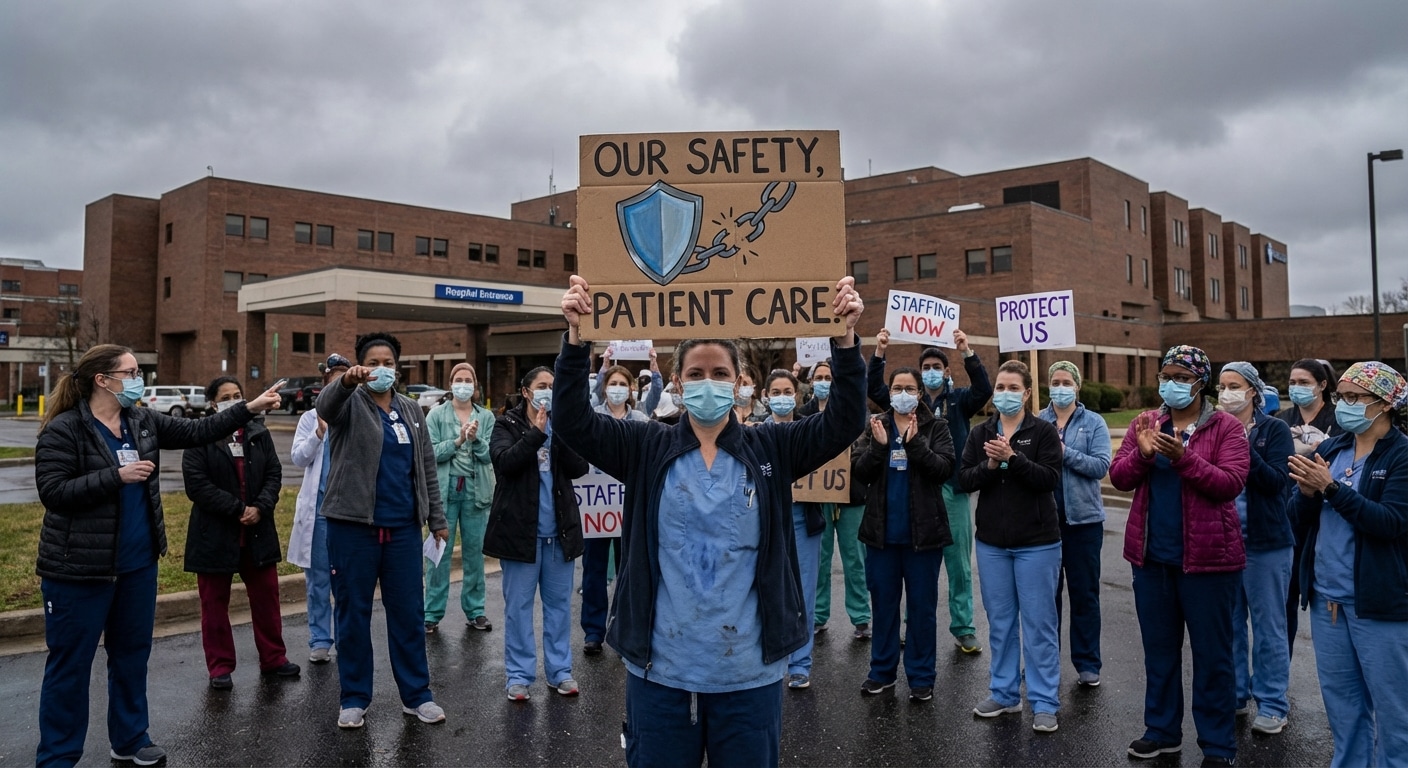
In recent weeks, nurses at multiple U.S. hospitals have taken to demonstrations and strikes to spotlight what they describe as unsafe staffing, punitive discipline, and management practices that degrade care. These actions matter beyond labor relations: they illuminate gaps in organizational systems for safety and oversight that directly affect the core pillar of AI in healthcare.
For executives, board members, and recruiting leaders, the wave of public clinician escalation is an indicator of persistent operational stressors rather than isolated disputes. Understanding the root causes and governance implications is essential for preventing erosion of clinical capacity and reputational risk.
Systemic symptoms: persistent mismatch between staffing and acuity
When clinicians repeatedly resort to public protest, it signals chronic misalignment between staffing models and the clinical workload. Complaints commonly reference high patient acuity, mandatory overtime, and inconsistent scheduling practices. These are not merely morale issues; they are operational signals that staffing algorithms, float pools, and surge-response plans are not calibrated to real-time variations in demand.
Hospitals that rely on short-term fixes — extended shifts, agency staff, or temporary unit closures — often delay the structural changes needed to rebalance capacity. Over time, this produces a feedback loop: higher workload reduces retention, which further worsens staffing ratios and increases the probability of safety events, prompting more public complaint.
Governance gaps and the erosion of trust
Repeated public grievances raise questions about the effectiveness of internal escalation pathways and how leadership responds to safety reports. Governance failures surface when frontline input is not translated into binding corrective actions or when disciplinary measures are perceived as substitutes for system improvement.
From a boardroom perspective, recurring protests create an accountability imperative: reconcile published safety metrics with clinician experience, document corrective actions, and ensure mechanisms exist for independent review when patterns of unsafe staffing persist. Without transparent governance, clinician trust declines and risk exposure — regulatory, legal, and reputational — increases.
Call Out: Recurring nurse protests are often the visible expression of invisible governance breakdowns — when escalation channels fail, clinicians escalate publicly. Boards should treat these incidents as safety and governance failures, not only labor disputes.
Labor dynamics: recruiting, retention, and workforce strategy
Public labor action reshapes the labor market signals that recruits and clinical staff use to evaluate employers. Prospective hires increasingly weigh workplace safety, predictable schedules, and clinician voice alongside compensation. Organizations that cannot demonstrate enforceable staffing commitments will face higher churn and longer recruitment cycles.
For existing staff, sustained overload accelerates burnout and career exit decisions. Talent strategies that emphasize transient solutions (higher pay for overtime, short-term bonuses) without tangible governance reforms will struggle to achieve long-term stability. Successful recruiting will require demonstrating measurable reductions in workload variability and formal clinician participation in staffing decisions.
Data, technology, and enforceable operational rules
Advanced analytics can improve forecasting by incorporating acuity, admission patterns, and seasonal variability. However, predictive insights alone are insufficient. Real benefit accrues when analytics are embedded within governance frameworks that translate triggers into mandatory operational responses — for example, automatic escalation to staffing committees when staffing-to-acuity thresholds are breached.
Equally important are protections for clinicians who report safety concerns and transparent follow-through on remedial actions. Combining predictive models with documented, enforceable staffing policies and regular public reporting creates a credible path to rebuilding clinician confidence.
Call Out: Predictive staffing tools must feed enforceable governance rules. Without predefined remediation steps and clinician safeguards, analytics will fail to prevent escalation and will not restore trust.
Implications for the healthcare industry and recruiting
The recent protests are a practical indicator that traditional staffing levers are reaching their limits. Health systems should view these events as strategic signals to shift from reactive, short-term workforce tactics to durable governance reforms: align budgets with acuity-based staffing, codify escalation triggers, and incorporate frontline representatives into safety and staffing committees.
For recruiting teams, the value proposition to candidates must now include demonstrable governance practices: documented staffing commitments, transparent safety reporting, and evidence of sustained workload improvements. Organizations that can credibly show these elements will have an advantage attracting and retaining clinicians in a competitive market. Conversely, failure to act will increase turnover costs, degrade care quality, and invite external scrutiny from regulators and accreditors.
Sources
Patient advocate nurses raise concerns over working conditions – Daily Herald
Mission Hospital protest: Nurses speak out on discipline, safety – Citizen-Times