
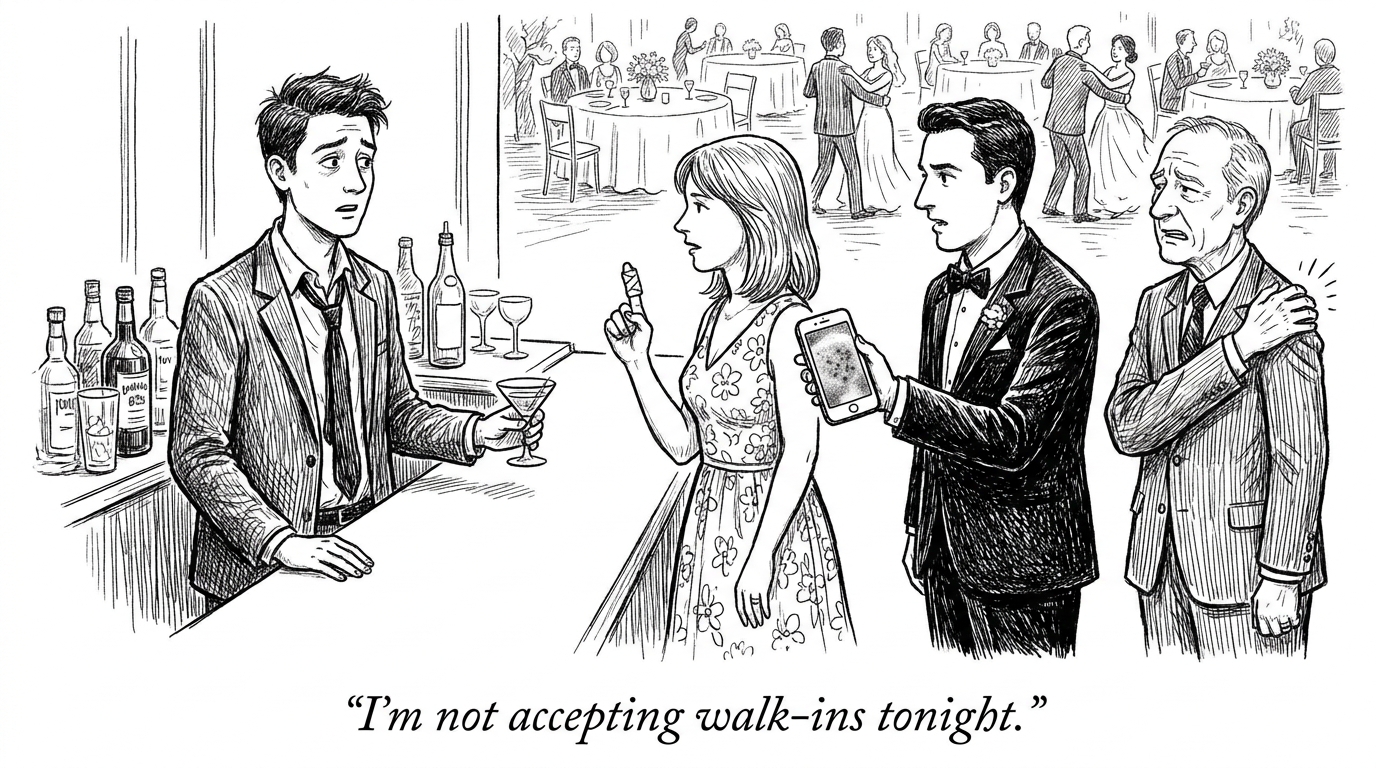
At a friend’s wedding, you’re finally off for the weekend, and your partner’s uncle corners you by the bar. “So you’re a doctor, right? I’ve had this pain in my shoulder for three weeks…” Before you know it, you’re running a differential diagnosis between the cocktail hour and dinner while others are enjoying themselves. If you’ve felt the demands of residency and watched your precious off-hours evaporate into free curbside consults, you know this isn’t sustainable.
Some residents have started lying about their training year—telling people they’re “just a first year” or “still in the classroom” to dodge the onslaught of medical questions. Others claim they’re in a specialty that has nothing to do with the question being asked. The fact that this is a common survival strategy tells you something: the problem is real, it’s exhausting, and nobody teaches you how to handle it.
Why This Feels So Hard to Handle
Here’s the uncomfortable truth: you feel guilty saying no because medicine trains you to always be available. The culture of “put the patient first” doesn’t come with an asterisk that says “except at social events when you’re off the clock.” So when someone asks about their rash or their father’s chest pain, declining feels like a betrayal of your identity.
But there’s a difference between being a physician and being everyone’s unpaid on-call consultant. At the hospital, you have context, resources, and liability protections. At a barbecue, you have none of those things—just a vague description of symptoms and the expectation that you’ll provide a diagnosis between bites of potato salad.
The real cost isn’t just the minutes you spend talking about someone’s knee. It’s the mental shift. You were finally relaxed, maybe even enjoying yourself, and now you’re back in clinical mode. That cognitive switch has a price, and it compounds over time. Residents who never learn to protect their off-hours often find that they don’t have any off-hours left—just work and work-adjacent obligations.
Scripts That Actually Work
The goal isn’t to be rude or dismissive. It’s to redirect the conversation without damaging the relationship or spending long explaining why you can’t help. Here are approaches that work in practice:
The Redirect: “That sounds frustrating. I’d really want you to see someone who can actually examine you—I’d hate to steer you wrong without being able to look at it properly.” This acknowledges their concern while making clear that a cocktail party isn’t a clinic.
The Specialty Deflection: “I’m actually in [your specialty], so I’d be totally out of my depth on that one. But your primary care doc would be the right person to ask.” Even if the question is vaguely related to your field, you’re under no obligation to advertise that.
The Time Boundary: “I’d love to help, but I’m really trying to be off-duty tonight—it’s been a brutal week. Can I point you toward someone who can actually give you the time this deserves?” This is honest and sets a clear limit.
The Liability Shield: “I can’t really give medical advice outside the hospital—it gets into weird liability territory. But definitely worth bringing up with your doctor.” This one has the advantage of being true.
The Deeper Issue: Who Are You Outside the Hospital?
The free medical advice problem is a symptom of a bigger challenge: learning to exist as a person who happens to be a physician, rather than a physician who occasionally tries to have a personal life. If every social interaction becomes a medical consultation, you never actually get to be off.
This matters for burnout prevention in a very direct way. The residents who flame out aren’t always the ones with the hardest rotations—they’re often the ones who never built any separation between work and life. When your identity is entirely wrapped up in being a doctor, every moment becomes a potential work moment. That’s not sustainable for a career that’s going to last 30+ years.
Setting boundaries around free medical advice is practice for the bigger boundaries you’ll need to set throughout your career: saying no to extra shifts when you’re exhausted, protecting vacation time, choosing jobs that respect your life outside the hospital. The skills are the same.
What About Family?
Family is trickier than strangers at parties. Your mom isn’t going to accept “I can’t give medical advice outside the hospital” when she’s worried about a symptom. And honestly, you probably don’t want to blow her off entirely.
The approach here is different: set expectations about what you can and can’t do. “I can help you think through whether this is something you need to see someone about, but I can’t be your doctor—I’m too close to the situation to be objective, and I don’t have access to your records or the ability to examine you properly.” This keeps you in a supportive role without becoming their primary care physician by default.
For the persistent family member who wants to text you photos of rashes at 11 PM, you may need to be more direct: “I love you, but I can’t be on call for medical questions when I’m already on call at the hospital. Let’s set up a time to talk about this when I’m actually able to focus on it.”
The Bottom Line
Protecting your personal time isn’t selfish—it’s necessary. The same boundaries that help you survive residency will help you build a sustainable career. You’re allowed to be a person at parties. You’re allowed to have conversations that don’t involve someone else’s symptoms. And you’re definitely allowed to enjoy a wedding without providing a free consultation by the bar.