
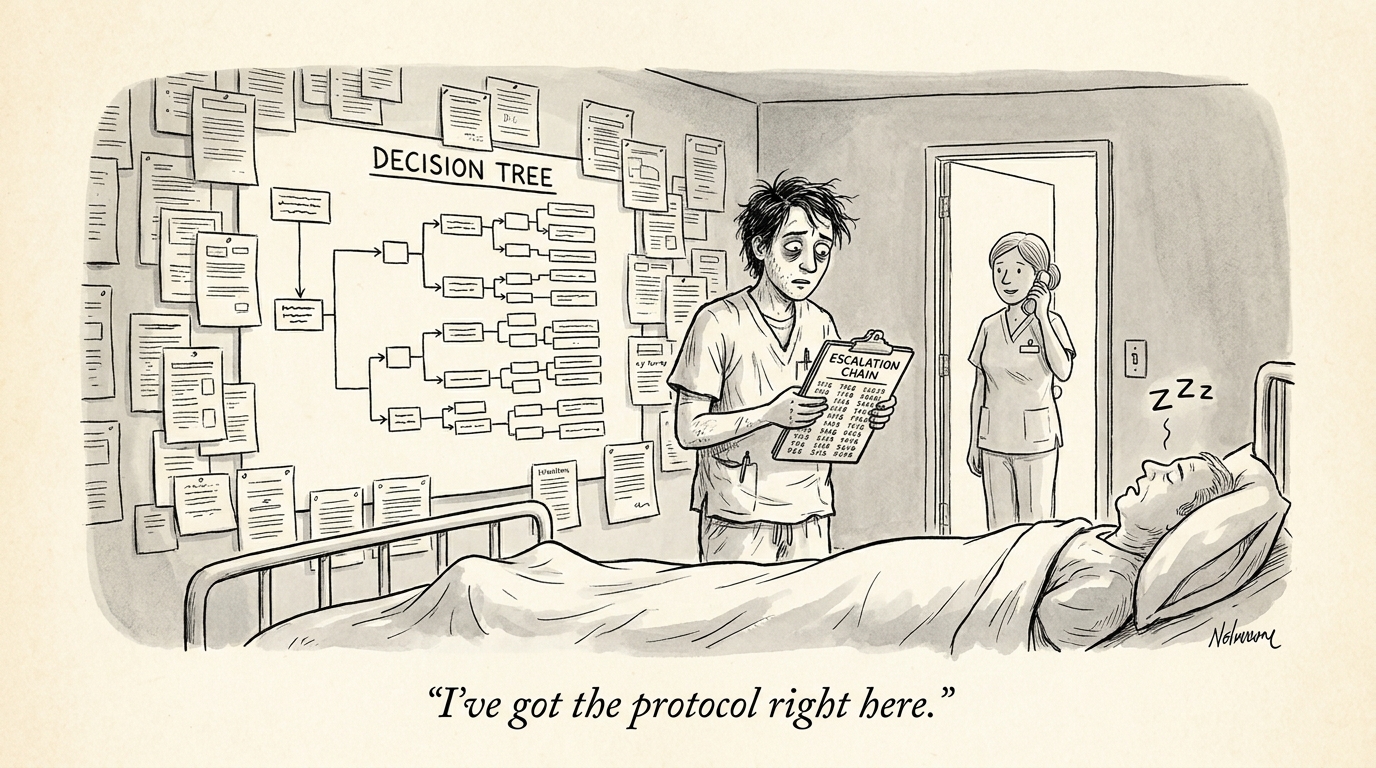
It’s 2 AM, you’re three months into intern year, and the nurse is calling about a patient with worsening hypotension. Your senior is covering two other floors. The attending is asleep at home. For the first time, the decision tree leads to you.
This moment—the first real solo night shift—feels like a rite of passage in residency that nobody really prepares you for. The anxiety isn’t irrational. You’re being asked to make independent clinical decisions with real consequences, often in the middle of the night when your cognitive reserves are lowest. The question isn’t whether you’ll feel unprepared. You will. The question is whether you’ve built the systems to function effectively despite that feeling.
Build Your Resource List Before You Need It
The worst time to figure out how to manage sepsis is when you’re standing at a patient’s bedside at 3 AM. The second-worst time is googling it on your phone while the nurse watches.
Before your first night shift, spend 30-60 minutes building a quick-reference document for the scenarios you’re most likely to encounter. For most interns, this includes:
- Sepsis workup and initial management (fluid bolus parameters, when to start pressors, antibiotic choices)
- Chest pain evaluation algorithm
- Acute respiratory distress approach
- Hypotension differential and initial steps
- Altered mental status workup
- Electrolyte replacement protocols (your hospital’s specific thresholds)
Don’t reinvent the wheel. UpToDate is useful but slow when you need answers fast. Many programs have internal quick-reference guides—ask your seniors. Apps like MDCalc, EMRA Antibiotic Guide, and ICU One-Pagers exist specifically for this purpose. The goal isn’t to memorize everything; it’s to know exactly where to look when you need it.
Know Your Escalation Chain
Calling for help isn’t a sign of weakness. It’s a clinical skill. The residents who get into trouble aren’t the ones who call too often—they’re the ones who wait too long because they’re afraid of looking incompetent.
Before your shift, know exactly who to call and in what order:
- Your senior resident: First line for most questions. They’ve been where you are and expect calls.
- Specialty fellows: Know the direct numbers for cardiology, nephrology, ICU. Don’t go through the operator at 3 AM if you don’t have to.
- Your attending: Yes, you can call them. Most attendings would rather get a 4 AM call than learn about a deteriorating patient at morning rounds.
- Rapid response team: If a patient is circling the drain, this isn’t the time to prove yourself. Call the team.
Write these numbers down. Put them in your phone. Tape them to your clipboard. When your heart rate is 120 and the patient’s is higher, you won’t remember where you saved that contact.
The Mental Preparation Nobody Talks About
Clinical knowledge is half the battle. The other half is managing your own nervous system when things get intense.
Accept that you will feel uncertain. This isn’t imposter syndrome—it’s an accurate assessment of your experience level. You’re an intern. You’re supposed to be learning. The confidence you’re looking for doesn’t come from knowing everything; it comes from having a process to follow when you don’t.
When you get a scary call, take five seconds before responding. Breathe. Then ask clarifying questions: What are the vitals? What’s changed? What have you already tried? This buys you time to think and ensures you’re working with accurate information.
If you’re an IMG, you may be carrying additional weight—wondering if your training prepared you adequately, whether your accent will affect how nurses perceive your competence, whether you belong here at all. You do. Your path to this point was harder than most, and that resilience is an asset. The clinical medicine is the same everywhere. Trust your training.
The Practical Logistics
Night shifts are physically brutal. Don’t make them harder than they need to be.
- Sleep before your shift. Even 4-5 hours makes a difference. Blackout curtains and earplugs are worth the investment.
- Bring food. The cafeteria closes. Vending machine Snickers at 4 AM is not a meal plan.
- Caffeine strategically. Coffee early in the shift, not at 5 AM when you need to sleep post-call.
- Know where to rest. Find the call room before you need it. Know how to work the door lock.
What This Teaches You About Your Career
Your first independent night shift is a preview of attending life. The autonomy that feels terrifying now is the same autonomy that makes medicine a career worth pursuing. Every decision you make alone—even the ones that keep you up at night—builds the clinical judgment that will eventually make you the person others call for help.
The anxiety doesn’t disappear completely. It just gets quieter as your pattern recognition improves and your confidence becomes earned rather than borrowed. That transition—from supervised trainee to independent physician—is what residency is actually for.
Your first night shift won’t be perfect. But if you’ve built your resources, know who to call, and accept that uncertainty is part of the process, you’ll get through it. And the next one will be slightly easier. The night won’t end with a bow. The next shift will arrive with a familiar fear, a glow from the monitors, and a decision point that shapes your career. What will you do when the next 3 AM call comes in?