
How Cost of Living and Location Shape Resident Quality of Life—And What to Consider Before You Commit
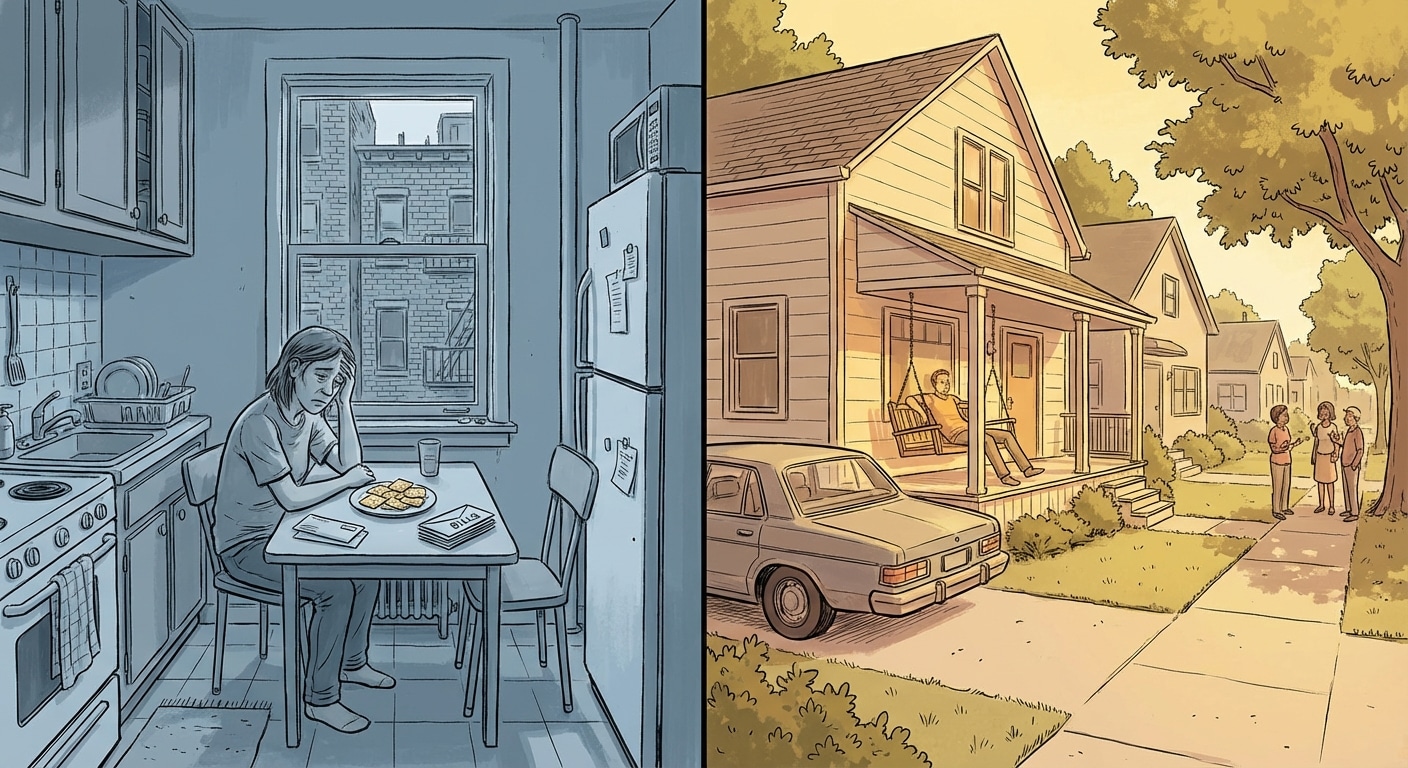
You matched at a prestigious program in a major city. Congratulations—now you’re paying $2,400 a month for a 500-square-foot apartment, your student loan payments are on pause because you literally can’t afford them, and your idea of a “night out” is splitting an appetizer at happy hour. Meanwhile, your co-resident who matched at a program in the Midwest just bought a house.
Location matters—a lot. And yet, when residents rank programs or consider their first attending job, geographic factors often take a backseat to reputation, specialty fit, or fellowship placement rates. That’s a mistake—because where you live during training (and beyond) directly shapes your finances, relationships, mental health, and overall quality of life.
These decisions don’t happen in isolation. They’re part of a broader set of tradeoffs residents face as they transition into the workforce—outlined in our Residency Survival Guide, which breaks down how to think about career, compensation, and lifestyle decisions during training.
This article will help you think through what location really means for your day-to-day well-being, so you can make smarter decisions about where to train and where to work.
The High-COL Trap: When Your Salary Doesn’t Stretch
Resident salaries are relatively standardized across the country—most programs pay somewhere between $60,000 and $75,000 in PGY-1, with modest increases each year. What’s not standardized is what that salary buys you.
In San Francisco, Boston, or New York, a resident salary puts you below the area median income. Rent alone can consume 40–50% of your take-home pay. Add in transportation, food, and the occasional attempt at a social life, and you’re often running a monthly deficit—or dipping into loans just to stay afloat.
Compare that to a program in a mid-sized city like Cincinnati, Pittsburgh, or Omaha. The same salary suddenly affords you a one-bedroom apartment (or even a small house), a car payment, and actual discretionary income. You’re not rich, but you’re not drowning either.
The practical takeaway: Don’t just look at salary. Look at salary relative to local cost of living. Tools like the MIT Living Wage Calculator or simple rent comparisons on Zillow can give you a realistic picture. If you’re comparing two programs, ask yourself: “What does my daily life actually look like here?”
The Rural Tradeoff: Affordability vs. Isolation
On the other end of the spectrum, rural and smaller community programs often offer significant financial advantages—lower rent, shorter commutes, sometimes even housing stipends or loan repayment incentives. Your dollar goes further, and the pace of life can feel more manageable.
But there’s a tradeoff that doesn’t show up on a spreadsheet: social isolation.
Residents in rural or less populated areas frequently report challenges with dating, making friends outside of work, and finding activities or communities that fit their interests. If you’re single, this can feel especially acute. If you’re moving with a partner, their job prospects and social needs matter too.
The practical takeaway: Be honest with yourself about what you need outside of work. Some people thrive in smaller communities and value the slower pace. Others feel isolated and disconnected. Neither is wrong—but ignoring this factor leads to burnout and regret.
How to Actually Evaluate Location (Beyond “It Seems Nice”)
When you’re ranking programs or considering job offers, here’s a framework for thinking through location:
1. Run the numbers. What’s the average rent for a one-bedroom apartment within a reasonable commute? What will you spend on transportation? Food? Use real data, not vibes.
2. Consider your support system. Are you close to family? Do you have friends in the area? Starting residency is hard enough without being completely isolated from everyone you know.
3. Think about your life outside the hospital. What do you do to decompress? If you need hiking trails, make sure they exist. If you need a dating scene, be realistic about what a town of 50,000 offers. If you need cultural diversity or specific community ties, factor that in.
4. Talk to current residents. Ask them directly: “What’s your life like outside of work? How do you feel about living here?” Their answers will tell you more than any brochure.
5. Consider the long game. Is this a place you could see yourself staying for fellowship or your first job? Or is it purely a training stop? Both are valid, but knowing your answer shapes how much weight to give location factors.
Location, Compensation, and Career Planning Are All Connected
Where you train often influences where you end up practicing—at least initially. Residency programs have local referral networks, and many graduates take their first attending job within a few hours of where they trained. If you’re open to relocating later, that’s fine. But if you know you want to end up in a specific region, training there (or nearby) gives you a head start on networking and job opportunities.
Location also intersects with compensation in ways that extend beyond residency. A $350,000 salary in rural Nebraska has very different purchasing power than the same salary in Los Angeles. When you’re evaluating attending job offers down the line, the same cost-of-living math applies—arguably even more so, since you’ll be making real financial decisions about housing, retirement savings, and loan repayment.
And let’s not forget work-life balance. Some locations offer slower-paced practice environments with less call and more predictable schedules. Others—especially competitive urban markets—may come with higher patient volumes and more demanding expectations. Geography shapes not just your paycheck, but your lifestyle as a physician.
The Bottom Line
Program prestige matters. Training quality matters. But so does your ability to pay rent, maintain relationships, and have some semblance of a life outside the hospital. Location isn’t a secondary consideration—it’s a primary one.
Before you commit to a program or a job, do the homework: run the cost-of-living numbers, be honest about your social and lifestyle needs, and talk to people who actually live there. The right location won’t make residency easy, but the wrong one can make it significantly harder.
Your career is a marathon. Choose a starting line that sets you up to finish strong.