
Foundation Models Reframe Early Detection

Mass General Brigham’s foundation model work shows how multimodal AI can centralize and accelerate predictive tools for dementia and cancer prognostication. The technology promises earlier detection and streamlined development—but requires rigorous validation, governance, and new hybrid talent to translate predictions into safer, equitable care.
Epic’s AI Charting Shakes Ambient Scribe Market

Epic embedding AI charting into its EHR changes the competitive landscape for ambient scribe startups and reshapes clinician workflow priorities. This post analyzes distribution, data, regulatory, and hiring implications—and outlines practical responses for startups and health systems.
When Healthcare AI Hits the Breaking Point

AI in healthcare is hitting a corrective moment as misuse, pilot failures, and regulatory scrutiny expose gaps in validation and governance. This post analyzes the drivers of overreach, practical course corrections for systems and vendors, and workforce implications for hiring AI‑literate governance professionals.
Governing AI in Healthcare: Practical Steps

Regulatory bodies and privacy authorities are converging on expectations for healthcare AI: risk-based controls, evidence pipelines, and vendor accountability. This post outlines practical governance steps—policy, procurement, monitoring, and talent—that health systems must adopt to deploy AI safely and limit legal exposure.
Opaque AI Systems Are Undermining Healthcare Trust

As AI proliferates across prior authorization, regulatory operations, and vendor solutions, transparency gaps are emerging that threaten patient access, safety, and institutional trust. This post analyzes the governance failures enabling opaque deployments and outlines practical accountability measures and hiring priorities healthcare organizations must adopt to manage risk.
Augmenting Clinicians with Point-of-Care AI

Point‑of‑care AI is shifting diagnostic and communicative value into the clinical encounter. This post analyzes how bedside algorithms and generative tools augment clinician capabilities, what that means for workflows and hiring, and how organizations should measure and govern deployment to capture real patient benefit.
Governing Data for AI in Health

Healthcare AI requires balancing model performance with strong data governance. This post outlines technical privacy methods, governance structures, and operational practices organizations need to deploy AI safely, and highlights hiring implications for teams that must operationalize these controls.
AI as a Physician Workforce Multiplier
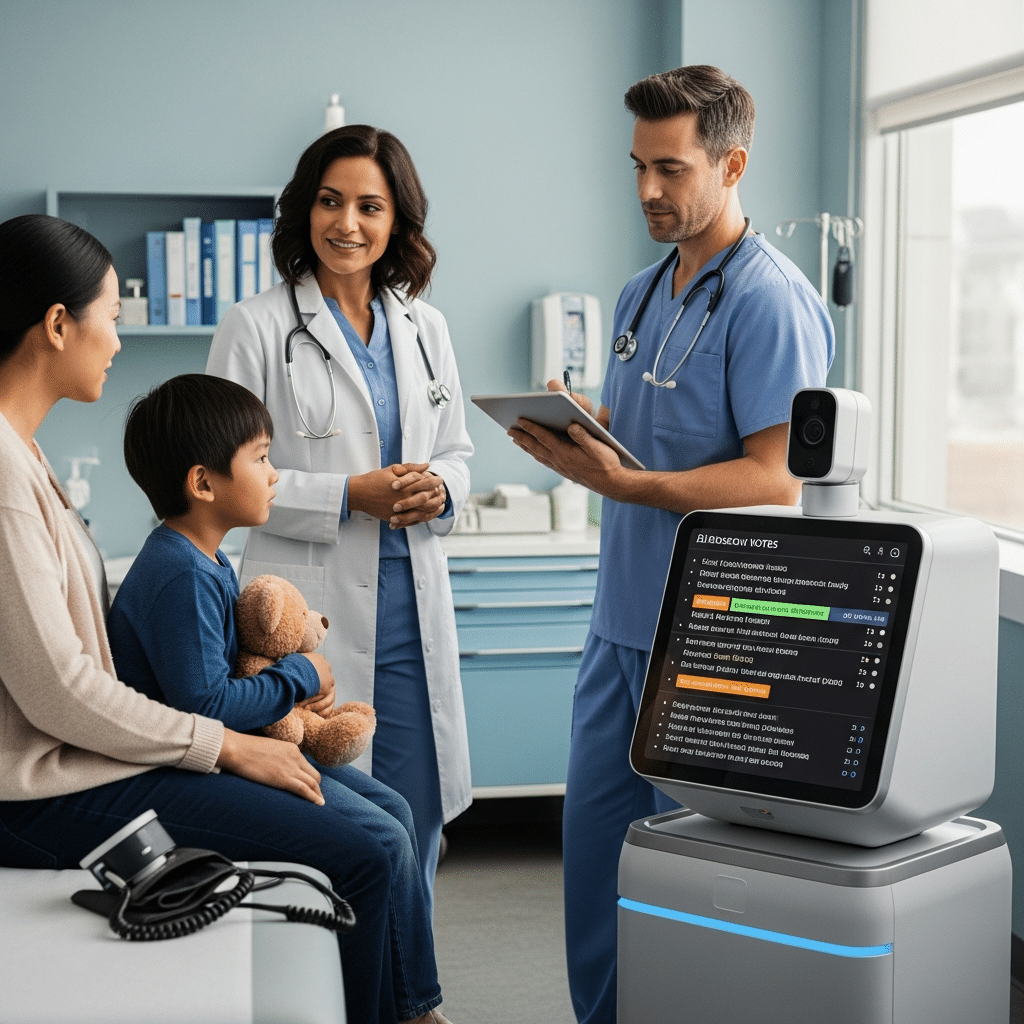
AI-powered tools such as ambient scribes promise to multiply clinician capacity and reduce burnout, but measurable gains depend on integration, human oversight, and operational redesign. Recruiters and health systems must adapt job roles, hiring criteria, and retention strategies to realize AI’s staffing benefits.
When Healthcare AI Needs Correction

AI in clinical care faces a corrective moment: persuasive outputs and fast deployments have exposed dangerous failure modes and invited regulatory scrutiny. Health systems and recruiters must prioritize validated safety, new governance roles, and evidence-based procurement to restore trust and realize AI’s clinical benefits.
Building AI Competence in Medicine

Academic medical centers are moving beyond ad hoc pilots to build formal AI education and assurance infrastructure. This post analyzes how degree programs, embedded training, and governance labs together reshape workforce competencies and recruiting, and offers tactical implications for health systems and talent platforms.