
AI Imaging Advances Beyond Detection Into Precision Medicine
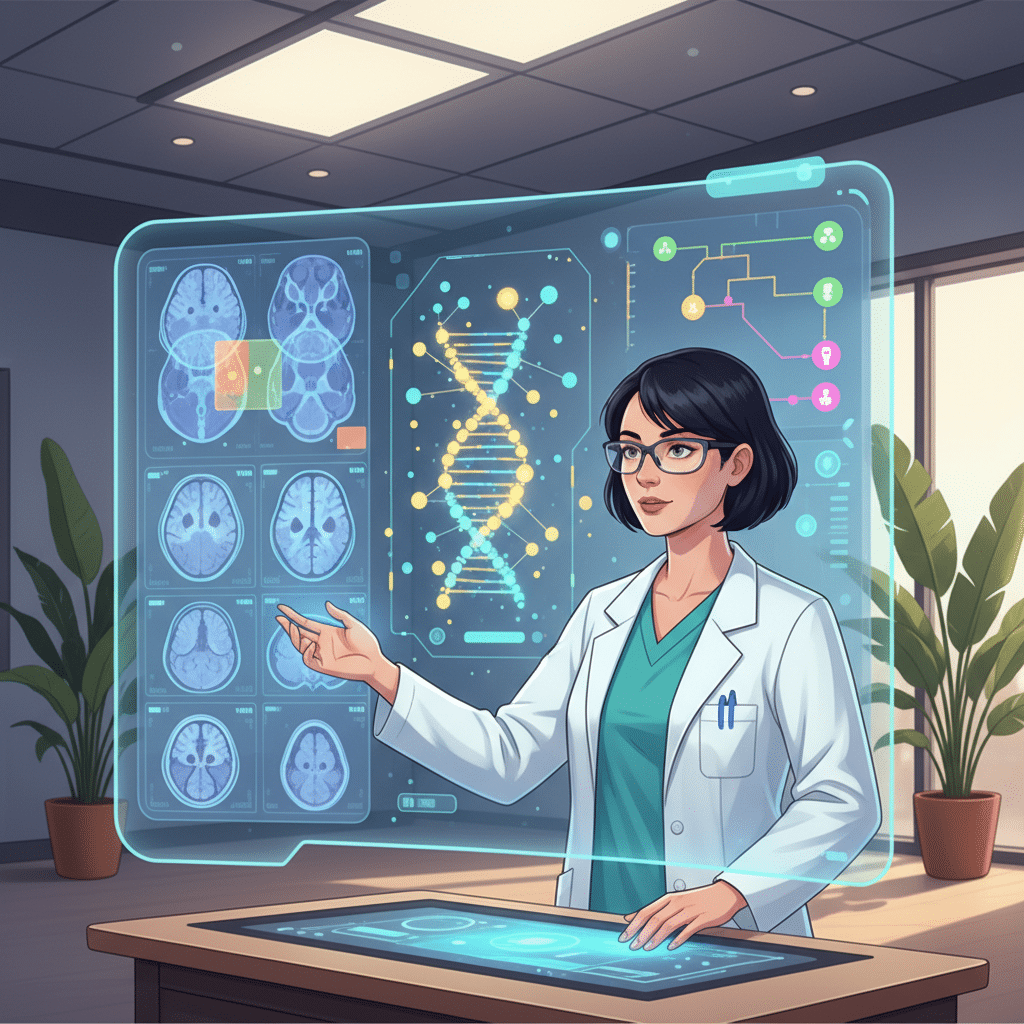
AI-powered imaging tools are evolving beyond detection to integrate genetic data, predict treatment responses, and enable precision medicine. Recent FDA clearances in oncology and research breakthroughs in cardiology demonstrate how artificial intelligence is transforming medical imaging from diagnostic visualization into multimodal clinical intelligence platforms that guide personalized therapeutic decisions.
AI’s Expanding Role in Surgical Safety and Imaging

Artificial intelligence is advancing across surgical care and medical imaging, with new tools to predict orthopedic complications, monitor post-surgical patients in real-time, and enhance degraded CT scans. While early results show promise for improving patient outcomes and reducing costs, significant validation challenges remain before these technologies can be widely deployed in clinical practice.
AI Deployment in Hospitals: Why Human Leadership Matters

As AI transitions from pilot projects to enterprise-scale deployment in hospitals, healthcare organizations face a critical reality: technology alone cannot solve complex operational and safety challenges. Success depends on human leadership, organizational culture, and realistic expectations about AI’s role in healthcare delivery.
The AI Literacy Gap in Healthcare’s Clinical Workforce

Recent studies reveal a critical gap between healthcare professionals’ enthusiasm for AI and their actual capability to use these tools effectively. With only 34% of surgical nurses confident in applying AI despite 78% expressing willingness, and pediatric surgeons citing ethical concerns and practical barriers, healthcare institutions face an urgent need to develop targeted training programs that prepare clinical staff for AI-enabled care delivery.
Healthcare Technology in 2025: What Shaped the Year

From FDA-approved AI diagnostics to generative AI in clinical workflows, 2025 marked healthcare technology’s transition from experimentation to operational reality. This retrospective examines the year’s most significant innovations and reveals what they mean for workforce strategy, implementation priorities, and the competitive landscape healthcare organizations will navigate in 2026.
Healthcare AI Enters Its Regulatory and Strategic Era
As artificial intelligence transitions from experimental pilots to mainstream healthcare applications, state legislatures are introducing regulatory frameworks while health systems confront the strategic challenges of scaled implementation. This analysis examines the emerging policy landscape, organizational requirements for successful AI adoption, and implications for healthcare workforce planning.
AI and Primary Care Shortages: Promise Meets Reality

As the U.S. faces a critical shortage of primary care physicians, health systems are turning to AI for help. While algorithms show promise in reducing administrative burden and improving efficiency, experts caution against viewing technology as a substitute for human providers. This analysis examines both the potential and limitations of AI in addressing workforce shortages, emphasizing the need for balanced integration that preserves the human connection essential to primary care.
The Hidden Flaw in Healthcare AI: Why Label Leakage Threatens Clinical Prediction Models

Label leakage—when outcome information inadvertently contaminates AI training data—creates healthcare prediction models that appear accurate in testing but fail in clinical practice. Recent research reveals this problem is widespread, threatening the reliability of AI tools used for patient care decisions and demanding coordinated action from developers, healthcare institutions, and regulators.
Beyond the Algorithm: Why AI Ethics in Specialized Medicine Demands More Than General Guidelines

As AI systems move into specialized medical fields, general ethical frameworks prove inadequate. Recent analyses across pediatric surgery, imaging, and liver cancer care reveal that vulnerable populations and complex clinical scenarios demand tailored governance approaches, specialized training data, and enhanced transparency—challenges with significant implications for healthcare workforce development.
Beyond the Pilot: How Health Systems Are Building Strategic Frameworks for AI Maturity

Leading health systems are moving beyond AI pilots to develop strategic frameworks for organization-wide implementation. This analysis examines how institutions like Michigan Medicine and Ochsner Health are approaching infrastructure, governance, workforce training, and ROI measurement to achieve AI maturity and deliver measurable value.