
VA’s EHR Reset Meets AI for Suicide Prevention
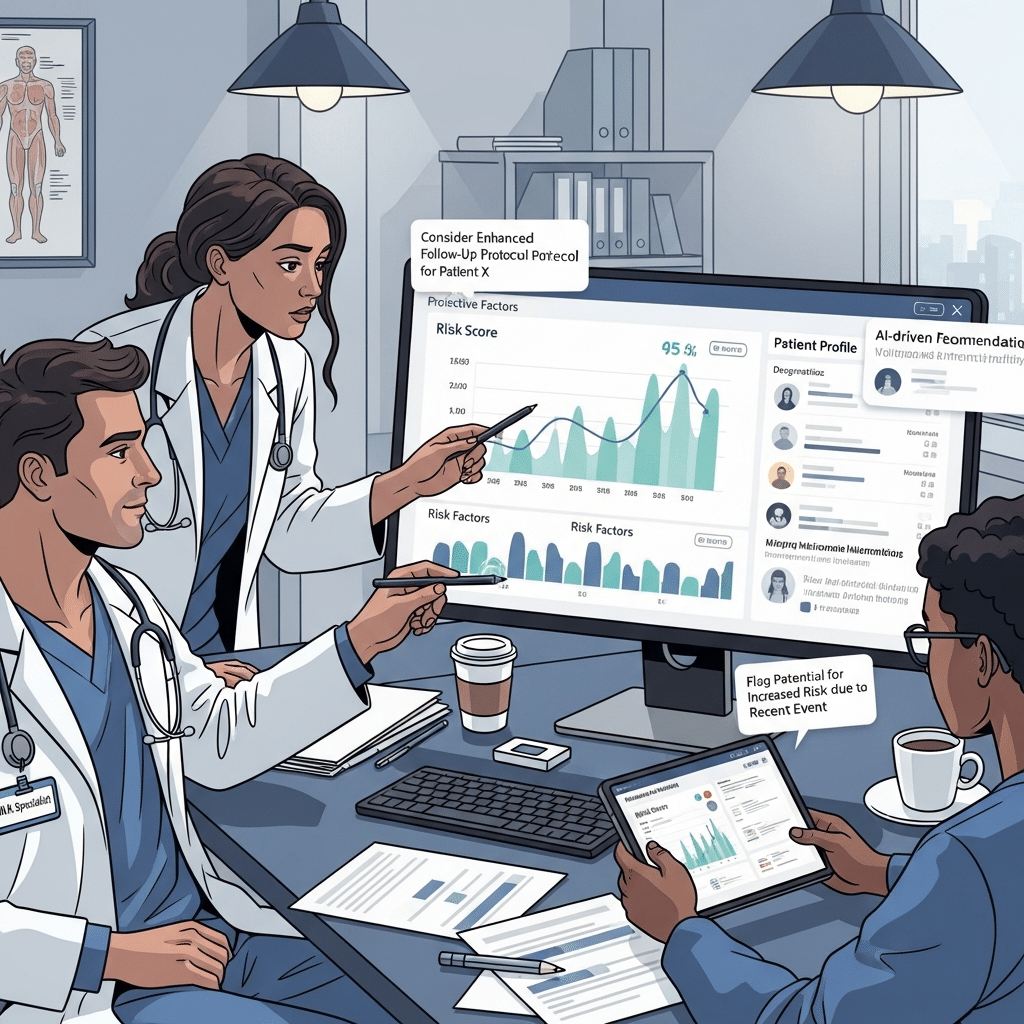
The VA’s concurrent reboot of its EHR program and prioritization of AI for clinical needs like suicide prevention creates a high‑stakes experiment in moving fast while maintaining safety. This post examines integration, governance, and workforce implications—and why health systems must align data, processes, and talent to realize AI’s promise.
AI Regulation: Healthcare’s Fragmented Crossroads

Federal health guidance is pushing for faster AI-enabled care even as state and local rules proliferate, creating a costly and operationally complex environment for health systems. CIOs, clinicians, and recruiters must adapt by hiring hybrid-skilled teams and designing jurisdiction-aware systems to avoid stalled deployments and patient-safety trade-offs.
Outcomes-Driven Standards for Clinical AI

AI validation in healthcare is shifting from technical metrics to outcomes-based evidence captured in real-world settings. This post examines how pragmatic evaluation, continuous monitoring, and governance structures can reduce risk, build trust, and reshape hiring needs—highlighting implications for health systems, regulators, and recruiting platforms like “PhysEmp”.
AI, EHRs, and Data Integrity

Health systems are embedding AI into EHRs to improve clinical care and efficiency, but inconsistent data quality and weak operational models threaten ROI. This post analyzes the technical, governance, and talent investments necessary to convert AI pilots into sustainable clinical and financial value.
Deliberate AI Adoption in Academic Medicine

Academic medical centers are adopting AI through disciplined governance, clinician engagement, rigorous validation, and targeted hiring. This post analyzes how phased rollouts, data stewardship, and multidisciplinary teams reduce risk and create a repeatable capability for safe AI integration.
AI Scribes and EHR Modernization

AI scribes and EHR upgrades promise to cut clinician documentation time, but rapid adoption exposes gaps in governance, training, and integration. This post analyzes vendor tools, large-scale EHR modernization, and the need for specialty-specific guidance—then outlines actionable steps for measurement, workforce design, and recruitment.
Closing AI Accountability Gaps in Healthcare

As AI systems move from pilots to production, accountability gaps are surfacing: models become obsolete, influence diagnosis and coding, and operate without clear ownership. This post outlines technical and governance failure modes and practical steps leaders must take—staffing, monitoring, contracting—to manage AI risk and protect patient care.
AI Agents Reshape Payer Operations and Care

Major payers and cloud vendors are deploying AI agents to automate administrative workflows and deliver more proactive, personalized care. This post analyzes how agent-based automation affects efficiency, cost, clinical oversight, and hiring—offering practical priorities for health systems and recruiters as these technologies scale.
Imaging AI: From Rapid Triage to Prediction

Recent imaging AI advances enable two complementary capabilities: near-instant detection of emergent findings and prediction of future fractures from routine images. This post examines how integrating rapid triage and prognostic outputs can reshape workflows, validation needs, and hiring priorities for health systems adopting AI.
AI Policy Is Reshaping Healthcare Workflows

Federal policy choices in early 2026 are decisively shaping how AI will be governed and used across healthcare. This post analyzes the tug-of-war between fast federal adoption and demands for stricter data, workplace, and accountability rules—and what that means for hiring, procurement, and compliance.