
This analysis synthesizes 6 sources published the week ending Jul 6, 2026. Editorial analysis by the PhysEmp Editorial Team.
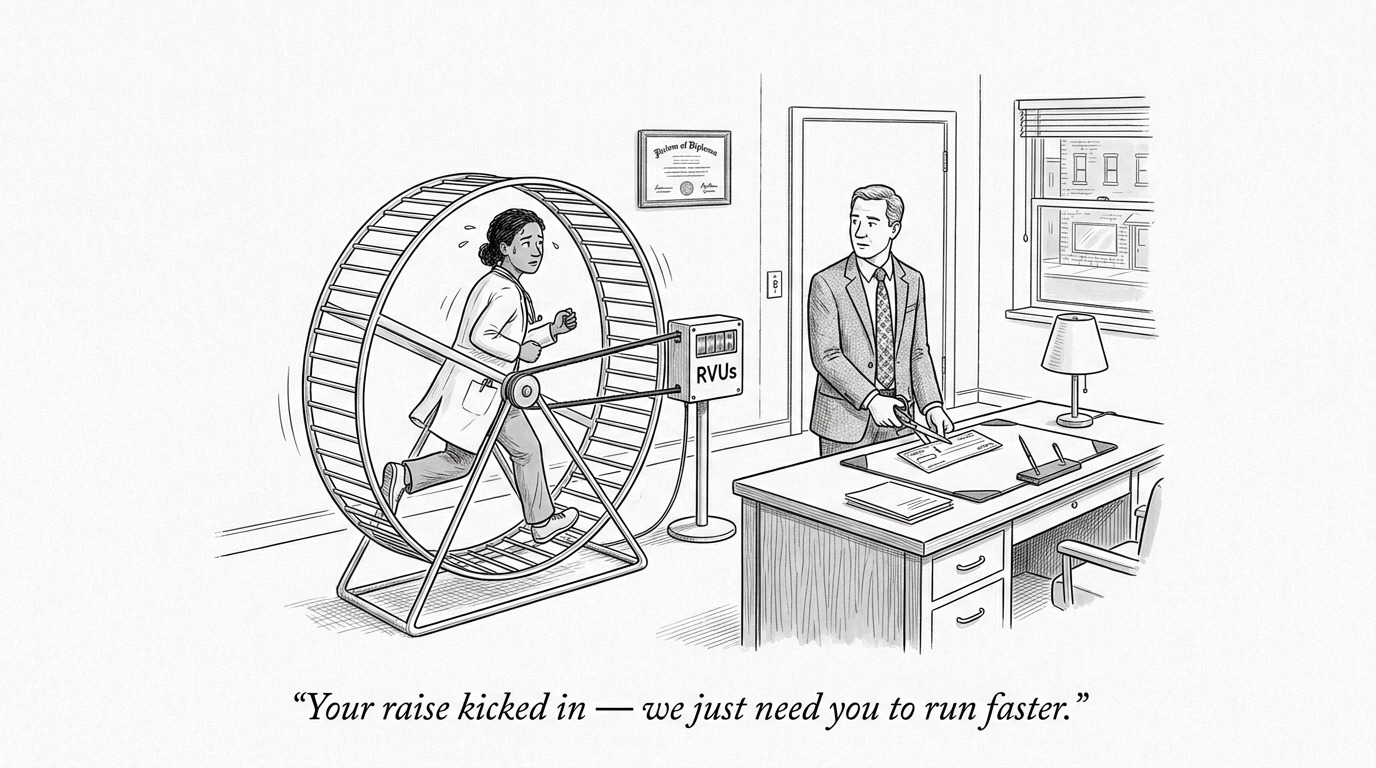
Physician compensation is rising — but the way it rises matters. Across specialties, higher pay is mostly the result of physicians doing more: more clinic sessions, more procedures, more relative value units (RVUs). Those gains rarely come from higher reimbursement rates. That difference changes the calculations around Physician Compensation & Demand — how doctors read offers, how they bargain, and how they plan careers they can sustain.
The headline numbers look positive: median pay climbed 3–4% year over year in many specialties. Layer in productivity and the picture flips. Work RVUs rose faster than compensation, so the effective pay per unit of work fell. This isn’t a minor statistical quibble. It shows a structural shift in how physician effort is converted into dollars.
The Productivity Treadmill Accelerates
Data show physicians producing more clinical output than before. Patient panels are fuller, documentation demands have increased, and administrative tasks eat up more time. When pay rises 3.5% but productivity jumps 5%, physicians are taking home bigger paychecks while getting paid less for each encounter.
That matters most for employed doctors on RVU-based plans. Those models reward volume and offer no straightforward way to capture value from being faster, better, or more efficient. With payer rates flat or declining in real terms, health systems boost physician pay only by pushing productivity higher — a strategy that has limits.
Physicians evaluating offers should separate total pay from effective hourly or per-encounter value. A $50,000 raise that requires 15% more patient volume is a cut in pay per encounter, even if the top-line number looks good.
Specialty Gaps and Structural Vulnerabilities
The tension between productivity and compensation plays out differently across specialties. Procedural fields with higher per-case reimbursements can handle increased volume more easily. Primary care and other cognitive specialties cannot. They already run at high volumes with low per-visit payments, so more productivity quickly strains pay and wellbeing.
Anesthesiology surveys highlight another wrinkle. Some commonly cited benchmarks may understate true market rates by large amounts — $100,000 or more, by some analyses — because of survey methods, non-response bias from high earners, and omission of items like call pay, bonuses, and partnership distributions. Relying on those numbers risks under-offering candidates.
For recruiters and hospital leaders, that creates both peril and opening. Organizations using stale benchmarks lose candidates. Those that design compensation to reflect total value — not just base salary — can win in tight markets.
Untapped Revenue Streams
Productivity-driven pay dominates now, but meaningful revenue streams often go unclaimed. Care management billing is a clear example: primary care practices frequently miss chronic care management, principal care management, and remote monitoring codes that pay for non-face-to-face work clinicians already do.
That omission points to a blind spot in most compensation analyses: pay isn’t only about visit volume and payer rates. Billing capture, code optimization, and ancillary services move the needle on total pay — yet they rarely show up in salary surveys or basic contract talks.
Health systems that invest in billing systems and clinician education around care management codes can raise compensation without forcing more patient encounters — a real advantage in recruiting.
Contract Design and Negotiating Strategy
The productivity-pay gap is changing negotiations. More physicians see RVU models as shifting risk to clinicians while limiting upside. That is pushing interest in hybrids: base guarantees plus quality incentives and productivity bonuses with fair thresholds.
Doctors negotiating offers should do three things: count total compensation, including call and admin time expectations; benchmark RVU conversion factors against specialty market data (with a skeptical eye toward published surveys); and insist on contract language that limits sudden productivity increases or unfair volume creep.
Executives face their own trade-offs. The physician shortage makes talent costly, but reimbursement growth is constrained. Sustainable hiring means paying in ways that physicians can maintain over years, not by squeezing short-term productivity and then dealing with turnover.
The Reimbursement Reality Check
A persistent mistake in coverage and planning is assuming reimbursement will save the day. It probably won’t. Medicare fee updates have trailed inflation and commercial payers focus on cost control. Without big policy changes, extracting productivity will remain the main path to higher physician pay.
That forces a choice: physicians must weigh career sustainability as they look at offers, and health systems must find revenue or efficiency gains that don’t simply demand more physician time. Both sides benefit from clearer accounting of what current compensation models reward — and what they leave out.
What Comes Next
Expect the productivity-compensation gap to widen before fixes appear. Negotiators should emphasize compensation per RVU, realistic volume assumptions, and protections against creeping expectations. Organizations that price physician time fairly and build revenue strategies that don’t rely solely on more clinic hours will have an edge.
Recruiting will reflect these dynamics: specialties that align pay and productivity sustainably will draw applicants; those that demand ever-more volume may find fewer takers despite high headline salaries. The advantage will go to the groups that spot this early and change their contracts, billing, or care models accordingly — or to the clinicians who walk away from offers that look big only on paper.
Sources
Provider compensation grew, but productivity outpaced pay – RevCycleManagement (TechTarget)
Doctor pay is up because they’re busy, not because of reimbursement – Forbes
The Truth About Physician Compensation – DocWire News
The $100,000 problem with anesthesiologist pay surveys – Becker’s ASC Review
2026 Physician Salary & Contract Trends — RESOLVE – American Medical Association (AMA)
The Care-Management Codes PCPs May Be Leaving on the Table – MDLinx