
This analysis synthesizes 12 sources published the week ending Jun 16, 2026. Editorial analysis by the PhysEmp Editorial Team.
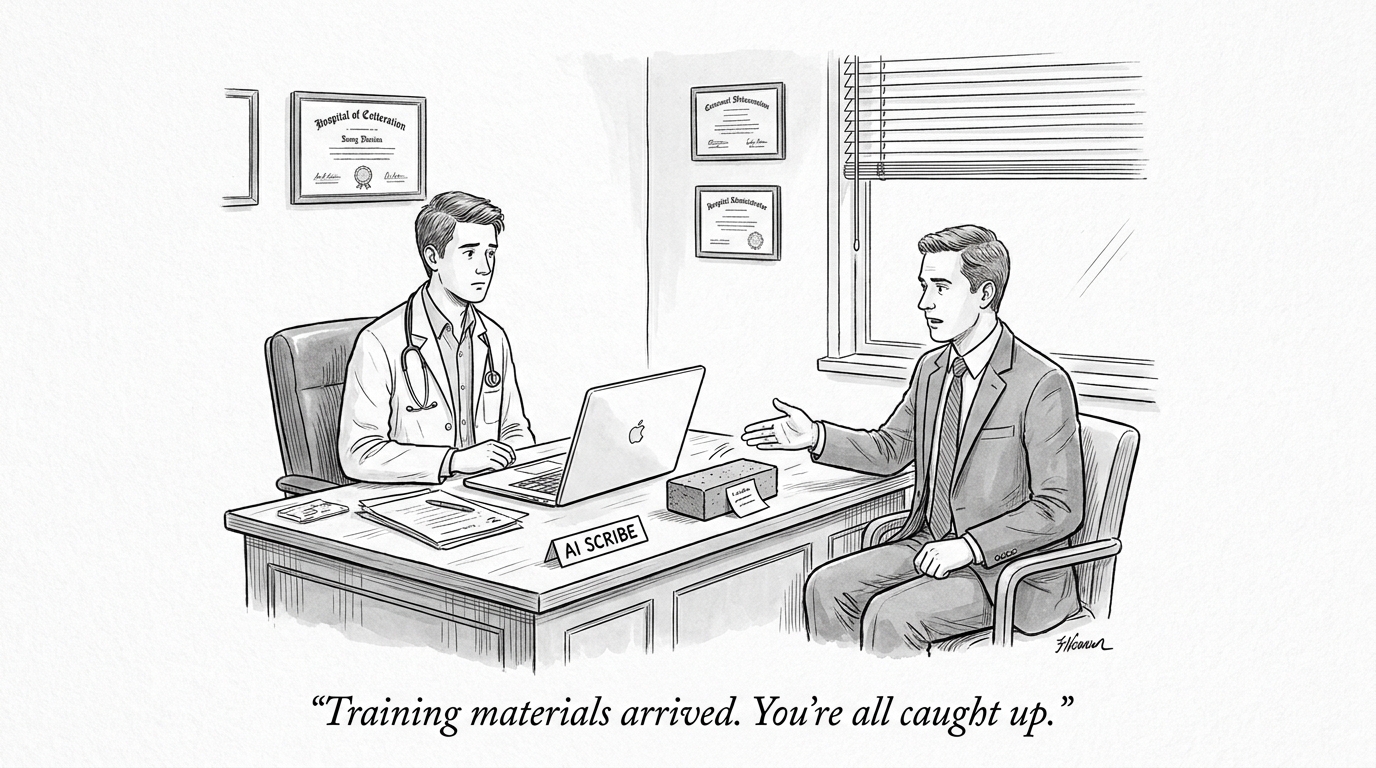
A stark contradiction is emerging across health systems: physicians report real workflow improvements from AI tools while simultaneously lacking the training to use them effectively or sustainably. This tension—between measured efficiency gains and missing educational infrastructure—creates a structural vulnerability that will reshape physician employment dynamics, compensation negotiations, and recruiting power in the months ahead. For physicians and health system leaders tracking developments in AI in Physician Employment & Clinical Practice, the gap between adoption speed and training capacity is both an opportunity and a risk.
The data are messy. Surveys show 71% of clinicians reporting improved workflow efficiency with AI tools, and Stanford’s discharge-summary tool has shown reductions in burnout. At the same time, most clinicians say they lack formal training, governance structures are thin, and systems are trying to rein in AI costs even as use accelerates.
The Efficiency Evidence Is Real — Incomplete
Multiple sources confirm that AI documentation tools—ambient scribes and discharge-summary generators among them—are saving clinicians time. Those minutes matter: less documentation can reduce daily load and, in some cases, lower burnout signals. That changes what health systems expect from physicians, because productivity expectations and compensation are tied to clinical output.
Who captures the productivity dividend is the unanswered question. If AI cuts 30 minutes from a shift, one system might let the physician leave earlier; another might expect more patients. With governance unclear, organizations are answering that question inconsistently. The result: very different working conditions under the same name—”AI-enabled practice.”
Physicians evaluating AI-enabled practice environments should look past tool availability and ask how any time savings will be allocated—toward lighter schedules or higher volume expectations.
Training Deficits Threaten Sustainable Adoption
The most consistent finding across this week’s sources is training shortfalls. Clinicians report AI training as “currently inconsistent,” and many are using tools without formal preparation. That’s not only an education gap—it’s a governance problem with employment consequences.
Clinicians are adopting tools faster than hospitals can build oversight, protocols, and quality checks. The AMA’s emphasis that AI must “support—not replace—physician judgment” recognizes the issue, but policy statements don’t build workflows or checklists.
For executives and recruiters, the training gap is a civil-rights-of-sorts in the job market: systems that build effective AI training programs will have an edge recruiting physicians who don’t want to be left holding the risk. Systems that deploy tools without training infrastructure risk turnover from clinicians seeking clearer operational support.
Governance Gaps Create Compensation Ambiguity
When AI boosts physician productivity, compensation models tied to RVUs or patient volume can break down. Few systems have adjusted pay frameworks to reflect AI-assisted workflows, so compensation outcomes are unpredictable.
That unpredictability gives negotiating leverage to informed physicians. Candidates can and should ask: How will AI-generated time savings affect my schedule, my panel size, my pay? With no standard answers, negotiation matters more than before.
Health systems rushing to deploy AI without governance and pay clarity are introducing compensation instability. Physicians with AI literacy can use that ambiguity in negotiations, while systems with clear rules will attract candidates who want predictability.
Cost Pressures Will Shape Where AI Shows Up
Systems trying to control AI costs will prioritize investments where the financial return is clearest: high-volume, documentation-heavy specialties—primary care, hospital medicine, emergency medicine. In those areas, AI will become a baseline expectation. Specialties that don’t get prioritized will see a widening gap within the same health system.
Recruiters should expect candidates to weigh specialty-specific AI support when choosing jobs.
The Literacy Imperative for Career Positioning
Physicians pushing for AI literacy are responding to a practical need. As tools become part of routine work, clinicians without working knowledge of them risk falling behind—not because AI replaces judgment, but because AI-savvy peers will be faster and more integrated in system workflows.
Candidates who can show AI experience or training will be more competitive. Health systems should treat AI training capacity as a recruiting asset, not just an IT line item.
Strategic Implications for Physician Employment
Adoption is racing ahead of the infrastructure that makes adoption sustainable. That creates a window: physicians who build AI competence while training is patchy will gain positional advantages as standards begin to form. For systems, rolling out tools without training, governance, and pay rules invites operational instability.
Expect hiring to favor systems that can explain not only which tools they offer, but how they teach, govern, and compensate around them. And expect fights—over schedules, over who fixes AI errors, over whether a shorter note means more patients—that won’t be resolved by another memo.
Recruiters will end up selling a training plan alongside benefits. Some clinicians will get time back and use it. Others will inherit new expectations and unclear pay. The picture will remain uneven for a while; that’s where the leverage in hiring will be found, and where small policy decisions will have outsized effects.
Sources
AI saves clinicians time, but most lack training, survey finds – Reuters
71% of clinicians report improved workflow efficiency with AI tools, Philips survey – Fierce Healthcare
Stanford’s AI discharge summary tool cuts physician burnout – Becker’s Hospital Review
Integration into the Workflow Is Key to Ambient Scribe Success – Healthcare IT Today
AMA policies ensure AI supports — not replaces — physician judgment – American Medical Association
Clinicians are embracing AI faster than hospitals can handle, report finds – Euronews
Doctors feel AI training is currently inconsistent in medical field, survey finds – Deccan Herald
AI increasingly part of care: transparency and quality are musts – American Medical Association
AI in Health Care: The Governance Gap – Spencer Fane
One Doctor’s Mission to Spread AI Literacy in Medicine – Medscape
Health systems race to rein in AI costs – Becker’s Hospital Review
Clinical Documentation Workflow Is Not Just an AI Fix – KevinMD