
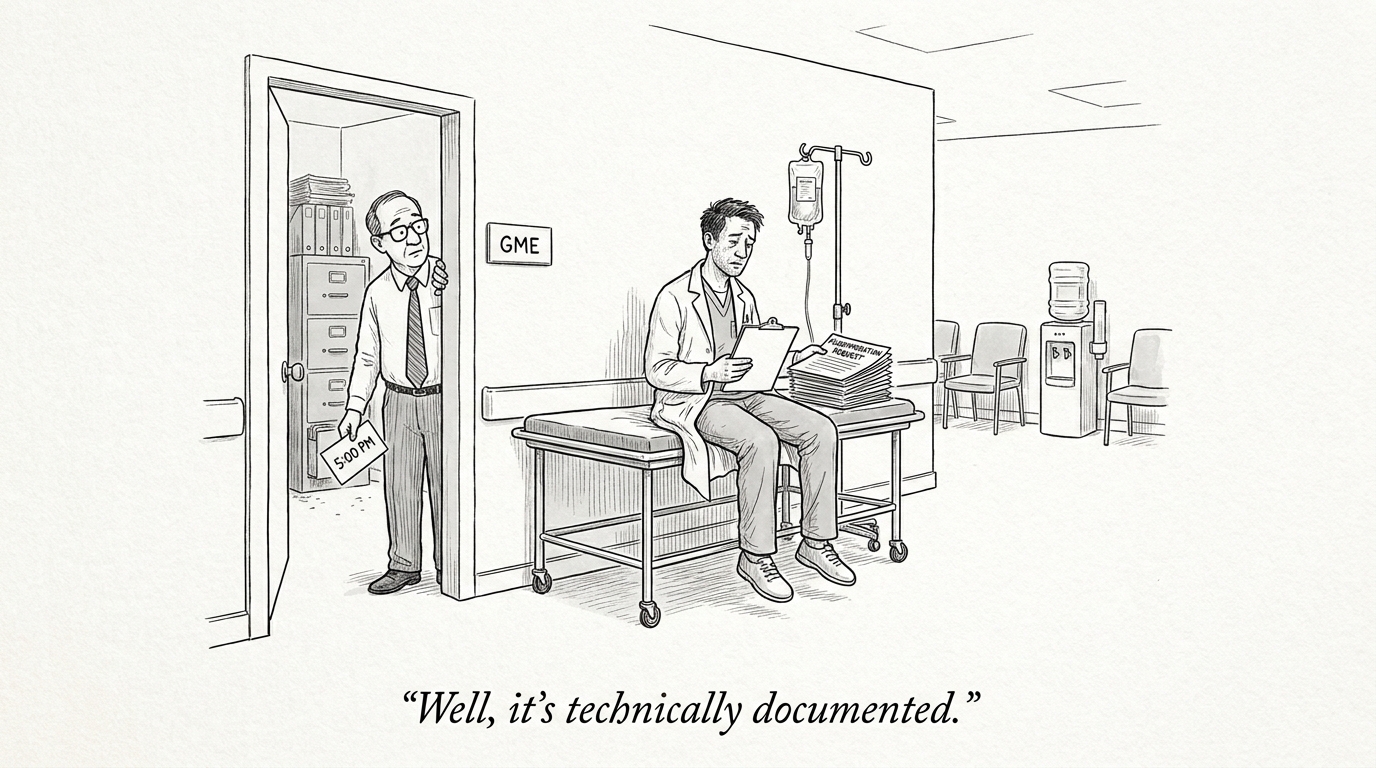
You’re six months into PGY-2 when the fatigue you chalked up to residency turns out to be something else entirely. The rheumatologist confirms what you’d half-suspected: lupus. Or maybe it’s Crohn’s, or MS, or type 1 diabetes that showed up in your late twenties. Whatever the diagnosis, you’re now facing a reality that residency survival guides don’t cover—how to be both the doctor and the patient in a system that barely accommodates either.
This isn’t a rare scenario. Chronic illness doesn’t pause for training, and plenty of residents get diagnosed during the most demanding years of their careers. The problem is that nobody talks about it, partly because of stigma and partly because the infrastructure for supporting sick residents is, charitably, inconsistent.
The Accommodation Gap
Technically, residents with chronic conditions are entitled to reasonable accommodations under the ADA. Practically, what \”reasonable\” means varies wildly by program, specialty, and how much your program director actually understands about chronic illness.
Some residents report getting flexible scheduling for infusion appointments or reduced call during flares. Others describe being told, essentially, to figure it out or consider whether medicine is right for them. The difference often comes down to institutional culture and whether you have someone in leadership who’s willing to advocate.
Here’s what you should know: GME offices are required to have a process for accommodation requests, but they’re not required to advertise it. If you need accommodations, you’ll likely have to initiate the conversation yourself, which means doing your homework first. Get documentation from your treating physician—not a colleague, not yourself—that specifies functional limitations and suggested modifications. Be concrete: \”needs flexibility to attend monthly infusion appointments\” is more actionable than \”requires accommodations for chronic illness.\”
And document everything. Every conversation, every request, every response. If your program is supportive, this is just good record-keeping. If they’re not, it’s your paper trail.
Managing Your Care When You Have No Time
The cruelest irony of getting sick during residency is that you’re surrounded by healthcare while having almost no time to access it for yourself. Your rheumatologist’s office closes at 5 PM. You’re on until 7 PM, minimum. Your GI wants to see you every six weeks. Your schedule gets released two weeks in advance, if you’re lucky.
Some practical strategies that residents with chronic conditions have found useful:
First, find providers who understand physician schedules. This often means academic medical centers where faculty are used to treating colleagues, or practices that offer early morning, evening, or telehealth appointments. Yes, this might mean switching providers, which is annoying. It’s less annoying than missing appointments because you can’t get there.
Second, batch your care. If you need labs, imaging, and a clinic visit, try to schedule them on the same day during a lighter rotation. Elective months aren’t just for studying—they’re for catching up on the healthcare you’ve been deferring.
Third, be strategic about disclosure. You don’t owe your attendings or co-residents your diagnosis, but selective disclosure can help. A chief resident who knows you have a monthly infusion can help protect that time. An attending who doesn’t know why you keep asking for specific days off might just think you’re difficult.
The Identity Problem
There’s a psychological weight to becoming a patient that medical training doesn’t prepare you for. You’ve spent years learning to be the one with answers, and now you’re on the other side of the conversation, dependent on someone else’s expertise and judgment.
Some residents find this experience makes them better doctors—more empathetic, more attuned to what patients actually experience in the healthcare system. Others find it destabilizing, a constant reminder of vulnerability in a profession that rewards invincibility.
Both responses are normal. What’s not helpful is pretending the identity shift isn’t happening. If you’re struggling with what your diagnosis means for how you see yourself as a physician, that’s worth talking through with a therapist, ideally one who works with healthcare professionals and understands the specific pressures of training.
Career Planning With Health in the Equation
Here’s the conversation nobody wants to have: your chronic illness might legitimately affect your career options. Not because you’re less capable, but because some practice environments are more compatible with ongoing health management than others.
A hospitalist position with rotating shifts and unpredictable schedules is different from an outpatient clinic with set hours. A rural practice where you’re the only specialist for 100 miles creates different pressures than an urban group where colleagues can cover. Procedural specialties that require standing for hours create different physical demands than cognitive specialties.
This isn’t about limiting yourself. It’s about being realistic about what you need to stay healthy while building a sustainable career. The attending salary doesn’t help much if you’re too sick to work, and the prestige of a demanding position matters less if it triggers constant flares.
When you’re job searching, consider: What are the call requirements? How flexible is scheduling? What’s the sick leave policy? Does the benefits package include good coverage for your specific condition? These questions matter more for you than for your healthy co-residents, and that’s okay.
The Bottom Line
Managing chronic illness during residency means working within a system that wasn’t designed with you in mind. You’ll have to advocate for yourself more than your healthy colleagues do. You’ll have to make tradeoffs they don’t have to consider. And you’ll have to figure out, probably without much guidance, how to reconcile being a healer with needing healing yourself.
None of that is fair. But plenty of physicians with chronic conditions have built successful, sustainable careers—often by being more intentional about their choices than their peers ever had to be. The diagnosis changes the math, but the equation still invites questions long after the last patient leaves.