
This analysis synthesizes 6 sources published the week ending May 18, 2026. Editorial analysis by the PhysEmp Editorial Team.
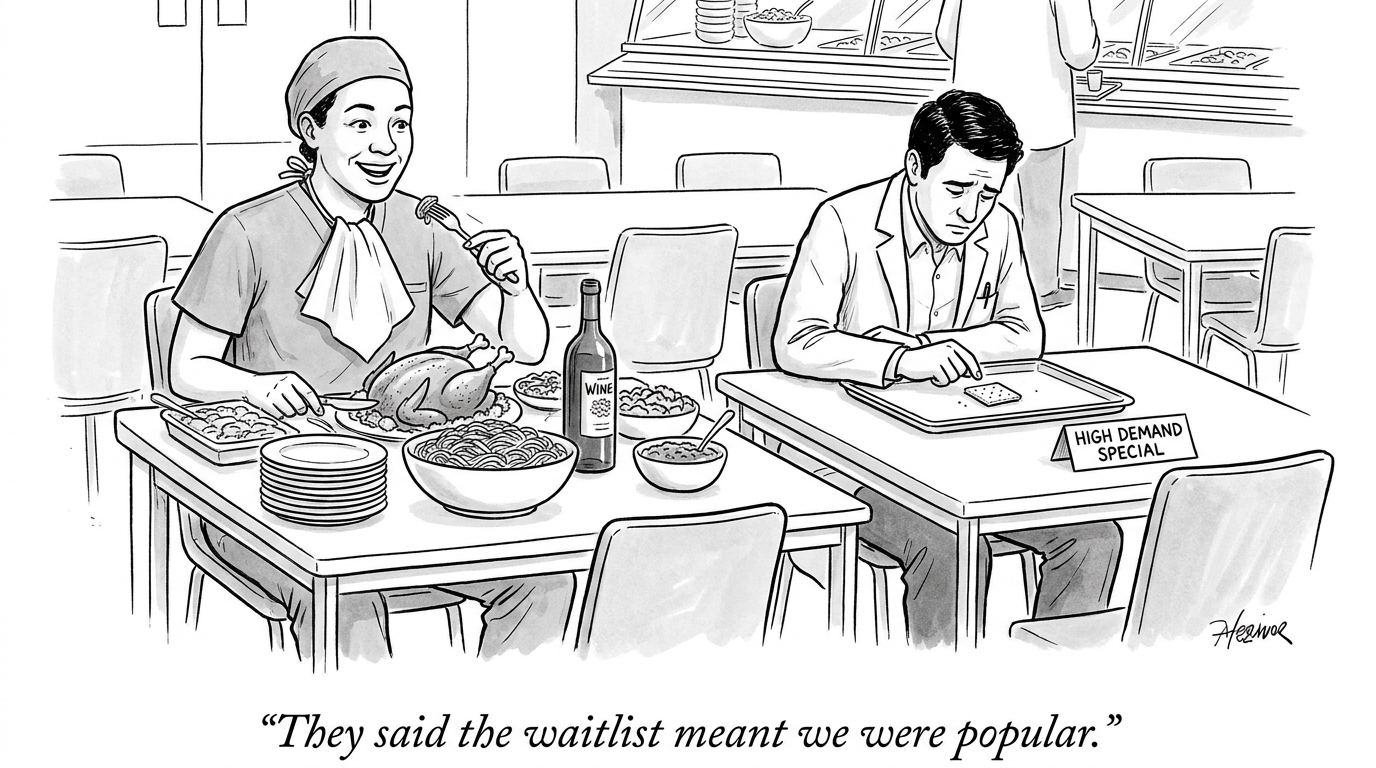
The physician compensation market is fracturing along specialty lines in ways that defy conventional workforce narratives. While cardiology pay has accelerated past every other specialty, psychiatry—long presumed to benefit from rising mental health demand—has seen declines even as overall physician compensation rises. The split points to forces most coverage of Physician Compensation & Demand tends to miss: compensation is less about simple supply and demand and more about procedural revenue capture, reimbursement rules, and how employers account for margins.
Oncology joins psychiatry in the declining-pay group, slipping about 2% even as cancer care needs grow. Dermatology remains a high-earning outlier, and orthopedic surgeons continue to pull packages that can rival medtech executives running billion-dollar product lines. For physicians choosing specialties or negotiating contracts, these differences matter to long-term earning power.
Cardiology’s Compensation Breakaway
Cardiology now leads in compensation growth because the specialty sits on several structural advantages. Interventional work—from ablations to structural heart procedures—has expanded in both volume and reimbursement. Moving more cardiac procedures into ambulatory surgery centers has created new revenue channels that benefit cardiologists, especially those in private practice or partnership arrangements.
Hospital systems competing for cardiology talent face two pressures: cardiovascular service lines are among the most profitable, and the procedural nature of the specialty creates clear productivity-based pay pathways. RVU-based models reward cardiologists who generate large volumes of well-reimbursed procedures, and employers are responding with signing bonuses and total compensation packages tied to that revenue reality.
Cardiology’s compensation surge reflects the specialty’s position at the intersection of high-margin procedures, favorable reimbursement, and ambulatory care expansion that amplifies physician revenue capture.
That shift forces choices for both sides. Hospital executives can raise recruiting and retention spending or risk losing volume to competitors. Cardiologists should press offers on productivity bonuses, partnership tracks, and ASC equity participation; those items now drive a large share of total pay.
Psychiatry’s Paradox: Demand Up, Pay Down
Psychiatry’s pay drop is the most surprising trend in this cycle. Demand for mental health care has surged, with wait times stretching months in many markets. Yet psychiatrist compensation has fallen.
The reason is structural. Psychiatry is mostly cognitive care, and reimbursement rates haven’t kept up. Payer mix problems—especially a high share of Medicaid and carved-out behavioral plans with lower rates—limit what employers can pass on to clinicians. Telepsychiatry has widened access, but it also introduced geographic price pressure that can suppress pay in some markets.
Coverage of the mental health crisis often assumes demand naturally becomes earning power. That ignores how reimbursement architecture sets what employers can actually pay. Psychiatrists negotiating contracts should push for models that reward larger panels and higher visit volumes, and consider hybrid setups that combine employed roles with telehealth work to capture extra revenue.
Oncology’s Quiet Decline
A 2% drop in oncologist pay is a warning sign for a specialty with rising patient loads. Cancer incidence is increasing with an aging population, and treatments are becoming more complex—yet compensation is drifting down.
Several dynamics are at work. Consolidation has shifted negotiating power toward health systems. Drug margin compression—payers reining in buy-and-bill—and increased scrutiny of the 340B program have cut into the ancillary revenue that once supplemented oncologists’ pay. The move toward oral oncolytics also shifts revenue away from infusion centers and the physicians who staff them.
Oncologists under pressure should examine contracts for drug margin pass-through language and research incentives that can offset base salary stagnation as reimbursement changes.
Dermatology and Orthopedics: Procedural Resilience
Dermatology’s hybrid mix of medical and procedural work gives it a steady pay floor. Cosmetic procedures sit largely outside insurance rules and provide income cognitive specialties don’t have. Dermatologists with strong procedural volumes, especially Mohs surgeons, keep significant earning power.
Orthopedic surgery pay remains strong enough that comparisons to medtech CEO compensation have become relevant. Orthopedics is a high-volume, well-reimbursed procedural specialty with big ASC potential. Productive surgeons in the right settings can reach earnings comparable to industry executives—an advantage they can use in contract talks.
Structural Implications for Compensation Strategy
What ties these trends together is procedural revenue potential. Physicians who can capture procedural or ancillary streams have a built-in pay advantage. Cognitive specialties face structural headwinds and need different negotiation approaches than procedural fields.
Recruiters and health system leaders will have to tailor offers by specialty. Cardiology and orthopedics require aggressive total compensation packages to compete; psychiatry and oncology recruiting may need to emphasize loan repayment, scheduling flexibility, and administrative support to make offers attractive despite tighter base pay.
Physicians should read offers for the whole compensation architecture: productivity bonuses, quality incentives, ancillary revenue participation, and partnership or equity options. Those elements often determine whether an offer is competitive.
Outlook
The split between procedural and cognitive pay looks likely to widen. Cardiology’s procedural growth, orthopedics’ move to ASCs, and dermatology’s cosmetic market point to continued gains for those specialties. Psychiatry and oncology face reimbursement pressures that will demand payer changes or new compensation models to reverse the trend.
Expect more bargaining over ASC equity stakes, tighter clauses around drug margins, and recruiter decks that read like financial models. In the next contract season you’ll see cardiologists asking about percent-of-ASC-revenue and oncologists digging through buy-and-bill pass-through language while hiring managers try to square budgets that won’t stretch forever. That mess—lots of spreadsheets, a few heated meetings, and offers that still miss what clinicians want—is where the industry is headed.
Sources
Compensation: Cardiology Now Outpacing All Other Healthcare Specialties – Cardiovascular Business
Psychiatrist pay falls despite broader physician compensation growth: 5 notes – Becker’s Behavioral Health
Oncologist Compensation Falls 2%: What to Know – Becker’s Oncology
Medscape Dermatologist Compensation Report 2026: Evaluating 2026 – Medscape
Orthopedic MedTech CEO vs. Orthopedic Surgeon Pay – Becker’s Spine Review
Week in Review: New IVL data, TAVR trend prompts call to action; compensation climbs, ablations, ASCs & more – Cardiovascular Business