
This analysis synthesizes 4 sources published the week ending May 1, 2026. Editorial analysis by the PhysEmp Editorial Team.
The healthcare staffing industry is undergoing rapid structural transformation as major players pivot from traditional placement models toward technology-driven workforce platforms. Within weeks, Nomad Health announced its transition from staffing firm to software provider, SnapCare merged with ConnectRN, and LaborEdge acquired Reconciled—moves that collectively signal a fundamental shift in how physicians and advanced practice clinicians will access employment opportunities. For those navigating Physician & Advanced Practice Jobs, these consolidations represent more than corporate restructuring; they herald changes in job discovery, compensation transparency, and the competitive dynamics of clinical recruitment.
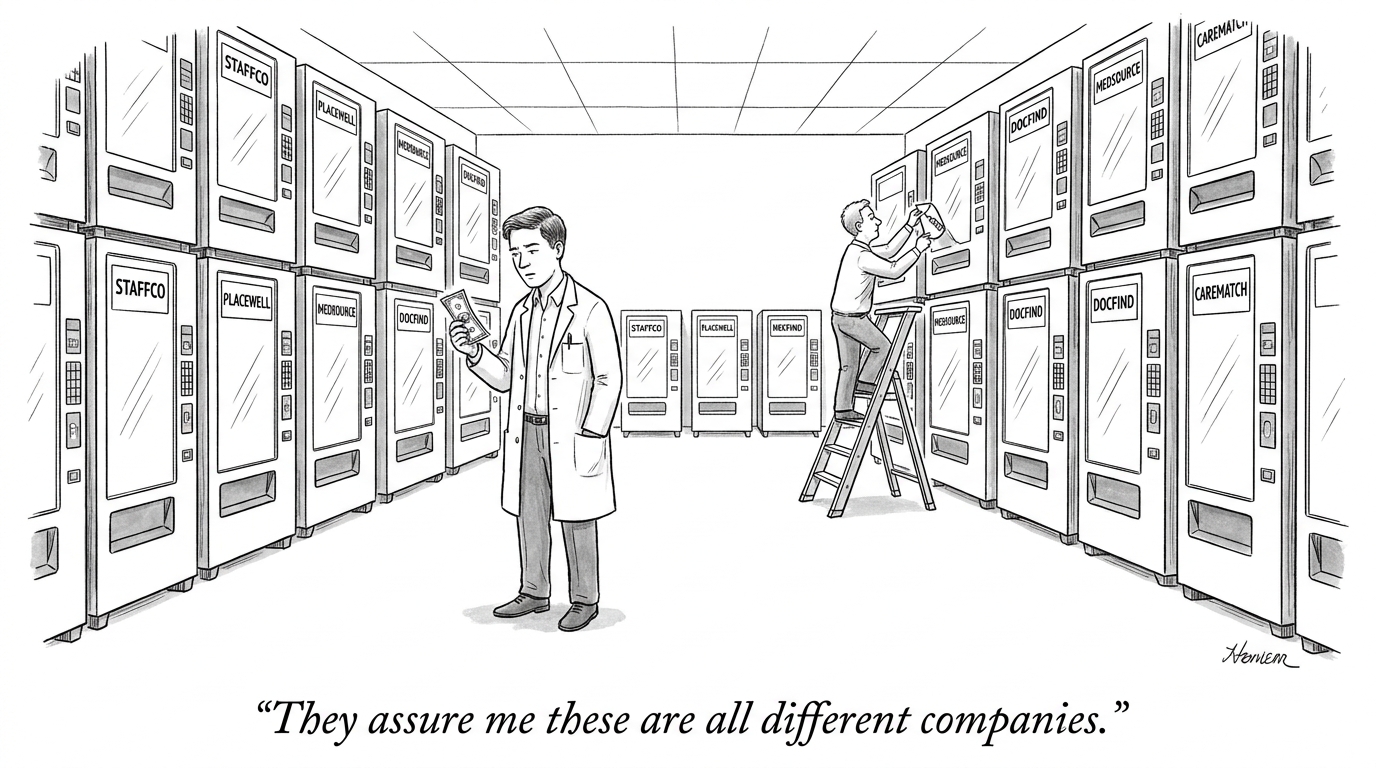
Mainstream coverage of these deals has focused narrowly on investor returns and operational efficiencies, largely overlooking the downstream implications for physician and APP job seekers. What remains underexamined is how platform consolidation concentrates market power, potentially limiting the diversity of job channels while simultaneously promising streamlined access and enhanced matching capabilities.
From Placement to Platform: The Nomad Health Pivot
Nomad Health’s decision to abandon direct staffing in favor of becoming a software provider marks a pivotal moment in healthcare workforce technology. Rather than competing for placement fees, the company is repositioning itself as infrastructure—offering workforce management tools to health systems and staffing agencies alike. This shift reflects broader recognition that the value in healthcare staffing increasingly lies in data intelligence and workflow optimization rather than transactional placements.
For physicians and advanced practice clinicians, this transition carries mixed implications. On one hand, software-driven platforms promise more efficient matching algorithms, potentially surfacing opportunities that align more precisely with specialty, geography, and compensation expectations. On the other hand, the move away from dedicated placement services could reduce the personalized advocacy that traditional recruiters provide—particularly valuable for physicians negotiating complex employment terms or exploring non-traditional arrangements like locum tenens or hybrid roles.
When staffing companies become software companies, physician job seekers lose dedicated advocates but gain algorithmic efficiency. The trade-off favors those who can effectively self-navigate digital platforms while disadvantaging clinicians who benefit from high-touch recruitment relationships.
Merger Momentum: SnapCare, ConnectRN, and Scale Economics
The SnapCare-ConnectRN merger exemplifies the consolidation wave sweeping healthcare staffing. Both companies built their reputations on technology-enabled workforce solutions, and their combination creates a larger platform with expanded reach across nursing and allied health—with growing ambitions in advanced practice placement. For nurse practitioners and physician assistants, this merger signals intensifying competition for APP talent as consolidated platforms pursue market share.
Scale economics drive these combinations. Larger platforms can invest more heavily in AI-powered matching, predictive analytics, and mobile-first job discovery tools. They can also negotiate more effectively with health systems, potentially influencing compensation structures and employment terms. The risk for job seekers is that consolidated platforms may prioritize volume over fit, optimizing for rapid placements rather than sustainable career matches.
What Consolidation Means for Specialty Hiring
Specialty-specific implications vary considerably. High-demand fields like psychiatry and primary care may benefit from enhanced platform visibility, as consolidated players invest in targeted recruitment campaigns. However, niche specialties could find themselves underserved as platforms optimize for volume markets. Physicians in subspecialties should monitor whether consolidated platforms maintain dedicated specialty channels or subsume them into generalist job boards.
LaborEdge-Reconciled: The Back-Office Integration Play
LaborEdge’s acquisition of Reconciled represents a different consolidation vector—focusing on back-office integration rather than candidate-facing platforms. By combining workforce management with financial reconciliation capabilities, this merger aims to streamline the administrative complexity that plagues healthcare staffing. For physicians and APPs, the immediate impact may seem distant, but operational efficiencies in credentialing, billing, and compliance can accelerate time-to-placement and reduce friction in employment transitions.
Healthcare executives and recruiters should note that back-office consolidation often precedes front-office transformation. As staffing companies achieve operational efficiencies, they gain capacity to invest in candidate experience improvements—faster credentialing, more transparent compensation data, and smoother onboarding processes. The competitive advantage shifts toward platforms that can offer physicians and APPs not just job access but employment velocity.
Back-office consolidation in healthcare staffing creates hidden advantages: faster credentialing, cleaner compensation data, and reduced administrative burden. Physicians should prioritize platforms that translate operational efficiency into tangible improvements in their job search and transition experience.
Physician-Built Intelligence: A Countervailing Force
Amid corporate consolidation, the emergence of physician-built workforce intelligence platforms offers a counterpoint. These solutions, designed by clinicians who understand the nuances of medical careers, aim to provide job market insights that generic staffing platforms overlook. Compensation benchmarking, geographic demand analysis, and specialty-specific trend data can empower physicians and APPs to negotiate from positions of strength.
The tension between consolidated corporate platforms and physician-centric intelligence tools reflects broader questions about who controls labor market information. When staffing companies own both placement services and workforce data, conflicts of interest emerge. Physician-built alternatives promise independence but face challenges in achieving the scale necessary for comprehensive market coverage.
Strategic Implications for Job Seekers and Recruiters
For physicians and advanced practice clinicians evaluating career opportunities, the consolidating staffing landscape demands strategic adaptation. Diversifying job search channels becomes essential as platform concentration increases. Clinicians should maintain relationships with specialty-focused recruiters while leveraging the efficiency of consolidated platforms—hedging against the risks of over-reliance on any single channel.
Compensation positioning requires particular attention. Consolidated platforms accumulate vast compensation data, creating information asymmetries that can disadvantage individual job seekers. Physicians and APPs should seek independent compensation benchmarks and approach platform-provided salary ranges with appropriate skepticism, recognizing that aggregated data may obscure specialty-specific, geographic, or experience-based variations.
Healthcare executives and recruiters face their own strategic imperatives. As staffing platforms consolidate, health systems must evaluate vendor relationships through the lens of market power. Exclusive reliance on consolidated platforms may streamline procurement but could limit access to diverse candidate pools. Competitive recruitment strategies should balance platform efficiency with direct outreach and specialty-specific channels.
Looking Ahead: Consolidation’s Long-Term Trajectory
The current wave of mergers and technology pivots likely represents early innings in healthcare staffing consolidation. Continued pressure on health system margins, persistent clinician shortages, and advancing workforce technology will drive further combinations. For physicians and APPs, this trajectory suggests that job discovery will increasingly occur through fewer, larger platforms—making platform selection a more consequential career decision.
The winners in this evolving landscape will be clinicians who combine platform fluency with independent market intelligence, negotiating leverage, and diversified professional networks. As staffing technology matures, the physicians and advanced practice clinicians who thrive will be those who treat job platforms as tools rather than authorities—leveraging their efficiency while maintaining the strategic autonomy that consolidated systems may inadvertently erode.
Sources
Nomad Health pivots from staffing firm to software provider – Staffing Industry
SnapCare Announces Merger With ConnectRN – Staffing Industry
Laboredge Acquires Reconciled – Staffing Industry
A Physician-Built Workforce Intelligence Platform Cracks Healthcare’s Staffing Code – PR Newswire