Why This Matters Now
The landscape of medical imaging is undergoing a fundamental transformation. Two recent developments—the FDA’s clearance of a multi-condition AI diagnostic platform and the Gates Foundation’s multimillion-dollar investment in point-of-care ultrasound AI—signal a decisive shift in how diagnostic imaging technology is conceived, deployed, and accessed. These aren’t incremental improvements to existing tools; they represent a strategic pivot toward comprehensive, accessible diagnostic systems that challenge traditional models of radiology practice and global health infrastructure.
For years, AI in medical imaging has largely followed a single-condition paradigm: one algorithm, one diagnosis, one regulatory pathway. Meanwhile, access to quality diagnostic imaging has remained concentrated in well-resourced healthcare systems, leaving vast populations underserved. The convergence of multi-condition detection capabilities with deliberate efforts to democratize imaging technology through AI-assisted point-of-care tools suggests we’re entering a new phase—one where diagnostic power becomes both broader and more distributed.
The Multi-Condition Milestone: From Narrow Tools to Comprehensive Platforms
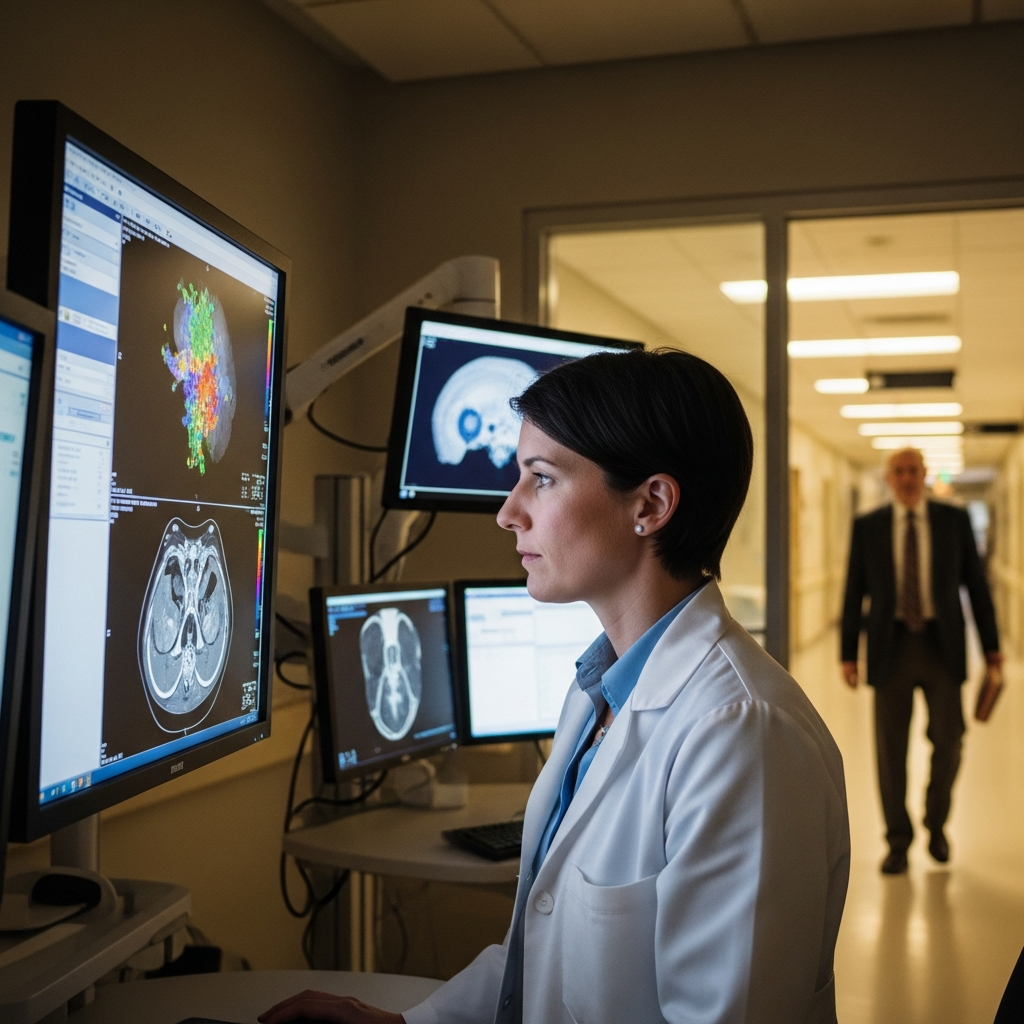
Aidoc’s FDA clearance for simultaneous detection of 14 conditions from CT scans represents more than regulatory achievement; it marks a conceptual evolution in clinical AI deployment. Previously, radiologists and emergency departments implemented separate AI tools for pulmonary embolism, intracranial hemorrhage, aortic dissection, and other time-sensitive conditions. Each tool operated independently, each required separate validation and integration, and each added another layer to already complex clinical workflows.
The shift to multi-condition platforms addresses a practical reality: patients don’t present with single, isolated pathologies, and radiologists don’t examine images looking for only one finding. A comprehensive AI system that screens for multiple urgent conditions simultaneously aligns more naturally with clinical reasoning and emergency department needs. For facilities managing high imaging volumes, this consolidation could streamline workflows, reduce alert fatigue from multiple disparate systems, and potentially catch critical findings that might be overlooked when attention is focused on a suspected primary diagnosis.
The FDA’s clearance of multi-condition AI diagnostics signals a maturation of regulatory frameworks and clinical expectations—moving from proof-of-concept single-disease algorithms toward integrated platforms that mirror the complexity of actual radiological practice and emergency medicine workflows.
Yet this advancement introduces new questions about cognitive load and clinical integration. Will radiologists face a barrage of alerts across 14 different conditions, increasing rather than decreasing their burden? How will emergency physicians prioritize when an AI system flags multiple potential findings? The technology’s success will depend not just on algorithmic accuracy but on thoughtful implementation that enhances rather than complicates clinical decision-making. As healthcare systems adopt these platforms, careful attention to user experience, alert specificity, and workflow integration will determine whether multi-condition AI fulfills its promise or becomes another source of alarm fatigue.
Democratizing Diagnostics: AI-Powered Point-of-Care Ultrasound
While multi-condition CT analysis expands capabilities in well-equipped facilities, the Gates Foundation’s investment in Qure.ai’s point-of-care ultrasound AI addresses a different frontier: bringing diagnostic imaging to settings where it has been largely absent. The focus on tuberculosis and pneumonia detection in resource-limited environments reflects a strategic approach to global health disparities, targeting conditions with high disease burden and significant diagnostic gaps.
Portable ultrasound technology has existed for years, but its clinical utility has been constrained by a fundamental challenge: interpretation requires expertise that isn’t available in many frontline healthcare settings. AI changes this equation by providing real-time guidance and interpretation assistance, effectively extending the reach of radiological expertise to locations where trained specialists are scarce or absent. For healthcare workers in rural clinics, refugee camps, or under-resourced hospitals, AI-assisted ultrasound could transform diagnostic capabilities from rudimentary physical examination to image-guided assessment.
The implications extend beyond individual patient encounters. In regions where tuberculosis remains endemic and pneumonia is a leading cause of mortality, earlier and more accurate diagnosis enabled by AI ultrasound could significantly impact public health outcomes. The technology also addresses workforce realities in global health, where training and retaining specialized radiologists faces persistent challenges. By enabling frontline workers to perform and interpret ultrasound examinations with AI support, this approach distributes diagnostic capacity more efficiently across healthcare systems.
Convergence and Divergence: Two Paths in AI Imaging
These developments—comprehensive multi-condition platforms and accessible point-of-care AI tools—appear to move in different directions, yet they share fundamental characteristics. Both prioritize clinical utility over technological novelty. Both address specific workflow challenges and resource constraints. And both represent a maturation of AI imaging from research curiosity to practical clinical tool.
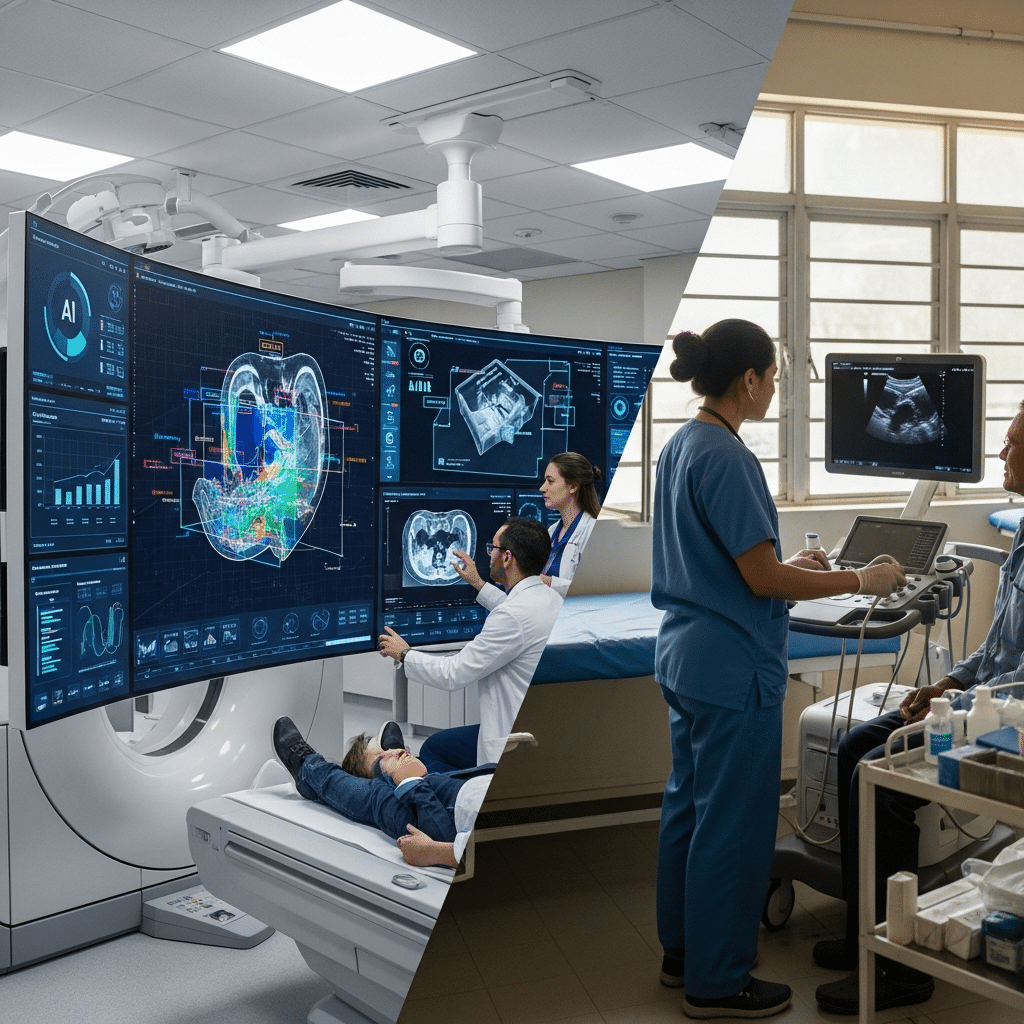
The multi-condition CT platform serves complex healthcare environments with high imaging volumes and multiple specialists, optimizing efficiency and reducing diagnostic errors in settings where imaging infrastructure already exists. The point-of-care ultrasound AI targets settings where imaging infrastructure is minimal or absent, prioritizing access and basic diagnostic capability over comprehensive analysis.
The simultaneous advancement of sophisticated multi-condition AI platforms and accessible point-of-care tools reveals a bifurcation in medical imaging’s future—one path deepening capabilities in advanced settings, another expanding basic diagnostic access to underserved populations worldwide.
This bifurcation raises important questions about equity and resource allocation in healthcare AI development. Will innovation continue along both paths, or will market forces concentrate investment in technologies serving well-resourced healthcare systems? The Gates Foundation’s involvement in point-of-care ultrasound AI suggests that philanthropic and public health funding may need to drive innovation in access-focused technologies, while commercial incentives propel advancement in comprehensive diagnostic platforms.
Implications for Healthcare Workforce and Recruiting
These technological shifts carry significant implications for healthcare workforce development and recruiting. As AI takes on more diagnostic screening and interpretation assistance, the role of radiologists evolves from primary image reviewer to expert validator and complex case specialist. This doesn’t eliminate the need for radiological expertise—it changes how that expertise is deployed and what skills become most valuable.
For healthcare organizations and recruiting platforms like PhysEmp, understanding these shifts is essential. Facilities implementing multi-condition AI platforms will need radiologists comfortable with AI-assisted workflows, capable of critically evaluating algorithmic outputs, and skilled in managing complex cases that AI flags or cannot confidently assess. Emergency medicine physicians will need training in working with comprehensive AI alerts and integrating algorithmic findings into clinical decision-making.
In global health contexts, the workforce implications differ but are equally significant. AI-assisted point-of-care ultrasound creates opportunities for frontline health workers to expand their diagnostic capabilities, but this requires training programs that combine basic ultrasound technique with understanding of AI tool limitations and appropriate clinical application. Healthcare organizations working in resource-limited settings will need to recruit and train personnel who can effectively leverage these technologies while maintaining clinical judgment and recognizing when cases require specialist referral.
The democratization of imaging through AI also has implications for specialist distribution. If frontline workers can accurately diagnose tuberculosis and pneumonia with AI-assisted ultrasound, the acute shortage of radiologists in developing regions becomes less of an absolute barrier to basic diagnostic care. This doesn’t eliminate the need for imaging specialists, but it may allow more strategic deployment of limited specialist resources to complex cases and training functions rather than routine screening.
As AI continues to reshape diagnostic imaging—both expanding capabilities in advanced settings and extending access to underserved populations—healthcare workforce planning must account for changing skill requirements, evolving roles, and new opportunities for technology-augmented practice across the spectrum of clinical environments.
Sources
FDA clears AI to detect 14 conditions from CT. What’s next? – STAT News
Qure.ai scores multimillion-dollar Gates grant for AI lung ultrasound and more briefs – MobiHealthNews
Q&A: How AI can revolutionize point-of-care ultrasound – Medical Xpress
Qure.ai receives grant from Gates Foundation for AI POCUS – AuntMinnie