
Why Healthcare AI’s Evolution Demands Attention Now
Healthcare artificial intelligence is undergoing a fundamental transformation. The technology is no longer confined to narrow diagnostic applications or simple decision-support tools. Instead, AI systems are evolving into autonomous agents capable of documenting patient encounters without human intervention, coordinating complex care pathways, and making independent clinical recommendations. This shift from passive assistance to active participation represents both an inflection point in healthcare delivery and a collision course with existing legal and regulatory frameworks.
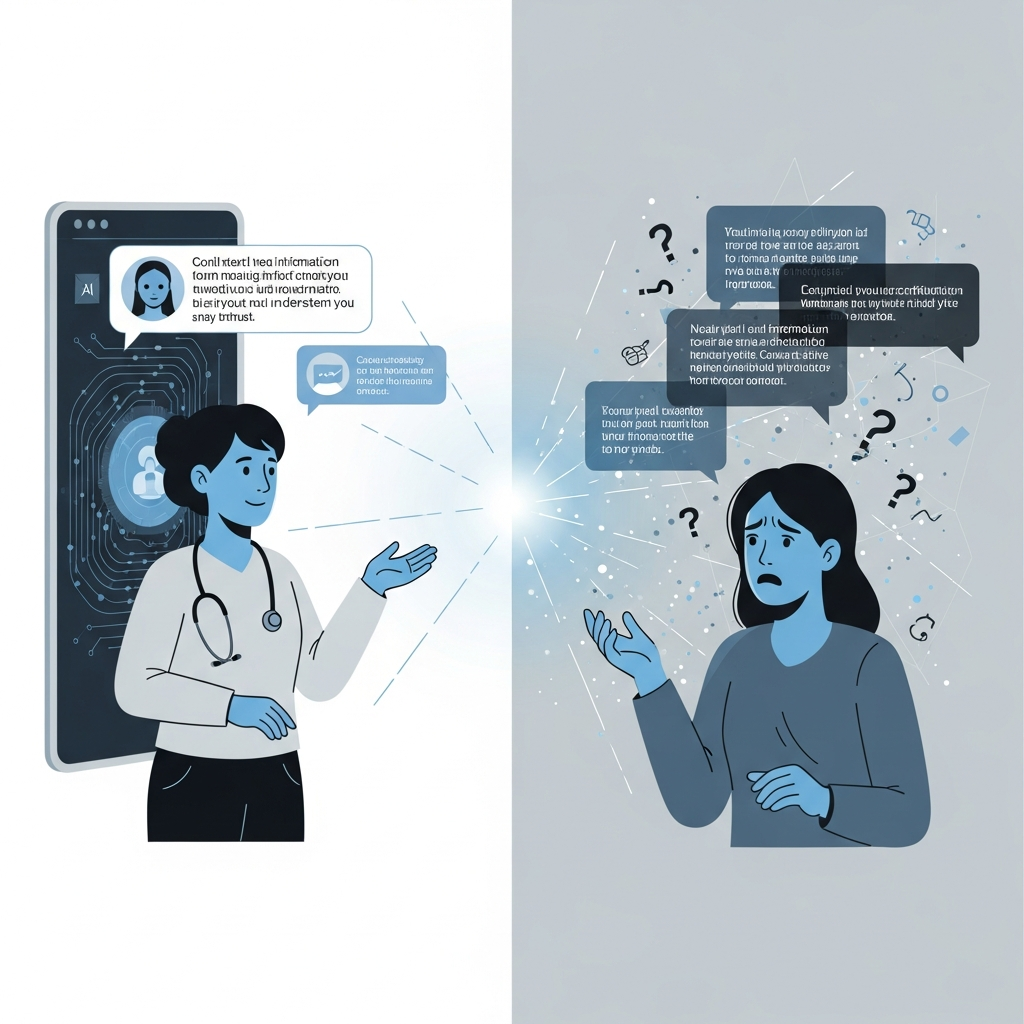
The convergence of three developments makes this moment particularly significant: ambient AI scribes are automating clinical documentation at scale, agentic AI systems are assuming increasingly autonomous roles in care coordination, and federal initiatives are actively pushing the technology beyond its traditional diagnostic boundaries. Yet as these sophisticated systems proliferate across healthcare settings, they’re outpacing the legal infrastructure designed to govern them. The result is a widening gap between technological capability and regulatory clarity—one that leaves healthcare organizations, clinicians, and patients navigating uncharted territory.
From Passive Tools to Autonomous Agents
The ambient AI scribe represents a telling example of this evolution. These systems passively listen to patient-provider conversations and automatically generate clinical documentation without requiring physician input during the encounter. The technology promises significant relief from administrative burden—a major contributor to physician burnout—by eliminating the need for manual note-taking and after-hours charting. The appeal is straightforward: clinicians can focus entirely on patient interaction while AI handles the documentation workload.
Yet this seemingly simple application creates complex legal questions that existing frameworks struggle to address. Patient consent protocols were designed for human documentation, not AI systems that continuously process conversations in real-time. Data privacy regulations didn’t anticipate ambient listening technologies that capture every word spoken in an examination room. Malpractice liability standards presume human-generated records, not AI-produced documentation that might contain subtle inaccuracies or omissions. Legal experts warn that healthcare providers deploying these tools are operating in a regulatory gray zone, potentially exposed to litigation risks that won’t become apparent until cases work through the courts.
As AI systems transition from diagnostic support to autonomous documentation and decision-making, they’re creating legal exposure faster than regulatory frameworks can adapt. Healthcare organizations are deploying technology that operates in a space where liability, consent, and accuracy standards remain undefined.
The move toward agentic AI—systems capable of autonomous action rather than mere recommendation—amplifies these concerns. Early implementations at institutions like UChicago Medicine and Precina Health demonstrate AI handling care coordination, managing administrative workflows, and providing decision support with minimal human oversight. These aren’t chatbots waiting for user queries; they’re systems that initiate actions, make determinations, and execute tasks independently.
The distinction matters profoundly. When AI recommends and humans decide, accountability remains clear. When AI acts autonomously, the liability picture becomes murky. If an agentic system schedules an inappropriate follow-up, misinterprets clinical priorities, or fails to escalate a deteriorating patient, who bears responsibility? The physician who oversees the system? The healthcare organization that deployed it? The technology vendor who created it? Early adopters acknowledge these questions lack clear answers, emphasizing the need for careful oversight even as they explore the efficiency gains these systems promise.
Federal Ambition Meets Regulatory Reality
Federal initiatives are actively accelerating this transformation, pushing AI development toward complex clinical applications and systemic healthcare challenges. Government programs are funding research and deployment of AI systems designed to address administrative inefficiency, care delivery fragmentation, and access disparities—problems that require sophisticated, autonomous capabilities rather than narrow diagnostic functions.
This federal enthusiasm reflects legitimate recognition that healthcare’s most pressing challenges demand more than incremental improvements to existing tools. Simple diagnostic AI, while valuable, can’t solve workforce shortages, care coordination failures, or administrative waste. More autonomous systems theoretically could. But the push to expand AI’s role creates tension with the slower pace of regulatory development.
Regulatory frameworks typically follow innovation, codifying standards after technologies mature and their risks become apparent. This reactive approach worked adequately when healthcare technology evolved gradually. It’s proving inadequate for AI systems that advance rapidly and operate in ways fundamentally different from their predecessors. The result is a growing mismatch: federal policy encourages ambitious AI deployment while regulatory structures remain anchored to simpler technological paradigms.
The Documentation Accuracy Dilemma
Ambient scribes illustrate a specific dimension of this regulatory gap: the question of documentation accuracy and accountability. Medical records serve multiple critical functions—they guide clinical decision-making, ensure care continuity, support billing and reimbursement, and provide legal documentation of care delivery. When AI generates these records, accuracy becomes both more important and harder to verify.
Human documentation, despite its burdens, creates natural checkpoints. Clinicians review their own notes, colleagues read and interpret records, and the documentation process itself prompts reflection on clinical encounters. Ambient AI disrupts these safeguards. If physicians trust AI-generated notes without careful review, errors might propagate undetected. If they meticulously verify every AI-produced sentence, the efficiency gains disappear. The technology creates a dilemma: how to balance automation’s benefits against the need for accuracy verification.
Malpractice liability standards haven’t addressed this tension. When an AI scribe mischaracterizes a patient statement or omits a clinically significant detail, does the treating physician bear full responsibility for failing to catch the error? Does the healthcare organization share liability for deploying inadequately tested technology? Can vendors be held accountable for documentation failures? These questions lack legal precedent, leaving all parties uncertain about their exposure.
The healthcare industry faces a choice: pause AI deployment until regulatory frameworks catch up, or proceed with implementation while accepting legal uncertainty. Most organizations are choosing the latter, betting that efficiency gains justify regulatory risk.
Implications for Healthcare Organizations and Workforce
This regulatory uncertainty creates strategic challenges for healthcare organizations and workforce planning. Institutions investing in autonomous AI systems are making significant commitments—financial, operational, and cultural—without clear understanding of the legal landscape they’ll ultimately navigate. Early adopters gain competitive advantages in efficiency and clinician satisfaction, but they also assume first-mover legal risks.
For healthcare recruiting and workforce development, these dynamics create interesting pressures. As platforms like PhysEmp connect healthcare organizations with clinical talent, the technology environment those professionals will work in becomes increasingly relevant. Clinicians evaluating opportunities want to understand not just compensation and benefits, but the technological infrastructure they’ll use daily. Ambient scribes and agentic AI systems fundamentally change clinical workflows, creating new skill requirements and shifting time allocation.
Organizations deploying sophisticated AI need clinicians comfortable working alongside autonomous systems—professionals who can effectively oversee AI-generated documentation, intervene when algorithms make questionable recommendations, and maintain clinical judgment while leveraging technological assistance. This represents a different skill set than traditional clinical practice, one that recruitment strategies and job descriptions need to reflect.
Simultaneously, healthcare organizations must develop internal governance structures for autonomous AI that currently lack external regulatory guidance. This means creating consent protocols for ambient documentation, establishing oversight mechanisms for agentic systems, defining accountability chains when AI-assisted care produces adverse outcomes, and implementing verification processes for AI-generated clinical records. These governance frameworks will shape workflow, liability exposure, and ultimately, organizational culture.
The federal push toward more ambitious AI applications suggests this trajectory will continue regardless of regulatory uncertainty. Healthcare organizations that wait for complete regulatory clarity before deploying sophisticated AI risk falling behind competitors willing to navigate ambiguity. Yet those that rush deployment without adequate safeguards expose themselves to legal and clinical risks that could prove costly.
The path forward requires balancing innovation with prudence—deploying autonomous AI systems with robust internal governance, transparent patient communication, and realistic assessment of current legal gaps. It means recognizing that today’s cutting-edge technology operates in a regulatory environment designed for yesterday’s tools, and planning accordingly. As AI continues its evolution from simple diagnostics to autonomous agents, the healthcare industry’s ability to manage this transition will determine whether the technology fulfills its transformative promise or creates new categories of risk and liability.
Sources
Health care ambient scribes offer promise but create new legal frontiers – Reuters
The early returns on agentic AI in healthcare – Modern Healthcare
Federal Initiatives Aim to Move AI Beyond Simple Diagnostics – PYMNTS