Why AI in Oncology Matters Now
Oncology stands at a critical juncture where data abundance meets analytical complexity. Cancer survival rates vary dramatically across populations, treatment protocols differ for thousands of cancer subtypes, and rare malignancies present unique monitoring challenges that strain traditional research methodologies. Artificial intelligence is emerging not as a replacement for clinical expertise, but as an analytical engine capable of processing the volume and complexity of oncological data that exceeds human cognitive capacity.
Recent developments demonstrate AI’s dual capability: mapping macro-level survival patterns across entire populations while simultaneously enabling micro-level personalized monitoring for individual patients with rare cancers. These parallel advances signal a fundamental shift in how oncology research identifies systemic inequities and how clinical teams deliver post-treatment care. For healthcare organizations and professionals navigating this transformation, understanding AI’s role in oncology has moved from theoretical interest to operational necessity.
Uncovering Hidden Survival Determinants Through Population-Scale Analysis
A newly developed AI system has analyzed millions of patient records to map the intricate web of factors influencing cancer survival rates across different populations and geographic regions. The technology identified previously unrecognized correlations between socioeconomic variables, healthcare access patterns, and treatment outcomes—connections that remained invisible to conventional epidemiological methods.
The significance lies not in confirming that disparities exist, but in quantifying how multiple factors interact to create survival differentials. Traditional research typically examines variables in isolation or in limited combinations. AI’s capacity to process multidimensional data simultaneously reveals how income levels, insurance status, geographic location, treatment facility characteristics, and demographic factors combine in complex ways to influence outcomes. This granular mapping enables researchers to move beyond acknowledging disparities toward understanding their mechanistic origins.
AI’s ability to process multidimensional oncology data reveals how socioeconomic factors, healthcare access, and geographic variables interact in complex ways to determine cancer survival—insights that remain invisible to conventional epidemiological methods examining variables in isolation.
The practical implications extend to intervention design. When researchers understand which factor combinations most strongly predict poor outcomes, healthcare systems can target resources more precisely. Rather than broad initiatives addressing single variables, interventions can address the specific confluence of factors affecting particular populations. This represents a shift from intuition-based resource allocation to data-informed strategic planning in cancer care delivery.
Personalized Monitoring for Rare Cancers Post-Radiation
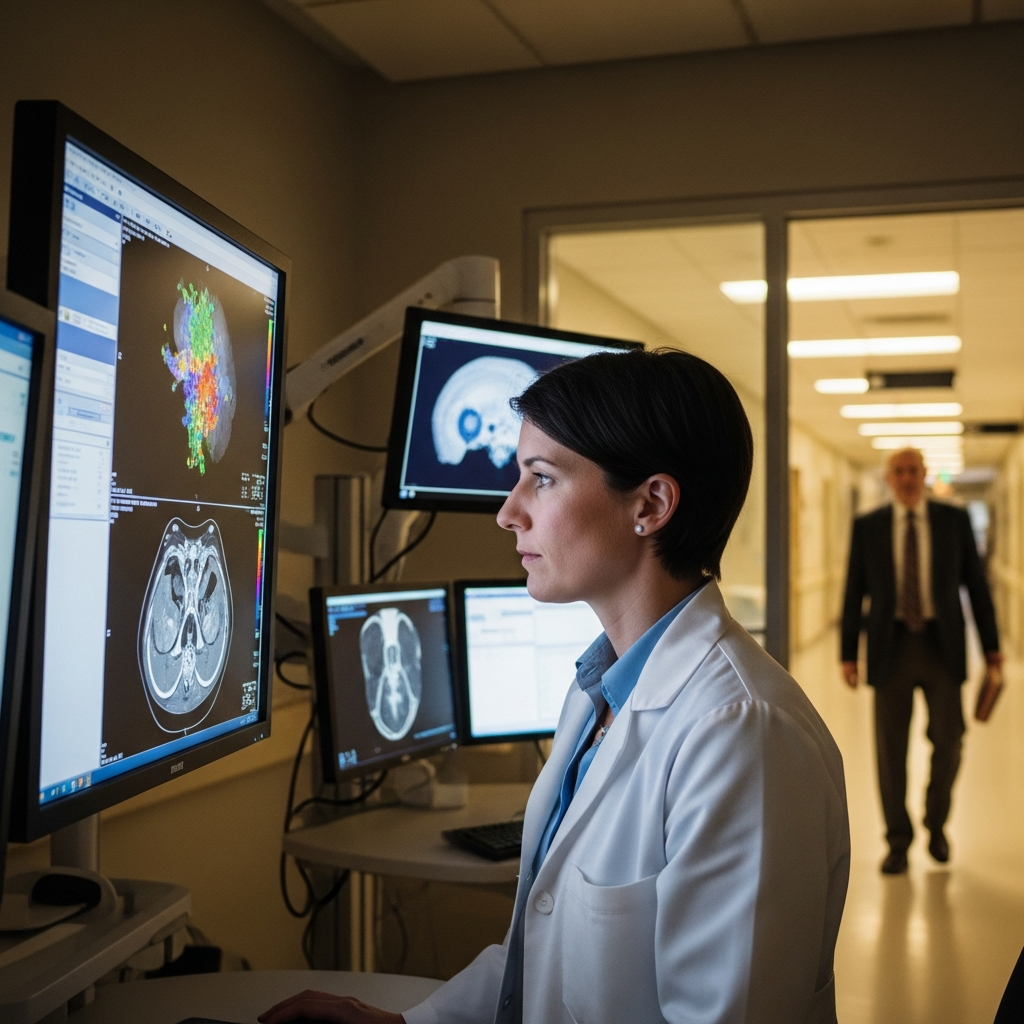
Stanford University researchers have developed an AI system addressing a fundamentally different challenge: monitoring patients with rare cancers following radiation therapy. The tool analyzes imaging data and patient records to detect early indicators of recurrence or treatment complications, enabling potentially earlier clinical intervention.
Rare cancers present a paradox for evidence-based medicine. Limited patient populations mean insufficient data to establish robust monitoring protocols through traditional clinical trials. Oncologists treating these patients often extrapolate from related but not identical malignancies, introducing uncertainty into follow-up care decisions. The Stanford AI system trained on data from thousands of patients creates a knowledge base that individual clinicians could never accumulate through direct experience.
The technology’s value proposition centers on pattern recognition across heterogeneous data. Imaging studies, laboratory results, symptom reports, and treatment histories generate signals that, in isolation, may appear unremarkable. AI identifies subtle combinations of findings that correlate with recurrence or complications, potentially detecting problems before they become clinically obvious through conventional monitoring. For rare cancers where delayed detection significantly impacts outcomes, this temporal advantage could prove clinically meaningful.
From Population Health to Individualized Care: AI’s Dual Role
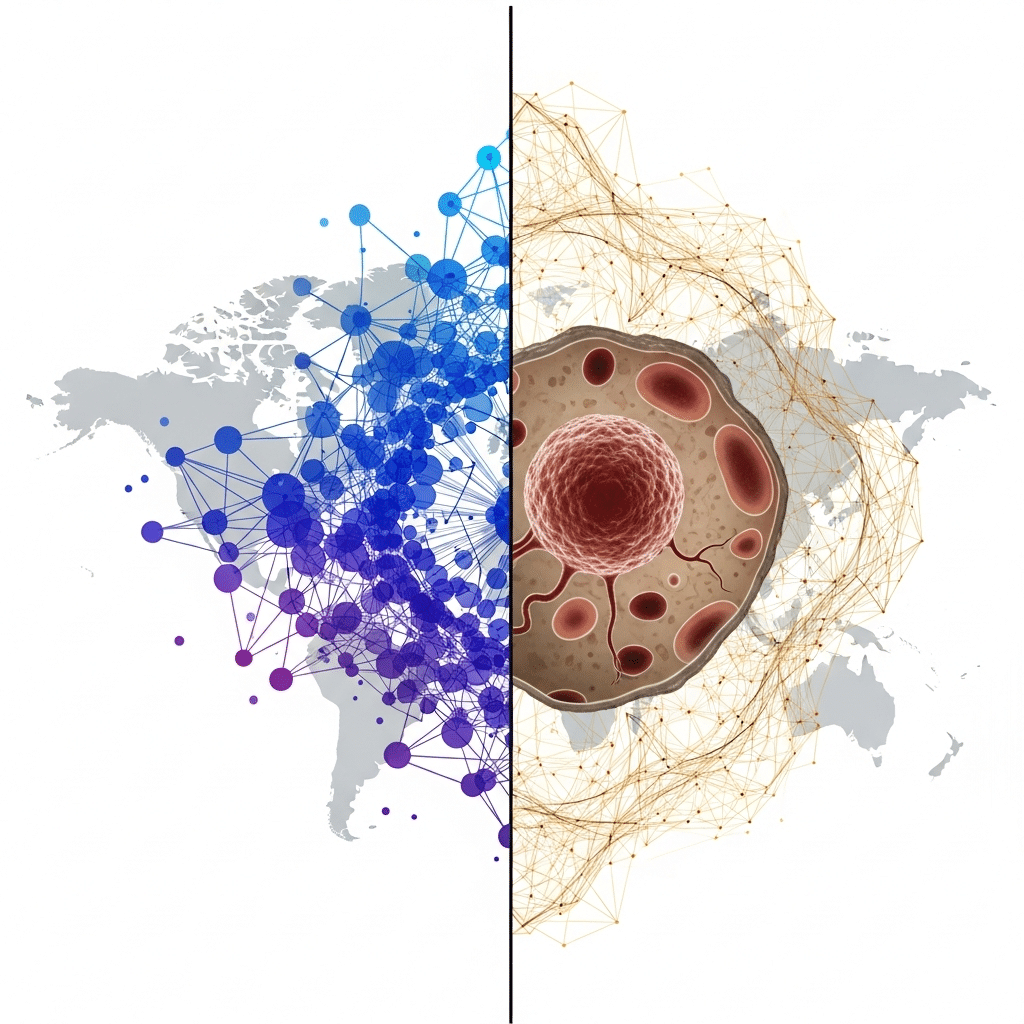
These developments illustrate AI’s capacity to operate simultaneously at population and individual levels—a duality that traditional healthcare analytics struggles to achieve. Population health research typically sacrifices individual nuance for statistical power, while personalized medicine often lacks the comparative context that population data provides. AI bridges this gap by maintaining granular detail while processing population-scale datasets.
The survival mapping system identifies population-level patterns that inform health policy and resource allocation. The rare cancer monitoring system delivers individualized risk assessment for specific patients. Yet both rely on the same fundamental capability: processing complex, multidimensional data to identify patterns that predict outcomes. This shared foundation suggests that AI’s impact on oncology will not be confined to isolated applications but will create an integrated analytical infrastructure spanning research, clinical care, and health system operations.
AI creates an integrated analytical infrastructure for oncology that operates simultaneously at population and individual levels—identifying systemic inequities through large-scale survival mapping while delivering personalized risk assessment for rare cancer patients, a duality traditional healthcare analytics cannot achieve.
The workforce implications deserve attention. These AI systems don’t eliminate the need for oncological expertise; they change what expertise means. Clinicians must develop competencies in interpreting AI-generated insights, understanding algorithmic limitations, and integrating computational findings with clinical judgment. Healthcare organizations adopting these technologies need professionals who combine domain knowledge with data literacy—a skill set that remains scarce in many markets.
Implications for Healthcare Organizations and Workforce Development
For healthcare systems implementing AI in oncology, these developments underscore several operational considerations. First, data infrastructure becomes foundational. AI systems require comprehensive, well-structured data spanning demographics, treatments, imaging, and outcomes. Organizations with fragmented electronic health records or inconsistent data collection face significant implementation barriers.
Second, the clinical workflow integration challenge extends beyond technology deployment. AI-generated insights must reach decision-makers at relevant moments without creating alert fatigue or disrupting established processes. This requires careful design of clinical decision support systems and ongoing refinement based on user feedback.
Third, workforce planning must account for evolving skill requirements. Oncology teams need professionals who can bridge clinical and computational domains—interpreting AI outputs, identifying appropriate use cases, and maintaining quality oversight. Organizations like PhysEmp, which connect healthcare employers with AI-literate professionals, play an increasingly important role as these technologies move from research settings to routine clinical practice.
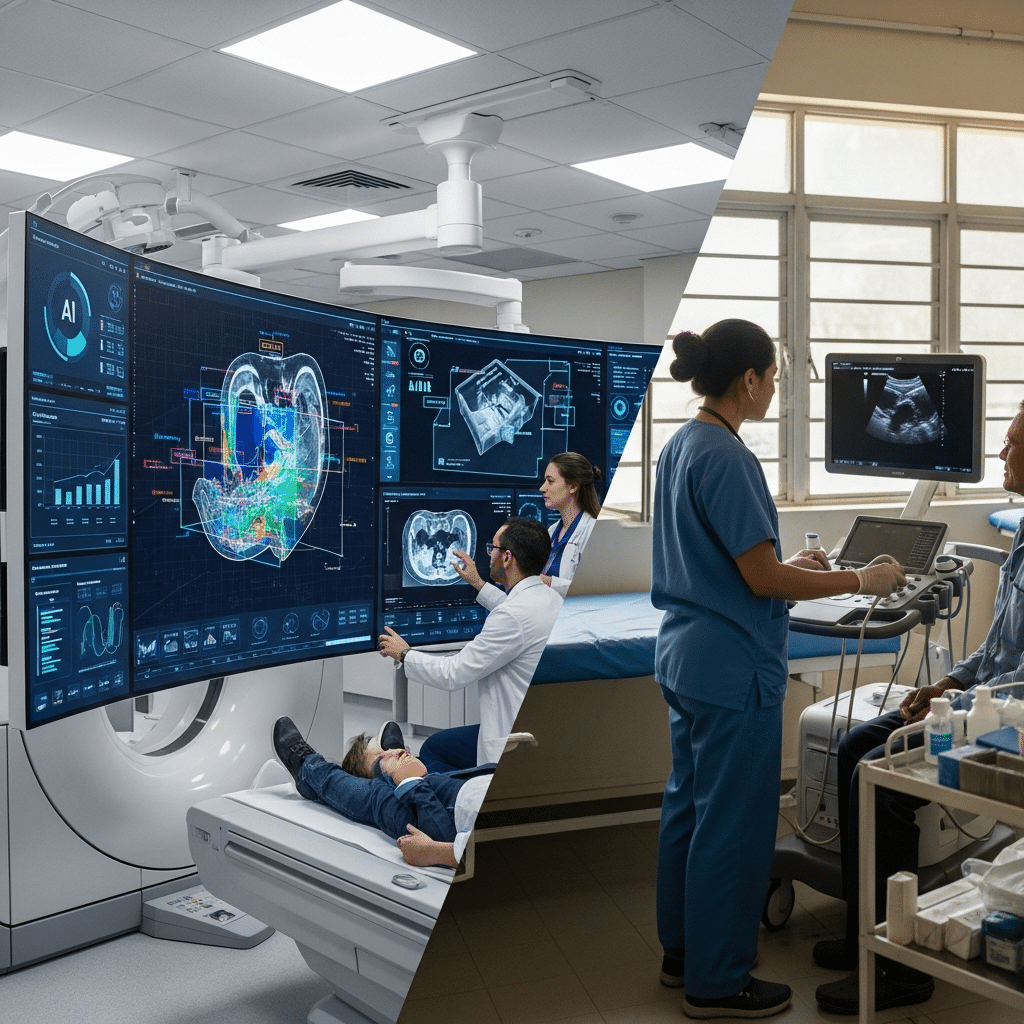
The equity implications warrant particular attention. AI systems that map survival disparities create transparency around inequities, but transparency alone doesn’t drive change. Healthcare organizations must translate these insights into concrete interventions—adjusted resource allocation, targeted outreach programs, or care delivery modifications. Similarly, AI monitoring systems for rare cancers must be accessible beyond academic medical centers to prevent creating new disparities in access to advanced diagnostic capabilities.
Looking Forward: AI as Oncology’s Analytical Foundation
These developments represent early stages of AI integration in oncology rather than mature implementations. Current systems demonstrate proof of concept; widespread adoption requires addressing validation, regulatory, reimbursement, and workflow integration challenges. Yet the trajectory is clear: AI is becoming oncology’s analytical foundation, enabling insights and capabilities impossible through conventional methods.
For healthcare professionals, this transformation creates both opportunities and imperatives. Opportunities exist for those who develop competencies at the intersection of oncology and AI, positioning themselves as essential contributors to technology implementation and oversight. The imperative is adaptation—understanding how AI changes clinical practice, research methodologies, and healthcare delivery even for those not directly developing algorithms.
The cancer care landscape is shifting from data-limited to data-rich, from population averages to individualized predictions, from reactive monitoring to proactive risk assessment. AI serves as the engine driving these transitions, processing complexity at scales that enable new forms of clinical and research insight. Healthcare organizations and professionals who understand and engage with this transformation will shape oncology’s next chapter.
Sources
AI maps the hidden forces shaping cancer survival worldwide – ScienceDaily
Stanford Researchers Use AI to Monitor Rare Cancers after Radiation Therapy – Digital Health News