Why this theme matters now
The Department of Veterans Affairs has simultaneously relaunched its electronic health record program and surfaced a catalog of artificial intelligence projects focused on high‑stakes clinical problems such as suicide prevention. These parallel moves occur against a backdrop of operational strain in the VA’s digital infrastructure and increasing expectations that AI will deliver measurable clinical value. For clinicians, health system leaders, and talent teams, this moment marks a test of whether large, safety‑critical organizations can accelerate IT modernization while responsibly deploying AI into care pathways.
Rebooting a troubled EHR program: speed versus stability
After sustained implementation difficulties and episodes of downtime, VA leadership has signaled a course correction for its EHR modernization effort with a renewed emphasis on faster, more reliable deployments. Any restart of a national EHR program must balance two opposite pressures: the operational imperative to reduce future disruption and the political and financial pressure to show progress. Faster delivery cycles can shorten feedback loops and reduce the risk of long, unproductive rollouts, but they also require mature DevOps practices, robust test environments, and explicit rollback mechanisms to protect patient safety.
For healthcare organizations watching the VA, the core lesson is not merely technical. It is organizational: success depends on structured AI in Physician Employment & Clinical Practice, cross-functional coordination between clinical leadership and IT, and transparent metrics that track both deployment velocity and system reliability. These elements determine whether a faster cadence reduces or amplifies clinical risk.
AI use cases aligned with clinical urgency: suicide prevention and EHR augmentation
The VA’s AI inventory highlights projects that directly intersect with urgent clinical priorities, notably suicide prevention, and with practical EHR integrations that support clinicians at the point of care. Prioritizing AI applications that address clear unmet needs is a pragmatic choice: targeting high‑impact, narrowly scoped problems increases the chance of delivering measurable benefits and builds institutional confidence in AI tools.
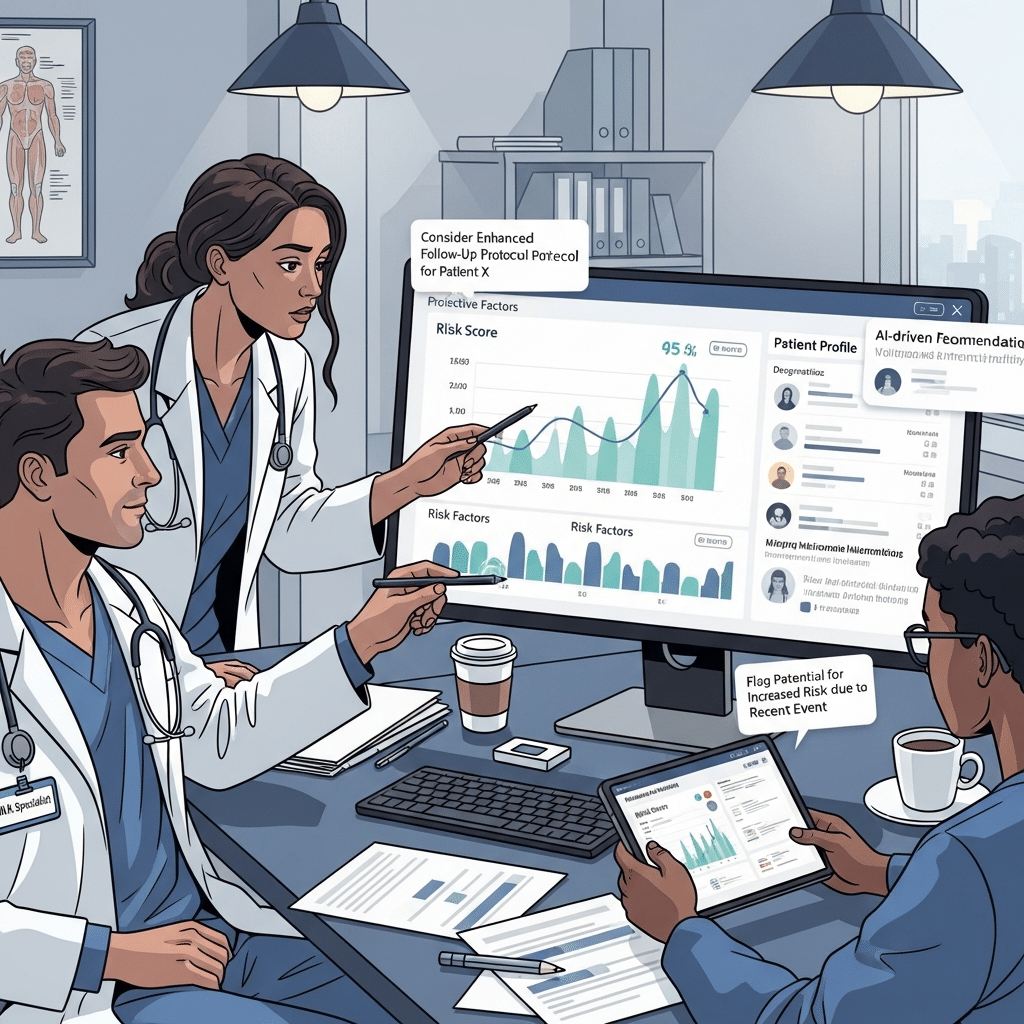
Operationalizing AI for suicide prevention presents particular challenges: predictive models must be integrated into clinician workflows in a way that aids, rather than burdens, decision‑making; alerts must be calibrated to minimize false positives and alert fatigue; and systems must preserve privacy and civil liberties while complying with clinical standards. When AI outputs are surfaced within the EHR, they can become part of an actionable care plan—but only if the EHR can present insights contextualized for clinicians and track downstream interventions.
Call Out: Embedding AI within a national EHR program demands alignment of model performance, user experience, and safety governance. Absent that alignment, predictive alerts risk being ignored or causing harm; when aligned, they provide clinicians with timely, actionable signals that can change outcomes.
Integration, governance, and data stewardship: the hard operational problems
Combining an accelerated EHR program with concurrent AI deployments intensifies three operational burdens. First, integration: AI systems rely on consistent, well‑structured data flows from the EHR; any instability in the underlying record increases the risk that models will produce unreliable outputs. Second, governance: AI in clinical settings requires model validation, monitoring for drift, and transparent performance reporting so clinicians and leaders can trust recommendations. Third, data stewardship and privacy: predictive models—especially for mental health—operate on sensitive information that requires strict controls and clear consent frameworks.
These challenges are interconnected. Robust governance reduces clinical risk and enables iterative delivery, which in turn supports faster but safer EHR rollouts. Conversely, treating modernization and AI as separate initiatives can amplify technical debt and operational risk.
Call Out: Effective deployment of AI at scale depends less on model novelty and more on reliable data pipelines, continuous validation, and clinician trust. Investment in these foundations is the multiplier for any front‑end AI feature.
Workforce and recruiting implications for healthcare organizations and talent teams
The VA’s dual push highlights new hiring priorities for health systems: clinicians and non‑clinical staff who can operate at the intersection of informatics, clinical workflows, and change management will be in demand. Roles that blend clinical credibility with technical fluency—clinical informaticists, implementation scientists, and product managers with health experience—become gatekeepers for safe AI adoption.
Recruiting for these hybrid roles is a strategic imperative for organizations that plan to scale AI inside EHRs. Talent pipelines must be cultivated with targeted training, cross‑sector hiring, and retention strategies that recognize the unique stress of working in safety‑critical modernization programs.
Implications for the healthcare industry
The VA case crystallizes a broader industry tension: the need to move faster on digital transformation while preserving or improving safety and clinician experience. The most scalable approach will combine incremental EHR releases with a disciplined governance framework for AI—one that enforces model evaluation, monitors real‑world performance, and treats clinician workflows as the primary unit of change.
For health system leaders and recruiters, the practical priorities are clear: invest in interoperability and data quality, resource governance and monitoring capabilities, and build teams that bridge clinical and technical domains. The alternative—rapid feature rollouts or disconnected AI pilots—risks eroding clinician trust and patient safety gains.
Sources
VA EHR reboot aims for faster deployments after years of delays and outages – Federal News Network
VA AI Inventory Highlights Suicide Prevention, EHR Use Cases – ExecutiveGov