
This analysis synthesizes 4 sources published February 2026. Editorial analysis by the PhysEmp Editorial Team.
State governments are shifting from stopgap hiring measures to deliberate investments in education, training infrastructure, and retention programs to address persistent shortages of nurses and primary care physicians. That pivot — moving funding upstream into training capacity and workplace redesign — is already reshaping where and how clinicians enter and remain in practice.
These developments are directly relevant to the healthcare workforce and labor market discussion: dollars for expanded programs and innovation centers change local supply dynamics, while retention policies alter career economics for practicing clinicians. For physicians and hiring leaders, the emerging signal is clear: long-term talent availability will increasingly reflect state-level policy choices and the strength of local education-employer linkages.
Funding targeted to education expands local capacity
Multiple states are awarding targeted grants to expand nursing program seats and boost clinical training capacity. Those grants accelerate the number of graduates and reduce the time-to-practice for new clinicians by funding faculty, clinical simulation resources, and additional cohort cohorts. Importantly, this is not just about headcount — it addresses structural bottlenecks such as limited preceptor availability and scarce clinical placements that have constrained program growth for years.
For individual clinicians weighing a move, expanded in-state training programs create clearer, lower-cost pathways into practice and may offer structured transition supports (extended preceptorships, state-sponsored stipends). For hospital executives and recruiters, predictable increases in local program graduates enable workforce planning that relies less on high-cost contingent labor and more on ‘grow-your-own’ strategies tied to community pipelines.
Innovation centers: hubs for aligned training and employer needs
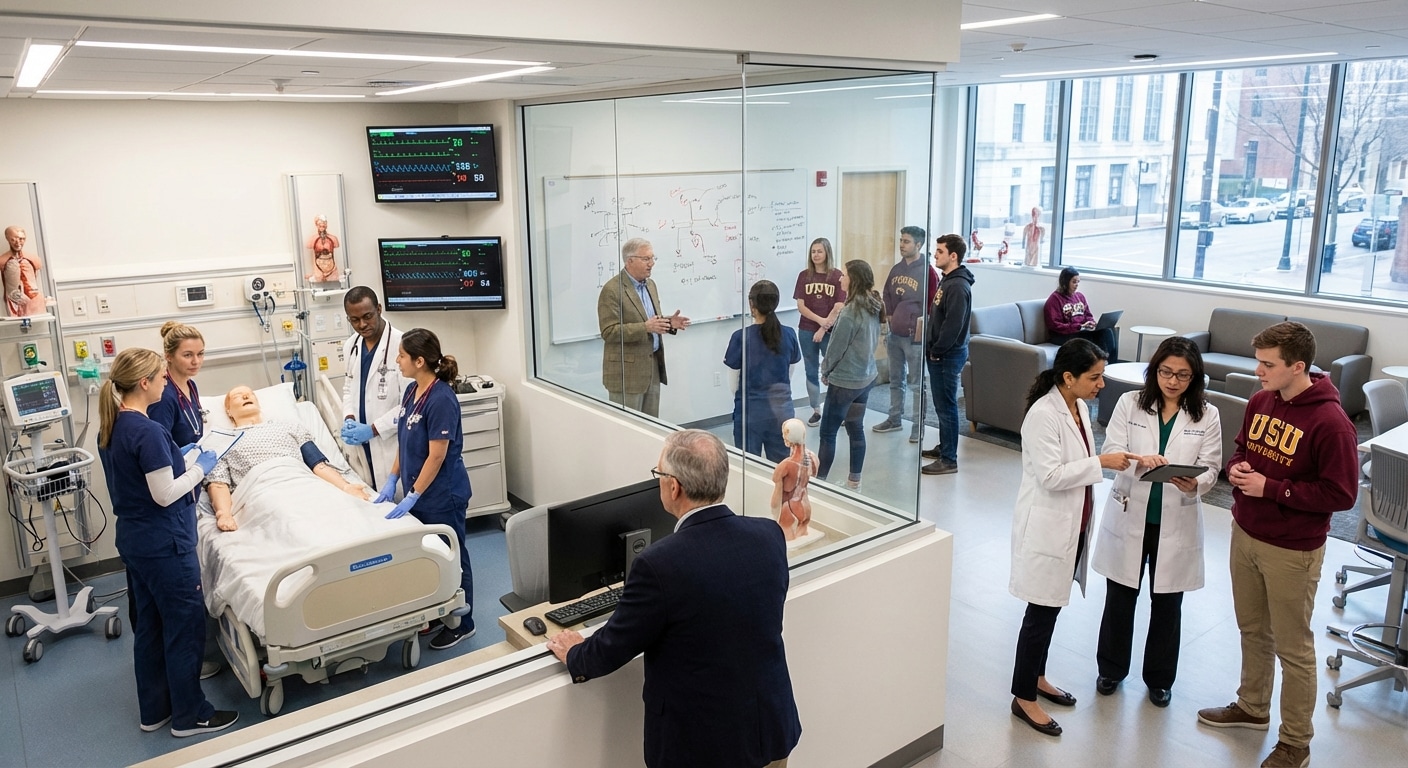
States are opening innovation centers that co-locate simulation labs, upskilling classes, and employer partnerships to align curricula with local care delivery needs. These centers function as coordination nodes where educators, health systems, and workforce agencies can rapidly iterate training models, test new care team configurations, and provide continuing education for incumbent staff.
For recruiters, partnership with such centers reduces onboarding friction and shortens time-to-full-productivity by ensuring graduates have exposure to the health systems’ workflows and technology. For practicing clinicians, nearby innovation hubs provide accessible pathways for career advancement and credentialing that make staying in-state more attractive than migrating to markets with higher immediate pay but weaker long-term supports.
Call Out — Strategic leverage: Hospitals that co-invest with state-funded training hubs gain hiring priority for graduates and improve retention by offering guaranteed transition pathways and career ladders tied to local workforce development investments.
Retention — the decisive factor for sustaining primary care
Several reports emphasize that retention, not just recruitment, determines primary care capacity over time. Incentives such as loan repayment tied to service commitments, practice redesign to reduce administrative burden, and targeted support for clinician well-being have greater ROI than episodic sign-on bonuses because they preserve continuity of care and reduce replacement costs.
Physicians assessing job offers should weigh state-level retention supports — loan repayment programs, streamlined credentialing, and practice-level workload redesign — because they materially alter lifetime earnings and satisfaction. Recruiters and executives should pivot hiring packages toward multi-year retention investments (mentorship, flexible scheduling, workload redistribution) rather than one-time financial inducements that do not address burnout drivers.
Short-term staffing vs. long-term pipeline: a pragmatic hybrid
In practice, states and health systems are combining short-term staffing relief with long-term supply-building. Agency staffing and travel clinicians plug immediate gaps but raise operating costs and disrupt continuity. Simultaneously funding education expansion and innovation centers requires patience and coordination but produces stable supply and lower marginal staffing costs over years.
Hospital leaders must therefore manage a two-horizon problem: protect service continuity now while committing to multi-year partnerships with educational institutions and workforce agencies. Clinicians can leverage visible, state-backed investments as indicators of future job stability and as negotiating leverage for roles that include development opportunities.
Call Out — Practical trade-off: Short-term hires preserve immediate care capacity but increase churn and long-run costs. Investing in training and retention reduces volatility, but it requires aligned incentives across state agencies, educators, and employers and a multi-year commitment.
Where mainstream coverage is incomplete
Public reporting often highlights grant amounts and facility openings but underplays critical coordination challenges. Expanding seat capacity without simultaneous alignment of clinical placement availability, preceptor incentives, credentialing throughput, and employer hiring commitments risks creating trained workers who cannot be absorbed into local jobs. Similarly, education expansion and retention are frequently treated as separate remedies; their effectiveness depends on integrated pathways that connect training, credentialing, placement, and workplace redesign.
Implications for healthcare organizations and recruiting
Over the next 3–7 years, state investments in training and retention are likely to shift regional supply curves. Health systems that proactively partner with state programs and innovation centers will secure priority access to graduates and capture efficiency gains in onboarding and retention. For recruiters, the competitive advantage will come from place-based strategies: co-investing in local training, guaranteeing preceptorships, and structuring multi-year retention supports rather than relying primarily on national hiring markets.
For physicians contemplating career moves, evaluate not only organizational offers but also the state-level ecosystem: loan repayment, clinical placement capacity, and visible workforce initiatives matter for long-term career sustainability. For hospital executives, prioritize agreements that guarantee clinical placements, fund preceptor incentives, and redesign roles to address workload and administrative burden — these levers convert training investments into retained, productive clinicians.
Sources
Amid statewide shortage, schools and hospitals aim to increase nurse workforce – Keene Sentinel
Future of primary care in state depends on retention – Las Vegas Sun