Why this matters now
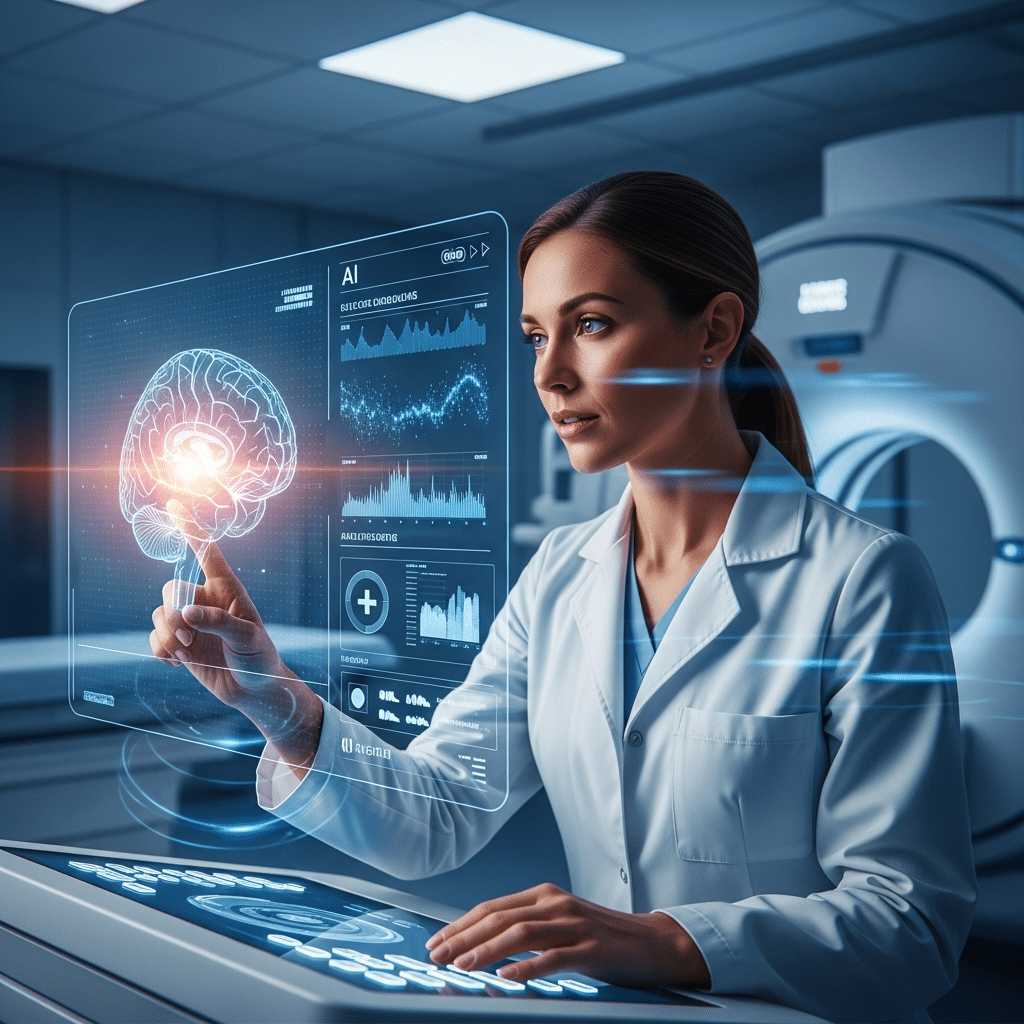
Neuroimaging volume is rising worldwide while neurologic conditions that benefit from rapid intervention—stroke, traumatic brain injury, certain infections—remain time-sensitive. Recent advances in deep learning architectures and access to larger imaging datasets have produced models that generate diagnostic outputs in sub-minute timeframes. That combination of growing clinical demand and near-instant algorithmic reads represents a turning point within broader AI in healthcare deployment, reshaping how radiology and neurology teams triage, interpret, and act on brain MRI data.
Speed, clinical utility, and triage potential
Fast automated reads change more than throughput; they alter clinical pathways. A model that produces a reliable classification or alert in seconds can re-prioritize worklists, trigger early specialty consults, and hasten treatment for patients with acute pathology. In practice, that means imaging performed off hours or in low-resource centers could be rapidly escalated to tertiary teams, reducing door-to-treatment delays for a subset of patients.
However, speed is only useful when paired with robust clinical performance. Sensitivity and specificity thresholds must align with intended use—high-sensitivity models make sense for triage to avoid missed emergencies, while high-specificity systems could be used to reduce false positive workflow burdens. Prospective studies comparing algorithm alerts to clinician decisions, and evaluating downstream outcomes (time-to-intervention, morbidity, mortality), are essential before changing standard care pathways.
Call Out — Rapid reads change priorities: A sub-minute algorithmic read can re-route a study from routine to urgent, but that rerouting must be governed by validated performance metrics and clear escalation protocols so that speed improves outcomes rather than creating noisy alerts.
Data, generalizability, and robustness
The capability of an AI model to interpret MRIs in seconds depends heavily on the diversity and scale of training data, and on design choices that affect robustness. Variability across scanner vendors, field strengths, pulse sequences, and patient demographics creates domain shifts that can substantially degrade model performance if not accounted for.
To be operationally reliable, models require external validation across institutions, prospective testing across imaging platforms, and mechanisms for continuous monitoring after deployment. Techniques such as federated learning, augmentation strategies that simulate scanner differences, and systematic calibration can mitigate—but not eliminate—the risk of performance drop-off in new settings.
Integration, explainability, and regulation
Translating a fast read into clinical impact involves more than model accuracy. Integration into PACS, radiology information systems, and electronic health records determines whether the output reaches the right clinician at the right time. Human factors matter: alerts must be intuitive, actionable, and accompanied by context such as confidence scores or visualizations that clinicians can interrogate.
Regulatory and medicolegal environments will also shape adoption. Clearance pathways differ by jurisdiction and by intended use (triage vs. diagnostic replacement). Institutions must define accountability lines: when does an algorithmic read augment clinician judgment versus when does it make autonomous decisions? Governance frameworks, explainability provisions, and post-market surveillance plans are prerequisites for safe, scalable use.
Call Out — Explainable, integrated outputs beat raw accuracy: Algorithms packaged without clear interfaces, confidence measures, and escalation rules will underdeliver clinically—successful deployments prioritize usability and oversight as much as model metrics.
Access, workforce implications, and recruiting
One of the most tangible promises of rapid MRI interpretation is expanded access. In regions with limited neuroradiology coverage, near-instant algorithmic triage could surface critical findings for remote review or immediate transfer. That can serve as a force multiplier for specialist teams and improve equity in acute neurologic care.
At the same time, these technologies reshape workforce needs. Radiologists and neurologists will increasingly work alongside AI, focusing on complex cases, interpretation nuance, and therapeutic decisions informed by algorithmic pre-screens. New roles will emerge—clinical ML engineers, imaging informatics specialists, and implementation leads—demanding different hiring profiles and training pathways.
For healthcare organizations and staffing platforms, this transition creates recruiting imperatives: hire clinicians with AI literacy, add data-savvy operational staff, and build continuous education programs. Job marketplaces that understand both clinical requirements and technical competencies will be valuable intermediaries as teams adapt to hybrid human-AI workflows.
Implications for health systems and recruiters
Adopting fast MRI-reading algorithms offers clear benefits—faster triage, extended specialist reach, and potential workflow efficiency—but realizing those benefits requires deliberate strategy. Health systems should prioritize multi-site validation, integration pilots that measure process and outcome metrics, and governance structures that address safety and liability. Recruiters and workforce planners must anticipate evolving role definitions and upskill clinical staff to work in hybrid environments.
For recruiters, the immediate opportunities are twofold: fill roles that implement and maintain AI-driven imaging tools, and identify clinicians who can operate within AI-augmented care pathways. Successful early adopters will be those that treat algorithmic tools as clinical infrastructure—requiring technical upkeep, change management, and ongoing performance monitoring—rather than as one-off experiments.
Sources
An AI model that can read and diagnose a brain MRI in seconds – Michigan Medicine
This AI Diagnoses Brain Disorders in Seconds – SciTechDaily
AI That Reads Brain MRIs in Seconds Could Transform Neurologic Care – Inside Precision Medicine