
This analysis synthesizes 8 sources published the week ending Jun 4, 2026. Editorial analysis by the PhysEmp Editorial Team.
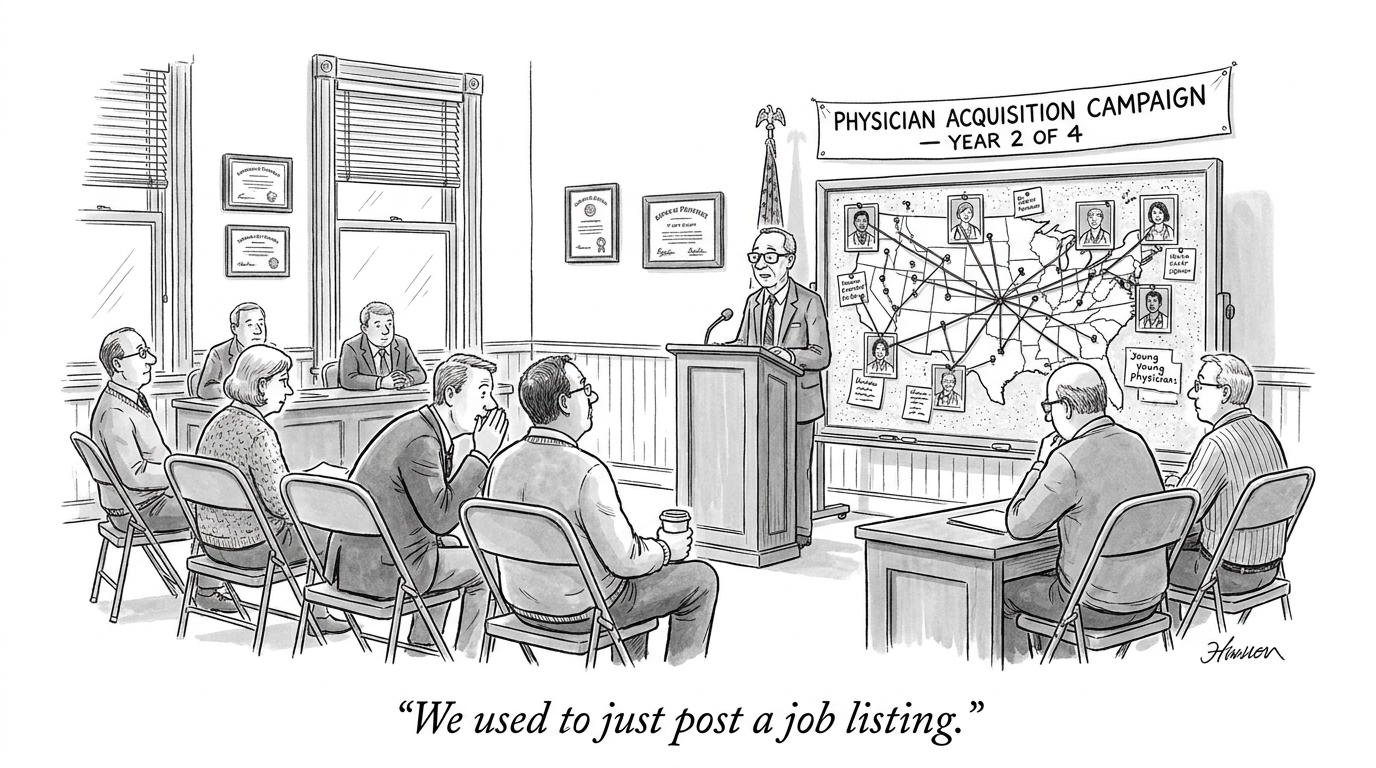
Healthcare organizations facing chronic physician shortages are moving beyond piecemeal recruiting. They’re funding multi-year programs and building partnerships that change how talent pipelines work in underserved markets. From Nevada’s four-year, 200-physician drive for a new children’s hospital to Canadian towns directly underwriting recruitment, more systems are treating physician hiring like an infrastructure project rather than a single transaction. That shift matters for Physician Recruiting & Staffing Insights and will push offer structures and bargaining power in many specialties.
The infrastructure model: multi-year recruitment timelines
Intermountain’s Primary Children’s Hospital in Nevada is a clear example. With a 2030 opening on the books, the group started a four-year recruitment push aiming for roughly 200 specialists. That timeline flips the usual just-in-time hiring on its head. Pediatric subspecialists are in short supply, families need time to consider moves, and compressed credentialing only adds delay.
Announcing big hiring goals years ahead also signals intent to the market. Competing pediatric programs now have to think defensively: how to keep current clinicians from being poached or how to improve packages before departures happen. The practical result is higher preemptive spending on compensation and working conditions in regions that thought they were stable.
Municipal and community capital enters the recruitment stack
Across several communities, local governments and civic groups are stepping in with money and organized programs. Cold Lake’s push, Mission’s council-backed Division of Family Practice, and mayoral involvement in Laredo show cities treating physician supply as public infrastructure. Call it community investment; it also functions as a structural subsidy that changes the competitive equation.
That subsidy creates asymmetry. A hospital in a town with municipal recruitment money can effectively deliver richer packages without showing the cost on its own books. Competing systems without that local backing suddenly find standard compensation benchmarks misleading—offers that look similar on paper may differ sharply once community dollars enter the picture.
Regional financial products add another twist. Specialized lending for physicians buying homes or starting practices ties clinicians to a place with real financial consequences for moving later. Those loans don’t just help a recruit sign on; they raise the cost of leaving.
Credentialing as a competitive bottleneck
Recruitment gets headlines, but credentialing often sets the clock on when a physician actually begins work. Slow verification processes cost systems in two ways: lost revenue from empty shifts and candidates slipping away while hospitals juggle paperwork.
A system hiring dozens or hundreds of clinicians over a set period faces very different credentialing demands than one hiring a few at a time. Without investing in credentialing capacity and process fixes, aggressive recruiting plans will stall. Faster hiring means nothing if providers can’t be cleared to practice.
Geographic arbitrage and early-career targeting
Some states create natural advantages for early-career physicians: decent pay, lower costs of living, friendlier malpractice climates, and places where a community connection happens faster. Recruiters who can translate those structural benefits into a convincing narrative gain an edge over rivals who compete on headline salary alone.
That’s why permanent placement teams are bulking up. Locum tenens fills immediate coverage gaps, but it doesn’t fix the broader shortages driving today’s recruitment intensity. Health systems need partners who can actually place and support long-term hires, not just provide short-term coverage.
Strategic implications for hiring competition
Executives and in-house recruiters are now competing with capital and community-backed programs, not just other hospitals. Organizations announcing large, multi-year campaigns reshape expectations: competitors must spend earlier on retention and preparedness, not wait until vacancies force reactive hiring.
For physicians, the market tilt creates negotiating room—especially in tight specialties. When systems bring municipal partnerships, lending incentives, and extended timelines to the table, they reveal how far they’ll go to attract clinicians. Candidates who see multiple offers in a single market can press for better terms, particularly around start-up support, loan programs, and faster credentialing.
Expect recruitment spending to keep rising. Systems that treat physician acquisition as an operational expense will fall behind those that plan and fund hiring as long-term infrastructure. Winners will be the organizations that match recruitment ambition with credentialing capacity, community partnerships, and real permanent-placement expertise.
On a practical level this looks less like a recruiter sending a single offer and more like a small campaign: a municipal council vote, a lender signing terms, a human resources team expanding credentialing staff, and a handful of physicians weighing not just salary but whether their family, home loan, and licensing paperwork can all line up. It’s messier than a spreadsheet—and harder to reverse once started.
Sources
Nevada’s standalone children’s hospital begins recruiting 200 doctors ahead of 2030 opening – FOX5 Las Vegas
Cold Lake pushes physician recruitment as healthcare expansion continues across region – Lakeland Connect
Laredo physician-retention discussion draws King mayor – Laredo Morning Times
Specialized Lending Helps Region Keep Medical Talent Close to Home – Talk Business & Politics
Council supports Mission Division of Family Practice physician recruitment initiative – Mission City Record
How long does hospital credentialing take? The quiet cost of provider readiness – Healthcare Dive
Top 10 States for Early-Career Physicians – Conexiant
Radius Staffing Solutions Strengthens Permanent Placement – OpenPR