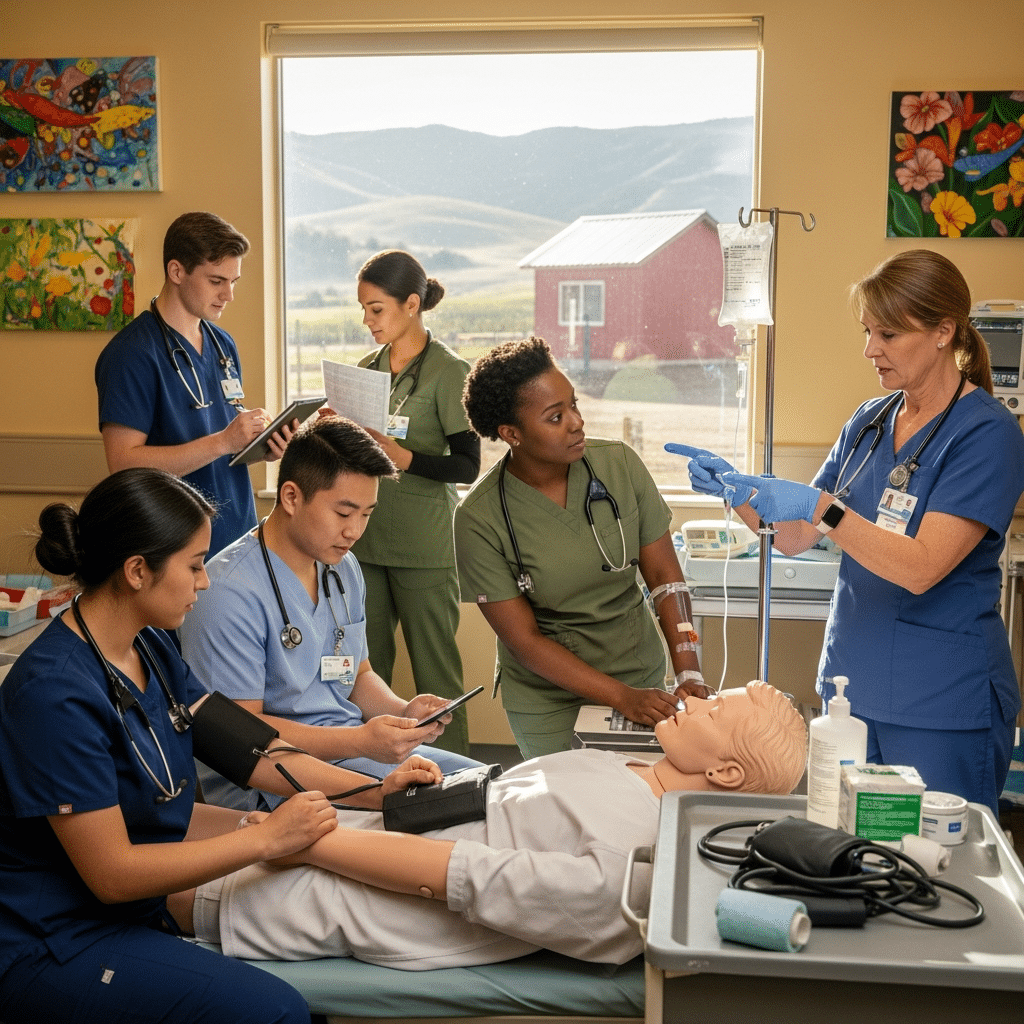
Why this theme matters now
Health systems across the U.S. are operating under sustained nurse staffing shortfalls driven by retirements, geographic maldistribution, and elevated turnover. Academic institutions are responding by growing capacity and redesigning pathways into practice. Those moves matter because supply-side interventions — more seats, new rural tracks, targeted recruitment strategies — are the most direct, durable levers to rebuild the workforce. For leaders in hospitals, health systems, and workforce planning, understanding how universities are reshaping education is essential for aligning hiring strategies, clinical training partnerships, and long-term staffing forecasts within the broader healthcare workforce and labor market.
Expanding capacity — quantity and quality
Universities are increasing program capacity in multiple dimensions: larger incoming cohorts, additional clinical sites, and expanded use of simulation and competency-based assessments. Expanding headcount is necessary but not sufficient; quality must be preserved through updated curricula, more clinical preceptors, and investments in faculty development. The practical constraints are familiar: accreditation requirements, available clinical placements, and the national shortage of nurse educators. Institutions that succeed typically pair seat expansion with investments in faculty recruitment and retention — offering competitive salaries, protected time for teaching, and supportive career tracks that reduce the risk that scaling up degrades educational outcomes.
Designing rural and distributed pipelines
Rural health care faces acute shortages that differ from urban markets: smaller facilities, longer patient travel times, and fewer specialty supports. Universities are increasingly adopting distributed education models — cohort-based regional tracks, clinical rotations embedded in rural hospitals and clinics, and partnerships with community providers — to cultivate nurses who are likely to stay in underserved areas. These programs recognize that clinical and social exposure during training influences practice location choices; students trained in rural settings show higher propensity to remain there after licensure. For workforce planners, supporting such distributed models through clinical affiliation agreements, teleprecepting, and shared investment in rural simulation centers can multiply impact.
Call Out: Scaling seats alone won’t solve the shortage — programs must pair expansion with targeted faculty hires, rural clinical pipelines, and employer partnerships to convert graduates into stable hires where they are needed most.
Rethinking recruitment and retention of pre-licensure and early-career nurses
Increasing program capacity needs to be matched by deliberate recruitment strategies aimed at a diverse cohort and by retention strategies that reduce attrition during training. Universities are experimenting with accelerated pathways, bridge programs for allied health professionals, and partnerships that guarantee clinical placements or employment commitments from local health systems. On the employer side, recruitment playbooks emphasize competitive compensation, structured onboarding, residency programs for new graduates, and investment in workplace culture. These employer strategies complement academic production by smoothing transition-to-practice, lowering early-career turnover, and improving long-term retention.
Addressing the educator and clinical preceptor bottlenecks
One of the persistent choke points in expanding nursing education is the shortage of qualified faculty and preceptors. Solutions in practice include hiring clinicians with joint academic appointments, offering faculty development stipends, leveraging tele-mentoring for remote clinical supervision, and expanding simulation labs to substitute where clinical placements are scarce. Policymakers and health systems can accelerate expansion by funding faculty fellowships, underwriting preceptor stipends for community partners, and coordinating state-level clinical site sharing to optimize placement capacity.
Call Out: Investing in nurse educators and preceptors provides outsized returns — every funded teaching position or preceptor stipend unlocks multiple student slots and accelerates the path from training to hire.
Implications for healthcare organizations and recruiters
For health systems and recruiters, the academic response to the shortage creates both opportunity and responsibility. Opportunity: stronger pipelines of homegrown talent, expanded candidate pools from distributed programs, and negotiation leverage to co-design residency and hire-back agreements. Responsibility: partnering proactively with universities to create clinical placements, preceptor incentives, and employment pathways that ensure graduates enter stable positions where demand is highest.
Recruiters should: (1) engage early with local programs to shape curricula toward system needs; (2) fund or subsidize residency programs that reduce early-career attrition; (3) track graduates from program expansions and rural tracks as high-priority candidates; and (4) align compensation, career ladders, and workplace safety initiatives to retain newly hired nurses. AI-enabled hiring platforms can help match graduates’ training experiences with appropriate openings and predict retention risk, a practical use case for technology-enabled job boards.
Sources
Univ. Alabama rolls out plan to fill nursing shortage – WAFF
University of North Dakota addresses rural nursing shortage with new program – KVRR
The Effects of Critical Issues in the Nursing Workforce – WXXI Connections
Winning Edge: Recruiting the Best Nurse Team – HealthLeaders Media