This analysis synthesizes 7 sources published Feb 25–26, 2026. Editorial analysis by the PhysEmp Editorial Team.
Why this matters now
The immediate tension: states are actively lowering licensing barriers to import physicians while simultaneous federal immigration and visa-policy shifts are raising the financial and administrative hurdles that make those recruits less attainable. That push–pull is creating a fragile pipeline: state reforms can accelerate hiring only if federal visa costs, processing delays, and credentialing frictions don’t negate those gains.
For hospital leaders and physician recruiters wrestling with shortfalls, the decisions you make about where to invest recruiting effort will be shaped as much by state licensing changes as by federal visa economics. For practical guidance on strategy, see our core pillar on physician recruiting and staffing.
1) State licensing reforms: provisional pathways and repeat-residency relief
Several state legislative efforts aim to clear two common obstacles: lengthy licensure timelines and repeat-residency requirements that effectively bar internationally trained physicians (IMGs) even when they hold U.S. certification. Provisional license bills and proposals to waive or relax repeat-residency rules reduce time-to-hire and expand the candidate pool able to practice in underserved and rural areas quickly. Operationally, this translates into shortened vacancy periods for primary care and certain procedural specialties most affected by coverage gaps.
2) Federal immigration policy: rising costs and cooling incentives
At the federal level, proposals to raise visa fees—most prominently new H‑1B fee proposals—are creating countervailing pressure. Higher per-hire visa charges alter the recruitment math: systems with thin operating margins face steeper trade-offs between covering visa-related expenditures and funding other clinical priorities. The result is segmentation—large, well-funded health systems absorb costs more easily while rural hospitals and safety-net providers are priced out.
Call Out — Funding friction: A modest state licensure change can shave months from hiring timelines, but a large federal visa fee increases the per-hire cost by thousands — turning a staffing fix into a budget crisis for resource-constrained hospitals.
3) Operational fragility: credentialing deadlines and sudden sidelining
Separate from policy debates, administrative deadlines and revalidation cycles can suddenly sideline large numbers of practicing physicians. These operational shocks amplify the value of provisional and expedited licensing but also create mismatches: a physician recruited under a faster state pathway still needs timely federal visa processing, credentialing completion, and hospital privileging. Delays at any stage can convert a prioritized hire into a swinging vacancy.
4) Recruitment ecosystem: conferences, networks, and legal infrastructure
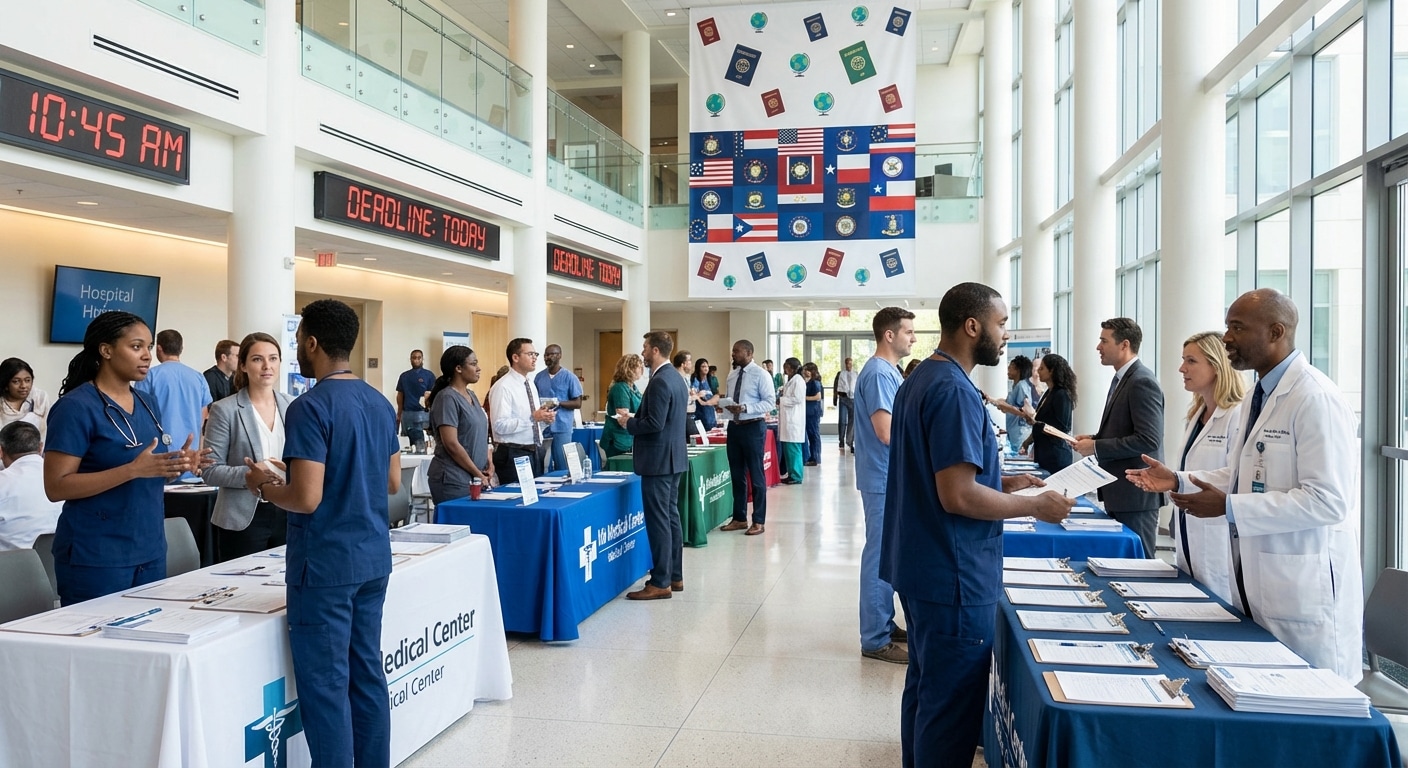
Industry groups and recruitment organizations are reacting by convening education and networking events focused on aligning licensing reforms with immigration operations. These gatherings reflect recognition that policy change must be operationalized—through targeted pipelines, immigration counsel integration, and employer-paid visa strategies—to produce starts rather than headlines. Recruiters who build legal and logistics capacity into offers materially raise the probability that a legislative win becomes a completed hire.
Call Out — Tactical implication: Recruiters who pair provisional licensing pathways with on-staff or contracted immigration counsel convert legislative wins into actual starts; those who don’t will find candidates lost to paperwork and bills.
Where conventional wisdom falls short
Mainstream coverage often frames licensing liberalization as a unilateral fix—lift a rule, recruit doctors, solve shortages. That framing is incomplete. It overlooks the systemic dependency on federal immigration economics, processing timelines, and employer capacity to absorb increased visa costs. State-level reforms increase supply potential, but without alignment on visa affordability and administrative throughput, that potential will largely remain unrealized in the most underserved communities.
Implications for physicians considering a move
Internationally trained physicians evaluating U.S. opportunities should see provisional licenses and waived repeat-residency rules as new entry points, but not as guarantees. Scrutinize total cost and timeline commitments: who pays for visa fees, what immigration legal support is provided, and are start dates tied to conditional approvals? Ask recruiters for written timelines that include federal processing contingencies and employer-sponsored fee coverage.
Implications for hospital executives and recruiters
Executives must treat recruitment as a cross-jurisdictional project: track state legislative windows for licensure change and overlay federal policy risks such as fee proposals and processing backlogs. Short-term tactics include negotiating employer-paid visa costs, investing in immigration legal capacity, and prioritizing interim staffing solutions while IMGs clear federal processes. Strategically, systems should evaluate concentrating recruitment in states where combined state and federal dynamics yield the highest probability of successful starts.
Strategic recommendations
1) Integrate immigration counsel early in the recruiting cycle to close paperwork and processing gaps.
2) Model full-cycle costs for IMG hires—include proposed fee increases and run scenario-based budgeting.
3) Build redundancy: pair state-focused IMG recruitment with domestic pipeline investments and locum partnerships to reduce single-policy dependence.
4) Coordinate advocacy: hospital associations should collectively oppose fee proposals that would nullify state licensing progress and lobby for expedited processing for clinical staff.
Conclusion — What this means for hiring strategy
Policy momentum at the state level creates a genuine near-term opportunity to shorten vacancy timelines and expand the pool of clinicians willing to work in underserved areas. But federal immigration economics and administrative capacity remain gatekeepers: without deliberate immigration budgeting, legal support, and scenario planning, state reforms risk becoming symbolic rather than operational. For physicians, executives, and recruiters, the practical imperative is to convert legislative gains into hires through coordinated legal, financial, and operational action.
Sources
Bill may help bring more physicians to rural areas – Kentucky Today
Committee Passes Provisional Medical License Bill – LexingtonKY.news
US visa fees: Indian doctors face hurdles; rural care faces shortage – IndiaWest
100,000 H-1B fee proposal raises concerns amid U.S. doctor shortage – National Herald India