This analysis synthesizes 13 sources published the week ending Mar 31, 2026. Editorial analysis by the PhysEmp Editorial Team.
For the first time in the EHR era, physicians are voluntarily adopting a documentation technology—and reporting genuine satisfaction with it. Ambient AI scribes have crossed a threshold that previous clinical technologies never achieved: physician enthusiasm. This shift carries profound implications for AI in Physician Employment & Clinical Practice, fundamentally altering how health systems structure clinical workflows, measure productivity, and compete for physician talent. Unlike the EHR implementations that drove burnout rates to crisis levels, AI scribes are being embraced precisely because they address the documentation burden that has eroded job satisfaction across specialties.
The deployment pattern emerging this week reveals something beyond incremental efficiency gains. From rural New Mexico to academic medical centers in West Virginia, health systems are racing to implement ambient documentation tools—not as experimental pilots, but as core infrastructure investments tied to physician retention and recruitment strategy.
The Documentation Burden Reversal
The scale of documentation burden that AI scribes address cannot be overstated. Physicians have consistently reported spending two hours on administrative tasks for every hour of direct patient care, with after-hours “pajama time” charting becoming normalized across practice settings. Epic’s recent data showing strong clinician feedback on AI charting tools confirms what individual deployment reports have suggested: ambient documentation represents the first technology intervention that actually reduces physician workload rather than adding to it.
What mainstream coverage of healthcare AI consistently misses is the employment and labor-market dimension of this technology shift. The conversation typically centers on clinical efficiency or patient experience metrics, but the structural implications for physician compensation models, productivity expectations, and staffing ratios remain largely unexamined. When a nephrology practice reports that AI scribes are “lifechanging” for reducing physician burden, the downstream question—how this changes the economics of physician employment—rarely follows.
Health systems deploying AI scribes are not simply reducing documentation time—they are fundamentally repositioning their physician employment value proposition. The organizations moving fastest on ambient AI implementation are acquiring a recruitment advantage that will compound as physician expectations shift.
Rural Health Systems as Early Movers
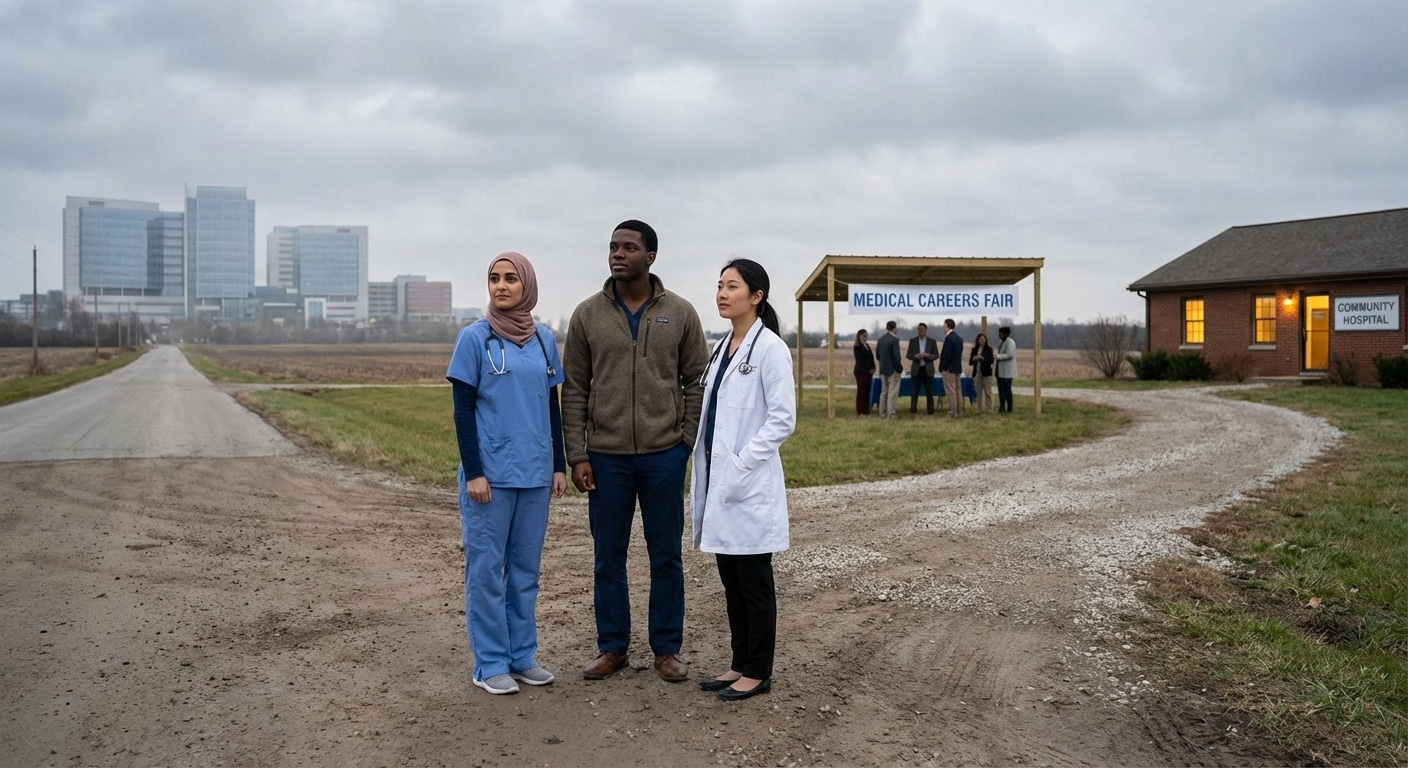
The rural deployment pattern deserves particular attention. Artesia General Hospital in New Mexico and similar rural facilities are implementing ambient AI not despite their resource constraints, but because of them. These organizations face the most acute physician recruitment challenges and have the least margin for physician turnover. Their early adoption signals that AI scribes have crossed from experimental technology to essential infrastructure for physician recruitment in underserved markets.
The alignment with CMS Rural Health Transformation Program goals adds a policy dimension to this deployment wave. Rural health systems can now position AI scribe investment as supporting federal transformation objectives while simultaneously addressing their most persistent operational challenge: attracting and retaining physician talent in markets that cannot compete on compensation alone.
The Competitive Positioning Calculus
For hospital executives and physician recruiters, the strategic calculus is becoming clear. Health systems without ambient AI documentation tools will increasingly find themselves at a disadvantage in physician recruitment conversations. Candidates evaluating practice opportunities now have reason to ask about AI documentation support with the same seriousness they ask about call schedules and compensation structures.
This dynamic creates a first-mover advantage that extends beyond operational efficiency. WVU Medicine’s deployment of Abridge AI, for example, positions the health system to recruit physicians who have experienced AI-assisted documentation and are unwilling to return to manual charting workflows. The physicians most likely to seek AI-enabled practice environments are often the same physicians most in demand: those with strong clinical skills who refuse to accept documentation burden as an immutable feature of medical practice.
Resident Training and Generational Expectations
The emergence of “AI-native” residents introduces a generational dimension to this shift. Young physicians completing training in AI-enabled environments will carry different baseline expectations into their first employment negotiations. The opportunity to reduce resident burnout through AI documentation tools is simultaneously creating a cohort of physicians who will expect ambient AI as standard practice infrastructure.
This generational shift has implications for health systems that delay AI scribe implementation. Organizations that view ambient documentation as optional or experimental may find themselves unable to recruit from the strongest residency programs, where AI tools have become integrated into training workflows. The talent pipeline implications extend years into the future as today’s residents become tomorrow’s attending physicians with embedded expectations about documentation technology.
The resident training environment is quietly establishing new baseline expectations for physician employment. Health systems that fail to match these expectations will face recruitment disadvantages that compound with each graduating class of AI-native physicians.
Compensation Model Implications
The productivity gains from AI scribes raise complex questions about physician compensation structures. If ambient documentation reduces charting time by 50% or more, health systems face decisions about how to allocate that recovered capacity. The options—increased patient volume, reduced work hours, or some combination—carry different implications for compensation models tied to productivity metrics.
Physicians evaluating employment opportunities in AI-enabled environments should examine how organizations plan to translate documentation efficiency into compensation and workload structures. A health system that deploys AI scribes while simultaneously increasing volume expectations may deliver less burnout reduction than one that allows physicians to reinvest time savings into patient care quality or work-life balance. The technology deployment alone does not determine the employment experience; the compensation model adaptation matters equally.
The Human ROI Framework
The concept of “personomics” and human ROI emerging in clinical workflow discussions points toward a more sophisticated evaluation framework. Health systems are beginning to measure AI scribe impact not just in documentation minutes saved, but in physician satisfaction scores, retention rates, and recruitment success. This measurement evolution suggests that ambient AI is becoming embedded in how organizations understand and manage physician workforce economics.
Virtual Care Integration
The integration of AI clinical tools with virtual care platforms, as demonstrated by telehealth providers reporting significant gains with Zoom AI features, extends the ambient documentation advantage beyond traditional practice settings. Physicians practicing in hybrid or fully virtual environments now have access to AI documentation support that matches or exceeds what facility-based colleagues experience.
This parity has implications for physician employment decisions between traditional and virtual practice models. Virtual care organizations that effectively integrate AI documentation tools may attract physicians seeking to combine the flexibility of telehealth with the documentation efficiency of ambient AI. The competitive landscape for physician talent now spans both physical and virtual practice environments, with AI documentation capability as a differentiating factor in both.
Strategic Outlook
The AI scribe adoption wave marks a structural shift in physician employment dynamics. Health systems that move quickly to implement ambient documentation tools are acquiring recruitment and retention advantages that will prove difficult for slower-moving organizations to overcome. Physicians evaluating career opportunities now have a new dimension to assess: the quality and integration of AI documentation support.
The coming years will likely see AI scribe capability become a baseline expectation rather than a differentiating feature—much as EHR implementation moved from competitive advantage to table stakes over the past two decades. Organizations that establish strong AI documentation infrastructure now will be better positioned for the next wave of clinical AI tools, while those that delay may find themselves perpetually catching up in both technology deployment and physician recruitment.
For physicians, the message is equally clear: AI documentation tools represent genuine workflow improvement, and employment decisions should account for an organization’s AI infrastructure maturity. The practices and health systems investing in ambient AI today are signaling their commitment to addressing the documentation burden that has driven physician burnout—and that signal matters for long-term career satisfaction.
Sources
‘They make your lives easier’: AI scribes improve productivity, clinician satisfaction – Healio
Artesia General Hospital (AGH) Brings Ambient AI to Rural Communities to Restore Patient-Physician Connection and Improve Care – Business Wire
Rural New Mexico hospital deploys AI scribe – Becker’s Hospital Review
AI scribes can be lifechanging for improving physician burden, patient care – Healio
Heidi Wins Frost & Sullivan Award for AI Scribe – CanHealth
Epic says AI charting for clinicians gets strong feedback – Chief Healthcare Executive
Are AI Scribes the First Tech Physicians Actually Like? – Medical Economics
A new opportunity to reduce resident burnout: Young doctors are AI natives – MedCity News
WVU Medicine benefits patients, doctors with Abridge AI clinical note-taking platform – The Dominion Post
From Burnout to Better Care: Tech, ‘Personomics’ and the Human ROI of AI in Clinical Workflows – Medical Economics
How ambient AI supports CMS Rural Health Transformation Program goals – Becker’s Hospital Review
Take Note: The AI Scribe Era Is Here – Medical Economics
Virtual care provider makes big gains with Zoom AI clinical tools – Healthcare IT News