Why this matters now
Healthcare delivery is entering a phase in which algorithmic systems are no longer just decision-support tools but active participants in routine clinical workflows. One such task—prescription renewals—is deceptively simple but tightly coupled to safety, continuity of care, and legal frameworks that assume clinician ownership. As several recent deployments and policy discussions show, moving renewals from clinician-mediated processes to autonomous AI systems crystallizes unresolved questions about validation, oversight, liability, and patient trust. The choices regulators and organizations make now will define the AI in Physician Employment & Clinical Practice that determine how autonomous clinical actions are validated, monitored, and held accountable.
What “autonomous renewals” actually mean
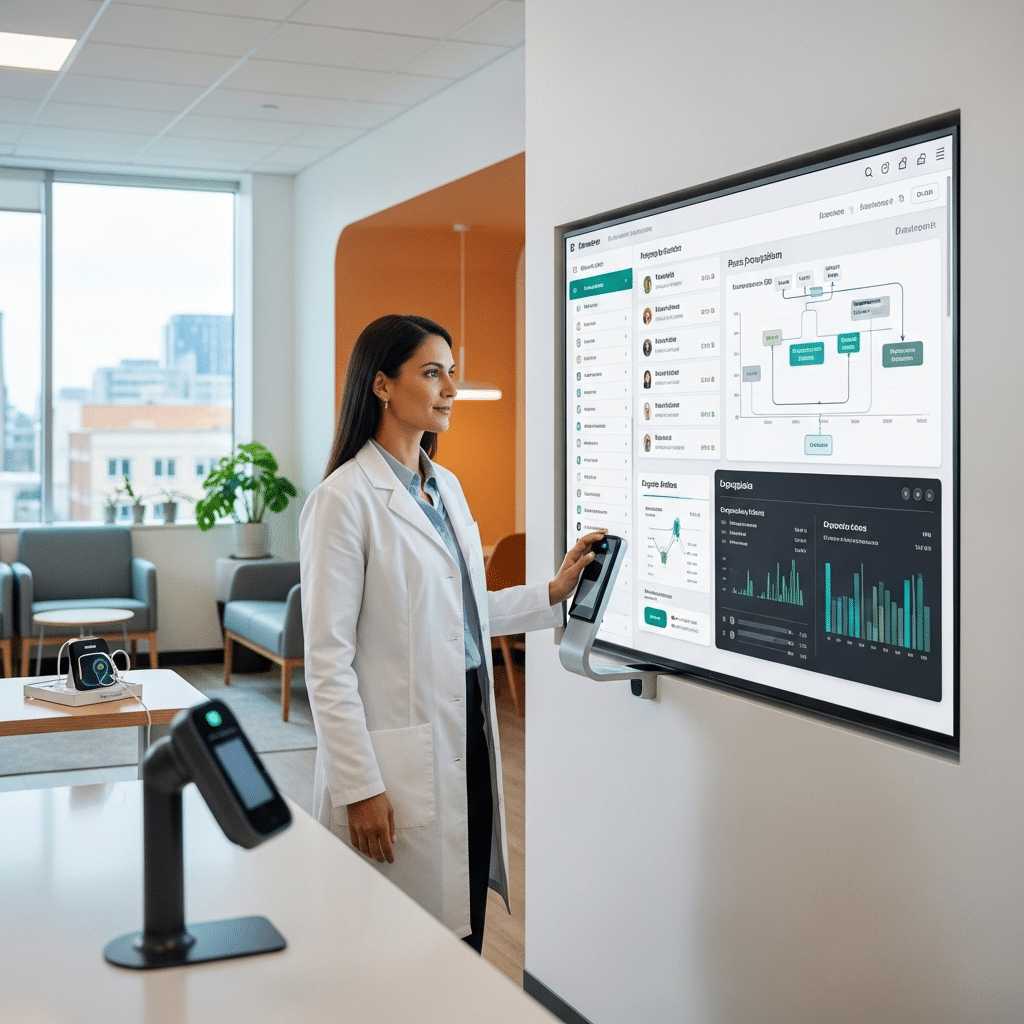
At its core, an autonomous renewal system evaluates a patient’s history, current medications, laboratory values, and rules (and sometimes free-text notes) to decide whether to issue a prescription refill without a clinician directly authorizing each instance. Technically this can range from rule-based automation to large multimodal models integrated with EHRs. Operationally it changes who signs off on routine continuity tasks and shifts risk from episodic clinician review to continuous algorithmic governance.
Autonomous renewals convert episodic clinical judgment into continuous automated adjudication. That shift amplifies benefits—faster access, reduced administrative burden—and magnifies risks if monitoring, escalation, and provenance are incomplete.
Regulatory responses: sandboxes, voluntary frameworks, and formal oversight
Regulatory actors are responding along two broad axes: permissive experimental spaces and formalized oversight. Governments and multilateral bodies are experimenting with regulatory sandboxes—time-limited, closely monitored environments where innovators can trial products using agreed guardrails. Sandboxes accelerate learning and help regulators observe failure modes in a controlled context, but they do not substitute for binding standards.
Concurrently, traditional regulators face pressure to decide when an AI-driven renewal requires the same approvals and post-market surveillance that apply to higher-risk medical devices. The tension is practical: over-regulation can stifle useful automation that improves access and reduces clinician burden; under-regulation risks unsafe or opaque agents operating at scale. Whatever the path, oversight must emphasize outcome-oriented metrics (adverse events, inappropriate renewals, downstream clinical escalations) rather than only validation statistics produced during development.
Safety, transparency, and human oversight
Safety for renewals is multidimensional. Accuracy is necessary but insufficient; systems must demonstrate correct handling of exceptions, transparent provenance of decisions, robust integration with EHR workflows, and clear escalation pathways when ambiguity arises. Human oversight can take multiple shapes: threshold-based clinician review for flagged cases, post-hoc audit sampling, or dedicated clinical-AI oversight roles responsible for continuous model performance evaluation.
Clinician involvement will likely evolve from per-action authorization toward oversight, triage, and exception management—requiring different skill sets and organizational processes than traditional prescribing work.
Liability, consent, and trust
Shifting renewals to algorithms raises legal and ethical questions. Who is accountable when a renewal triggers harm—the deploying health system, the model developer, or the individual clinician who set policies? Contract and malpractice frameworks were not designed for distributed decision systems; regulators and courts will have to adapt. Similarly, informed consent processes should make explicit when an algorithm, rather than a clinician, is issuing a renewal and what recourse exists if patients or clinicians disagree.
Operational implications for healthcare delivery
Autonomous renewals can reduce administrative load, speed access for patients with stable chronic conditions, and free clinicians for complex care. But the operational gains are realized only when organizations invest in monitoring infrastructure, clear escalation protocols, and retraining workflows around exception management. Implementation failures—poor integration with medication reconciliation or insufficient safety telemetry—create new latent hazards that can undermine both patient safety and clinician trust.
Workforce and recruiting implications
The rise of autonomous clinical tools changes the profile of in-demand healthcare roles. Employers will need clinicians who can validate models, define escalation policies, and interpret algorithmic audit trails in clinical context. New positions—clinical-AI safety officers, model performance analysts, and workflow integration specialists—will become part of care teams. Recruitment strategies should prioritize hybrid skill sets: clinical credibility plus familiarity with ML lifecycle, validation practices, and regulatory compliance.
Recommendations for regulators and health systems
Regulators should adopt a proportionate, outcomes-focused approach: permit sandboxes and iterative pilots while requiring clear post-market surveillance plans and public reporting of adverse outcome metrics. Health systems should adopt explicit risk stratification for renewals (e.g., low-risk chronic meds vs high-risk controlled substances), require human escalation thresholds, and maintain transparent consent language for patients.
Implications for hiring and organizational strategy
Organizations integrating autonomous renewals must recruit for new competencies and update role descriptions to include AI oversight responsibilities. Hiring teams should test candidates for experience in clinical validation, incident investigation, and operationalizing monitoring pipelines. Establishing cross-functional committees—clinical, legal, informatics, and compliance—will be essential for safe deployment.
Conclusion
Autonomous prescription renewals are a practical frontier that brings the abstract concerns of AI governance into everyday care. They offer real efficiency and access benefits, but those gains depend on governance choices: measurable safety standards, transparent patient communication, clear liability frameworks, and workforce adaptation. The decisions made by regulators and health systems about renewals will establish templates for broader autonomous clinical actions—making this a pivotal moment for trust, risk management, and governance in healthcare.
Sources
AI could soon renew prescriptions without clinicians. Should FDA ensure it’s safe? – STAT
Artificial Intelligence Begins Renewing Prescriptions Without Doctors – JR Report (Word & Brown)
Digital medicine’s international race for regulatory sandboxes and voluntary alternative… – Nature