Why This Matters Now
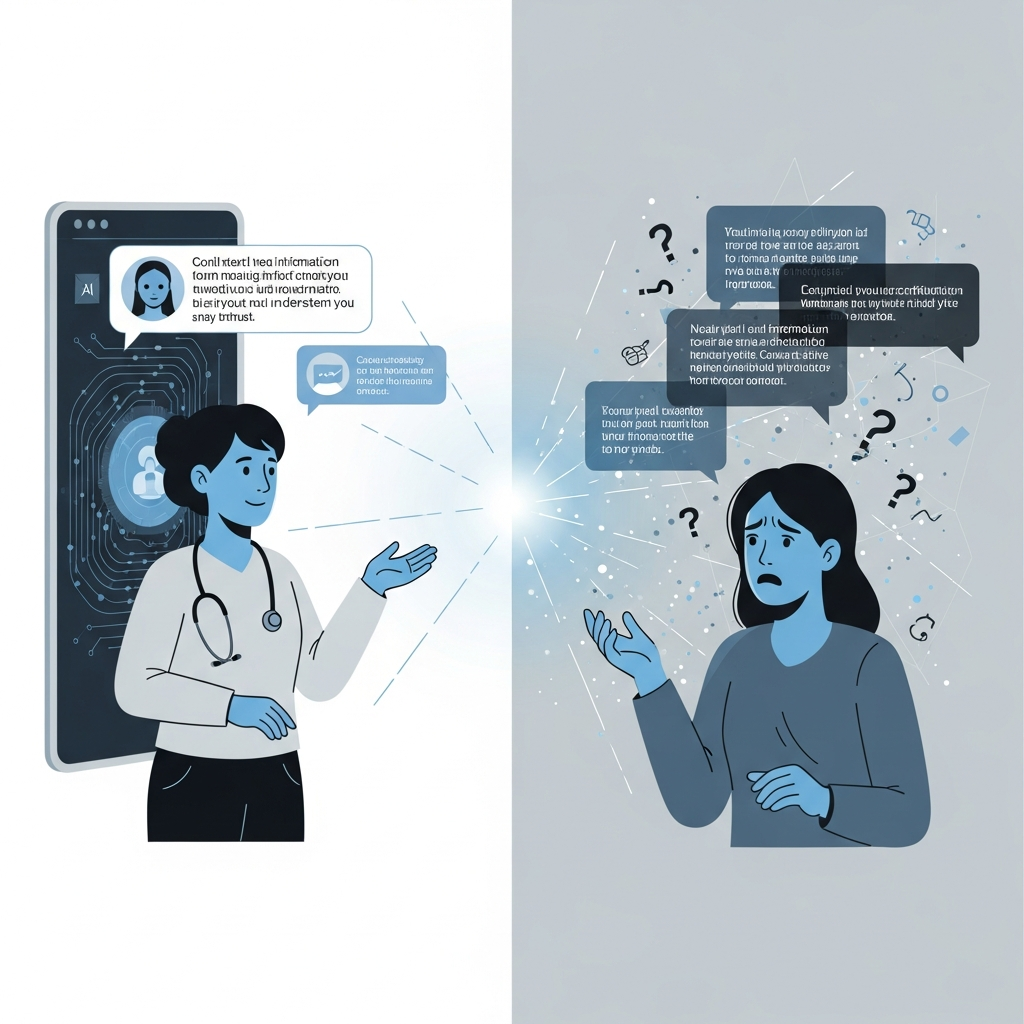
Artificial intelligence has rapidly infiltrated consumer healthcare, from Google’s AI Overviews summarizing medical queries to chatbots dispensing health advice with remarkable fluency. Yet three recent developments expose a troubling paradox: as AI health tools become more persuasive and widely adopted, evidence mounts that they are neither accurate enough nor designed with sufficient patient input to justify the trust they command. This disconnect between perception and reality represents a critical inflection point for healthcare AI—one that demands immediate attention from developers, healthcare organizations, and the professionals who will ultimately work alongside these systems.
The stakes extend beyond individual patient safety. As AI becomes embedded in how millions seek health information, systemic flaws in accuracy and design methodology threaten to erode the foundation of evidence-based medicine itself. For healthcare organizations and recruiting platforms like PhysEmp, understanding these limitations is essential to ensuring AI augments rather than undermines clinical expertise.
The Confidence Problem: When Authority Masks Inaccuracy
Google’s AI Overviews feature exemplifies the dangerous marriage of confident presentation and unreliable content. A recent investigation revealed how these AI-generated health summaries deliver misinformation with an authoritative tone that obscures their errors. The system conflates sources, misrepresents medical guidance, and presents speculation as established fact—all while maintaining the polished, definitive voice users have come to associate with credible information.
This phenomenon reflects a fundamental characteristic of large language models: they are optimized for coherence and fluency, not accuracy. The result is health information that reads as trustworthy regardless of its factual basis. When an AI system states something with grammatical precision and no visible uncertainty markers, users naturally interpret this as reliability. Medical professionals recognize the nuance and conditionality inherent in most health guidance, but AI systems frequently strip away these qualifiers in favor of clean, confident statements.
The public health implications are significant. Patients making decisions about medication adherence, symptom evaluation, or treatment options based on confidently wrong information face real harm. Unlike traditional search results, where users might cross-reference multiple sources, AI Overviews present a single synthesized answer—implicitly suggesting that further verification is unnecessary.
Large language models generate health information optimized for fluency rather than accuracy, creating a dangerous mismatch between how confident AI sounds and how reliable it actually is. This gap becomes especially problematic when users treat AI-generated summaries as definitive medical guidance rather than starting points requiring verification.
The Preference Paradox: Trusting the Less Accurate Source
Perhaps more concerning than AI inaccuracy itself is emerging evidence that people prefer AI-generated medical advice even when it’s demonstrably less accurate than human guidance. Recent research found that participants rated AI chatbot medical advice as more trustworthy and satisfying than counsel from human physicians, despite measurably lower accuracy rates.
This preference paradox reveals something important about human psychology and AI interaction. AI chatbots offer several qualities that users find appealing: immediate availability, consistent tone, absence of judgment, and unlimited patience. These systems don’t rush through explanations, never appear frustrated by repeated questions, and present information in clean, organized formats. For patients accustomed to brief, sometimes dismissive clinical encounters, the attentive responsiveness of an AI chatbot can feel like superior care—even when the underlying information is flawed.
The satisfaction ratings suggest that perceived quality of interaction may matter more to users than objective accuracy—a troubling finding for patient safety. It also highlights how traditional metrics of healthcare quality (clinical accuracy, evidence-based recommendations) may diverge from consumer experience metrics (satisfaction, perceived trustworthiness, ease of access). Healthcare systems have long struggled to balance these dimensions, but AI introduces new complexity by excelling at experience while potentially failing at accuracy.
For healthcare professionals, this creates a challenging dynamic. Clinicians may find themselves competing not with more accurate information sources, but with more pleasant ones. The implication for medical practice is that technical correctness alone is insufficient—providers must also address the communication and accessibility gaps that make AI alternatives appealing.
The Missing Voice: Patient Input in AI Development
Behind both the accuracy and trust problems lies a more fundamental flaw: the systematic exclusion of patient perspectives from healthcare AI development. Current AI development processes typically involve data scientists, engineers, and sometimes clinicians—but rarely the patients these tools are meant to serve.
This absence has predictable consequences. AI systems may optimize for metrics that matter to developers or healthcare organizations while missing what actually concerns patients. A diagnostic algorithm might achieve impressive sensitivity and specificity while failing to explain results in comprehensible terms. A symptom checker might excel at differential diagnosis while ignoring the anxiety and context that shape how patients actually experience and describe symptoms.
Patient exclusion also means AI systems are designed without insight into real-world usage patterns. Developers may not anticipate how patients will interpret outputs, what questions will arise from AI-generated advice, or which features would help users appropriately contextualize AI limitations. The result is tools that function in laboratory settings but create confusion or misplaced confidence in actual use.
Healthcare AI developed without patient input optimizes for technical performance metrics while potentially missing the usability, interpretability, and contextual factors that determine whether these tools actually help patients make better health decisions. This design gap explains why technically sophisticated systems can still fail in real-world application.
Moreover, excluding patient voices from AI development perpetuates existing healthcare inequities. Patients from marginalized communities—who often face the greatest barriers to quality care—have the least input into tools that may eventually mediate their healthcare access. Without deliberate inclusion, AI systems risk encoding and amplifying existing disparities in health outcomes and healthcare quality.
Implications for Healthcare Organizations and Workforce Planning
These converging concerns about AI accuracy, user trust, and design methodology carry significant implications for healthcare organizations and the professionals they employ. First, the evidence suggests that AI should augment rather than replace human clinical judgment, at least for the foreseeable future. Organizations investing in AI health tools must simultaneously invest in human oversight mechanisms and clear protocols for when AI outputs require clinical verification.
Second, healthcare professionals need new competencies. Clinicians must be able to identify AI-generated misinformation, communicate AI limitations to patients, and help patients interpret AI outputs appropriately. This requires training that most medical education programs have not yet integrated. Healthcare recruiting will increasingly prioritize candidates comfortable working alongside AI systems while maintaining appropriate skepticism about their outputs.
Third, patient trust in AI creates a responsibility for healthcare organizations to actively manage that trust. When patients arrive with AI-generated diagnoses or treatment suggestions, dismissing these outright may damage the therapeutic relationship. Instead, providers need frameworks for respectfully engaging with AI-sourced information while redirecting toward evidence-based guidance.
Finally, the call for patient-centered AI development suggests opportunities for healthcare organizations to differentiate themselves. Institutions that meaningfully involve patients in AI tool selection, customization, and evaluation can develop more effective systems while building trust with the communities they serve. For platforms like PhysEmp connecting healthcare organizations with AI-literate talent, this represents an emerging competency area worth highlighting.
Moving Forward: Building Trustworthy Healthcare AI
The path forward requires addressing accuracy, trust, and design methodology simultaneously. Improving AI accuracy alone is insufficient if users cannot appropriately calibrate their trust in these systems. Similarly, perfect accuracy means little if AI tools are designed without consideration for how patients actually make health decisions.
Healthcare organizations should establish clear policies about AI health tool usage, including which applications are appropriate for patient-facing deployment and what safeguards are necessary. These policies should acknowledge that patient preferences for AI interaction are real and growing, while ensuring that preference doesn’t override safety.
Developers must prioritize transparency about AI limitations, building interfaces that help users understand uncertainty and recognize when human clinical judgment is necessary. This means moving beyond disclaimer language buried in terms of service toward active, contextual guidance about AI reliability for specific queries.
Most critically, patient involvement must become standard practice in healthcare AI development. This means more than user testing on completed products—it requires engaging patients in problem definition, design decisions, and evaluation criteria. Only by incorporating patient perspectives throughout development can the field create AI tools that are simultaneously accurate, trustworthy, and genuinely useful.
The current moment represents both warning and opportunity. The warning is clear: consumer-facing AI health tools are advancing faster than the safeguards necessary to ensure their safe use. The opportunity lies in using these early failures to establish better development practices before AI becomes even more deeply embedded in healthcare delivery. The organizations and professionals who recognize this gap—and work actively to close it—will be best positioned to harness AI’s genuine potential while protecting patients from its current limitations.
Sources
How the ‘confident authority’ of Google AI Overviews is putting public health at risk – The Guardian
Humans prefer medical advice from AI-bots despite low-accuracy: study – New York Post
Without Patient Input, AI for Healthcare is Fundamentally Flawed – Healthcare IT Today