Cancer detection has always been a race against time. The earlier a malignancy is identified, the greater the likelihood of successful treatment and survival. Yet traditional diagnostic imaging has long been constrained by human limitations—fatigue, variability in interpretation, and the sheer volume of cases overwhelming radiology departments. Now, a wave of AI-powered diagnostic tools is fundamentally changing this equation, offering real-time detection capabilities that promise to catch cancers earlier, reduce diagnostic errors, and expand access to expert-level interpretation across diverse healthcare settings.
Recent developments across multiple imaging modalities—from colonoscopy to mammography—illustrate how rapidly AI is moving from research curiosity to clinical necessity. These aren’t incremental improvements; they represent a fundamental shift in how diagnostic imaging is performed, interpreted, and delivered. For healthcare systems grappling with workforce shortages and rising screening demands, these technologies offer both opportunity and disruption.
Why AI in Diagnostic Imaging Matters Now
The convergence of several factors has created an urgent need for AI-assisted diagnostics. First, cancer screening recommendations have expanded, with more populations eligible for earlier and more frequent screening. The U.S. Preventive Services Task Force, for instance, has lowered the recommended age for colorectal cancer screening to 45, instantly expanding the eligible population by millions. Similarly, breast cancer screening guidelines continue to evolve, with growing emphasis on risk-based approaches that may require more frequent imaging for certain populations.
Second, there’s a critical shortage of specialized radiologists and gastroenterologists trained in advanced imaging interpretation. This workforce gap is particularly acute in rural and underserved areas, creating significant disparities in diagnostic accuracy and access. Third, the cognitive burden on existing practitioners continues to escalate. Radiologists are reading more studies than ever before, often under time pressure that can compromise diagnostic accuracy. This is precisely the environment where AI can provide the most value—not by replacing human expertise, but by augmenting it with tireless, consistent analysis.
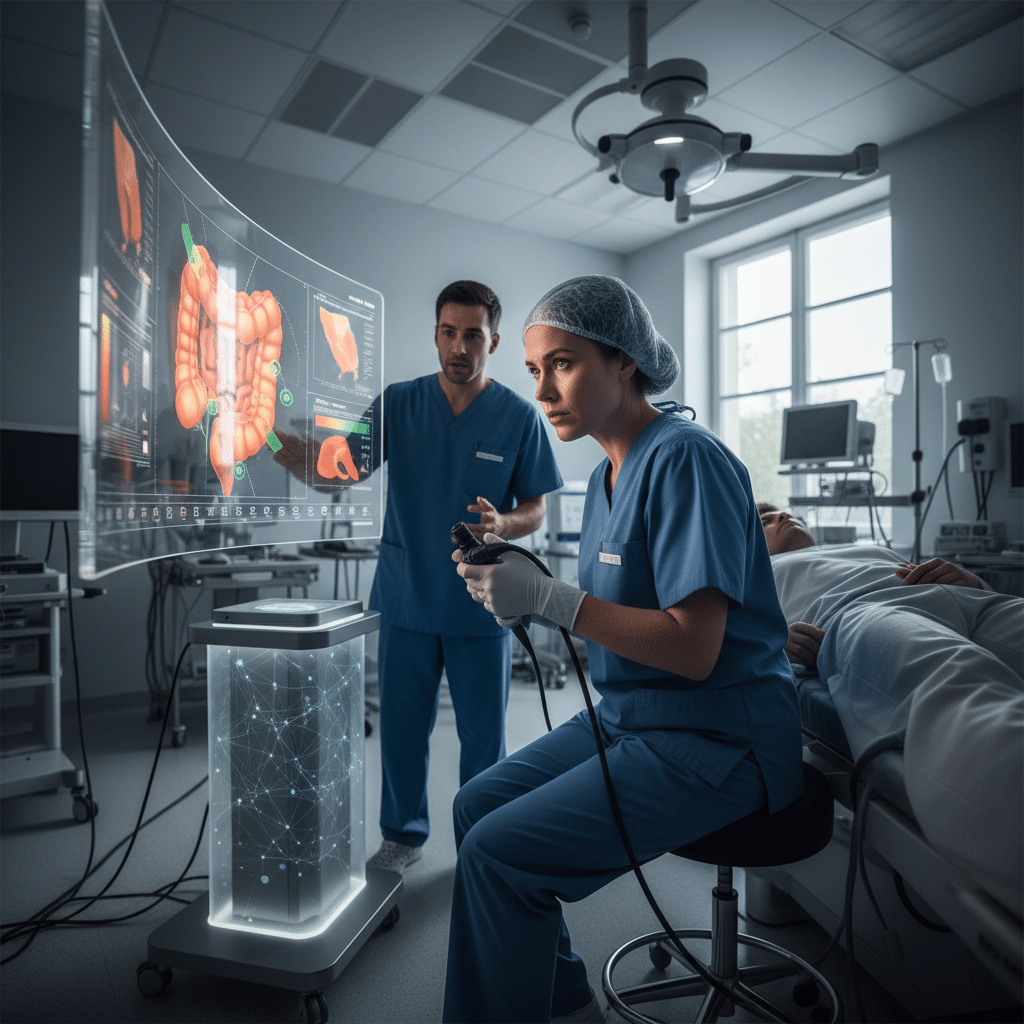
The shift from retrospective AI analysis to real-time detection during procedures represents a paradigm change in clinical workflow. When AI can alert a gastroenterologist to a suspicious lesion during the colonoscopy itself, it transforms screening from a documentation exercise into an immediate intervention opportunity.
Cloud-Based AI: Democratizing Expert-Level Detection
The recent Nature study on cloud-based AI for colorectal neoplasia detection exemplifies a crucial architectural evolution in medical AI. Unlike standalone systems that require significant local infrastructure and periodic manual updates, cloud-based platforms offer continuous learning and universal accessibility. This model addresses several persistent challenges in medical AI deployment.
First, cloud architecture enables continuous model refinement. As the system analyzes more cases across diverse patient populations and practice settings, it can incorporate new patterns and edge cases without requiring individual sites to install software updates. This means the AI available to a small community hospital can be just as sophisticated as that used in major academic medical centers. Second, real-time detection during colonoscopy procedures directly addresses one of gastroenterology’s most persistent quality challenges: adenoma detection rate (ADR). Studies have consistently shown significant variability in ADR between practitioners, with some gastroenterologists missing precancerous lesions that others would detect. An AI system that can flag suspicious areas in real time serves as a consistent second observer, potentially reducing this variability and improving overall screening quality.
The implications extend beyond colorectal cancer. The cloud-based model demonstrated in colonoscopy could be adapted to other endoscopic procedures and imaging modalities, creating a scalable framework for AI-assisted diagnostics across specialties. For healthcare systems, this represents both an opportunity to standardize quality and a strategic imperative to ensure their diagnostic capabilities remain competitive.
Breast Imaging AI: Addressing Capacity and Accuracy Simultaneously
The launch of platforms like Novarad’s MammoIQ highlights another critical application of AI in cancer detection: mammography. Breast imaging presents unique challenges that make it particularly well-suited for AI assistance. Mammography interpretation requires detecting subtle abnormalities in dense tissue, comparing current images with prior studies, and making risk-stratified recommendations—all while managing high-volume workflows.
AI-powered breast imaging platforms address multiple pain points simultaneously. They can serve as concurrent readers, flagging suspicious findings for radiologist review and potentially identifying cancers that might otherwise be missed. They can prioritize worklists, ensuring that studies with AI-detected abnormalities receive prompt attention. And they can assist with workflow efficiency by pre-populating reports with standardized measurements and comparisons. This multifaceted value proposition explains why breast imaging AI has seen particularly rapid adoption compared to other specialties.
Moreover, breast imaging AI directly confronts the radiologist shortage. As screening volumes increase and the workforce struggles to keep pace, AI can help existing radiologists maintain or even improve diagnostic accuracy while managing larger caseloads. This isn’t about replacing radiologists—it’s about making their expertise more scalable and sustainable. For healthcare organizations recruiting imaging specialists, the availability of advanced AI tools is increasingly becoming a competitive differentiator, both for attracting talent and for demonstrating commitment to diagnostic quality.
Healthcare systems that view AI implementation solely as a technology project miss the larger strategic picture. These tools fundamentally reshape workforce requirements, quality metrics, and competitive positioning in diagnostic services. The question isn’t whether to adopt AI-assisted imaging, but how quickly and effectively organizations can integrate these capabilities.
The Broader Landscape: FDA Clearances and Clinical Integration
The steady stream of FDA clearances for AI algorithms in radiology—as highlighted in recent monthly roundups—signals that these technologies have moved well beyond the experimental phase. Regulatory approval indicates not just technical capability, but demonstrated clinical validity and safety. However, FDA clearance is only the beginning of the integration journey. The practical challenges of deploying AI in radiology departments remain substantial.
Health systems must navigate questions of workflow integration, liability and oversight, staff training, and quality assurance. How do radiologists incorporate AI findings into their interpretation process without becoming over-reliant on algorithmic suggestions? How should AI-detected findings be documented and communicated? What happens when AI flags an abnormality that the radiologist disagrees with? These aren’t purely technical questions—they require careful consideration of clinical judgment, professional responsibility, and medicolegal implications.
Additionally, the proliferation of AI algorithms across multiple vendors and imaging modalities creates integration complexity. A large health system might be using different AI tools for mammography, chest CT, brain MRI, and colonoscopy, each with its own interface, workflow, and evidence base. Creating a coherent AI strategy that maximizes clinical value while minimizing operational friction requires thoughtful governance and coordination across departments.
Implications for Healthcare Recruiting and Workforce Strategy
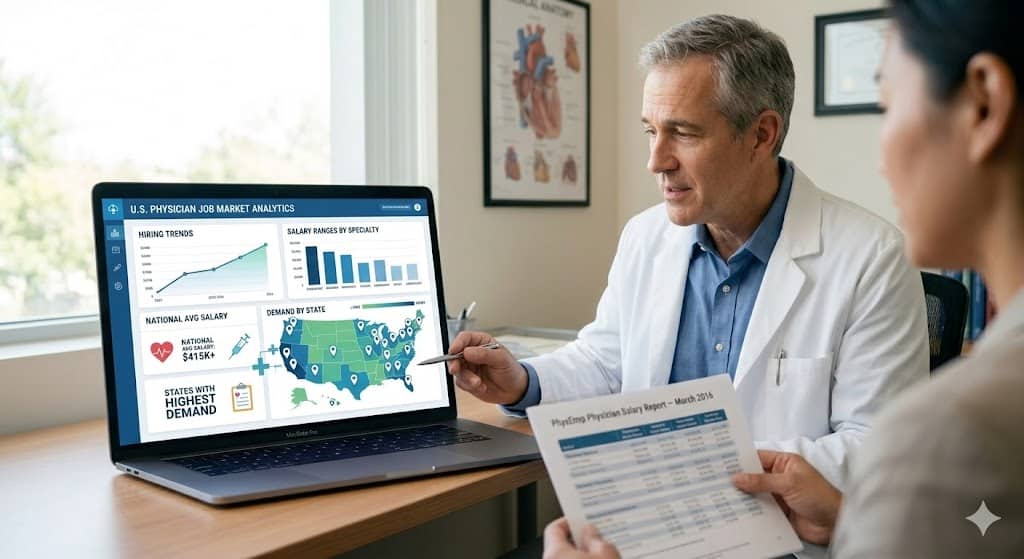
For healthcare organizations and recruiting platforms like PhysEmp, these AI advancements carry significant workforce implications. The role of diagnostic specialists is evolving, and recruitment strategies must evolve accordingly. Forward-thinking organizations are now seeking radiologists and gastroenterologists who are not only clinically excellent but also comfortable working alongside AI tools and contributing to their effective implementation.
This creates new requirements in job descriptions and candidate evaluation. Familiarity with AI-assisted imaging, willingness to engage with clinical decision support tools, and adaptability to evolving workflows are becoming valued competencies. At the same time, organizations must be transparent about their AI capabilities and implementation plans when recruiting, as practitioners increasingly view access to advanced diagnostic tools as an important factor in practice selection.
The workforce implications extend beyond physicians. Radiologic technologists, medical physicists, and IT professionals all play crucial roles in successful AI implementation. Healthcare organizations need teams that can bridge clinical and technical domains, ensuring that AI tools are properly configured, validated, and integrated into daily practice. This interdisciplinary requirement is reshaping hiring priorities across imaging departments.
Furthermore, as AI handles more routine detection tasks, diagnostic specialists may find their roles shifting toward complex case interpretation, quality oversight of AI systems, and patient consultation. This evolution could actually make diagnostic specialties more intellectually engaging and professionally satisfying, potentially helping to address workforce shortages by improving retention and attractiveness of these fields.
Looking Ahead: The Path to Integrated Intelligent Diagnostics
The rapid progress in AI-powered diagnostic imaging—from cloud-based colonoscopy systems to advanced breast imaging platforms—is not slowing down. If anything, the pace of innovation is accelerating as more data becomes available, algorithms improve, and clinical evidence accumulates. The next phase will likely focus on integration and intelligence orchestration: systems that can synthesize findings across multiple imaging modalities, incorporate clinical context and patient history, and provide truly personalized diagnostic assessments.
For healthcare leaders, the strategic imperative is clear. AI in diagnostic imaging is transitioning from competitive advantage to table stakes. Organizations that move quickly to implement, validate, and optimize these tools will be better positioned to deliver high-quality cancer detection, manage workforce constraints, and attract top diagnostic talent. Those that delay risk falling behind on quality metrics, operational efficiency, and professional recruitment.
The promise of AI in cancer detection is not just earlier diagnosis—though that alone would be transformative. It’s the possibility of more consistent, accessible, and scalable expert-level interpretation for every patient, regardless of where they receive care. That’s a goal worth pursuing with urgency and thoughtfulness in equal measure.
Sources
Advances in AI — December 2025 – Diagnostic Imaging
A novel cloud-based artificial intelligence for real-time detection of colorectal neoplasia – Nature
Novarad Launches Breast Imaging Platform MammoIQ – Diagnostic Imaging