Why Diagnostic Imaging AI Matters Now
Diagnostic imaging stands at the forefront of healthcare’s AI revolution, yet the technology’s rapid advancement has outpaced the frameworks needed to deploy it responsibly. December 2025 marks a pivotal moment where technical capabilities, ethical scrutiny, and institutional adoption are converging in ways that will define the next decade of medical imaging. The field is no longer asking whether AI can enhance radiological practice—FDA clearances and clinical validation studies have settled that question. Instead, health systems are grappling with how to implement these tools in ways that protect vulnerable populations, maintain clinical integrity, and deliver measurable value across diverse patient demographics.
The stakes are particularly high in diagnostic imaging because these AI systems influence critical clinical decisions at scale. Unlike administrative applications, imaging AI directly impacts diagnosis, treatment planning, and patient outcomes. This reality demands a sophisticated understanding of not just algorithmic performance, but also the ethical guardrails, implementation strategies, and workforce implications that determine whether AI becomes a transformative asset or a source of unintended harm.
Technical Maturation Meets Regulatory Momentum
The technical landscape of diagnostic imaging AI has reached a new level of sophistication. Recent FDA clearances reflect algorithms that have moved beyond proof-of-concept to demonstrate clinical utility in real-world settings. Lung nodule detection systems now achieve sensitivity rates that complement radiologist interpretation, while breast cancer screening enhancements are reducing false negatives in ways that could fundamentally alter early detection protocols. These aren’t incremental improvements—they represent algorithmic architectures trained on diverse datasets with validation across multiple institutions.
What distinguishes this current wave of innovation is the focus on workflow integration rather than standalone diagnostic tools. AI-assisted workflow optimization systems are addressing radiologist burnout by intelligently prioritizing worklists, automating routine measurements, and flagging urgent findings for immediate attention. This shift acknowledges a crucial reality: the value of imaging AI isn’t solely in diagnostic accuracy, but in its ability to make radiology departments more efficient and sustainable in the face of increasing imaging volumes and workforce shortages.
The regulatory pathways enabling this broader adoption have also matured. FDA clearance processes now accommodate continuous learning algorithms and real-world performance monitoring, recognizing that imaging AI improves through deployment rather than remaining static after approval. This regulatory evolution creates opportunities for iterative refinement while maintaining safety standards—a balance that will be critical as these systems become embedded in routine practice.
The diagnostic imaging AI landscape has shifted from proving algorithmic capability to demonstrating sustainable integration into clinical workflows—a transition that requires equal attention to technical performance, regulatory compliance, and the human factors that determine whether innovations actually improve patient care.
Ethical Frameworks for Vulnerable Populations
While technical progress accelerates, the ethical considerations surrounding AI deployment demand equally rigorous attention—particularly when applied to pediatric populations. Children represent a uniquely vulnerable demographic in medical imaging AI, not simply because of their age, but because of the compounding ethical challenges their care presents. Data privacy concerns take on additional weight when dealing with minors who cannot provide informed consent. Algorithm training becomes problematic when pediatric imaging datasets are significantly smaller than adult repositories, raising questions about whether AI systems can achieve comparable performance across age groups.
The physiological differences between pediatric and adult anatomy mean that algorithms trained predominantly on adult data may produce unreliable results when applied to children. A lung nodule detection system validated on adult chest CTs cannot be assumed safe or effective for pediatric patients whose thoracic anatomy, pathology patterns, and imaging protocols differ substantially. This reality necessitates dedicated pediatric algorithm development, which in turn requires access to pediatric imaging data—a resource that is both scarce and subject to heightened privacy protections.
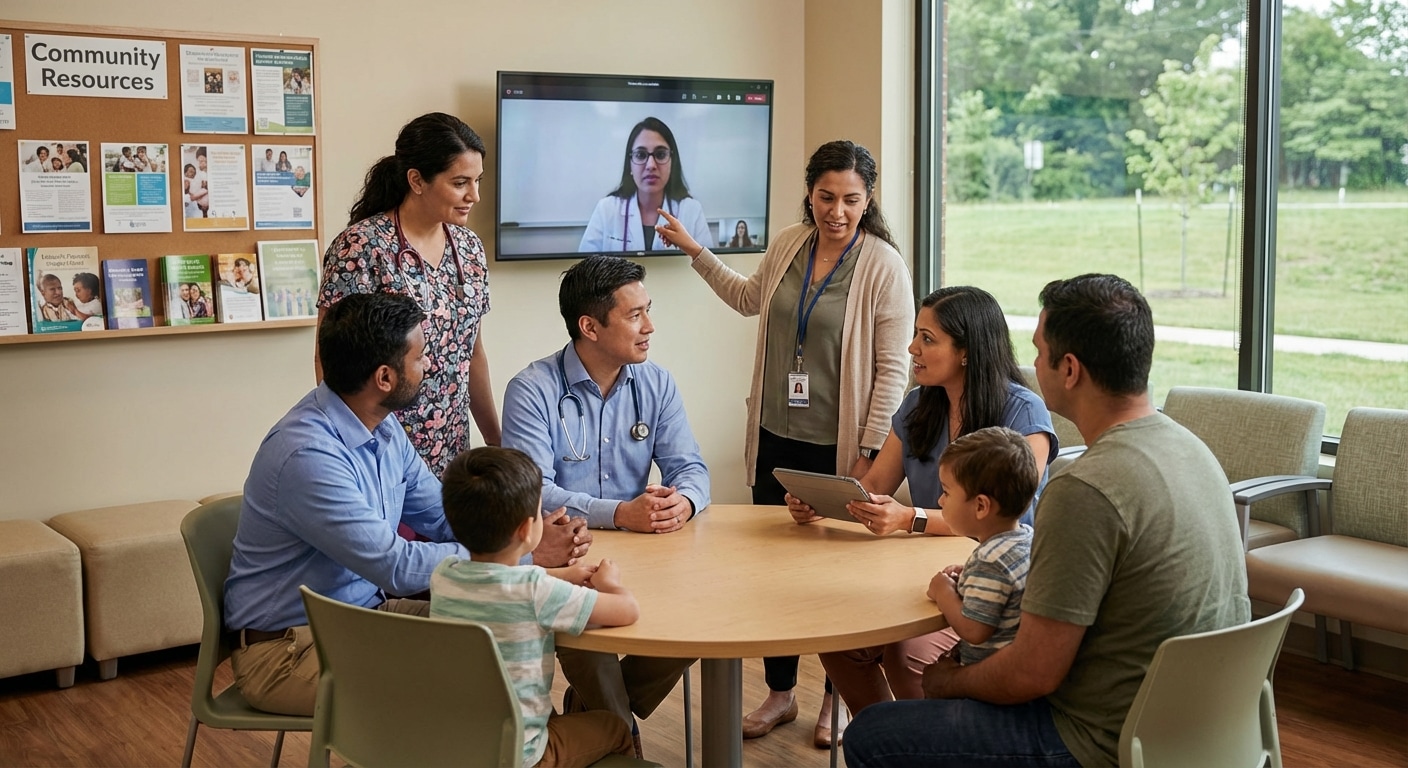
Responsible AI deployment in pediatric imaging requires collaborative frameworks that bring technologists, clinicians, ethicists, and patient advocates into shared decision-making processes. These multidisciplinary teams must address questions that extend beyond technical performance: Who bears responsibility when an AI system misses a finding in a child? How should consent be obtained when parents may not fully understand algorithmic decision-making? What safeguards prevent algorithmic bias from disproportionately affecting pediatric populations already experiencing healthcare disparities?
The emphasis on collaboration reflects a broader recognition that ethical AI deployment cannot be delegated to data scientists alone. Clinical expertise, ethical reasoning, and community input are essential to identifying risks that may not be apparent in validation metrics. For healthcare organizations, this means investing in ethics infrastructure—committees, review processes, and stakeholder engagement mechanisms—that can evaluate AI systems before, during, and after implementation.
Implementation Strategies at Scale
Theoretical frameworks and technical capabilities only deliver value when translated into operational reality. Michigan Medicine’s approach to AI implementation offers instructive insights into how large health systems are navigating this translation. Their strategic focus encompasses diagnostic accuracy improvements and workflow efficiency gains, but equally emphasizes the organizational change management required to achieve sustainable adoption.
Clinician training emerges as a critical success factor. Radiologists and referring physicians need to understand not just how to use AI tools, but how to interpret their outputs, recognize their limitations, and maintain diagnostic independence. This educational component addresses a fundamental tension in imaging AI: the systems are most effective when clinicians trust them enough to incorporate their insights, yet least safe when that trust becomes uncritical reliance. Training programs must cultivate informed skepticism—an approach that values AI assistance while preserving clinical judgment.
Measuring return on investment across departments represents another implementation challenge. The benefits of imaging AI often manifest in ways that traditional ROI calculations struggle to capture. Reduced radiologist burnout, improved diagnostic consistency, and earlier detection of critical findings all create value, but translating these outcomes into financial metrics requires sophisticated analytics. Health systems that succeed in AI implementation are developing new measurement frameworks that account for quality improvements, workflow efficiencies, and long-term cost avoidance rather than focusing solely on immediate cost reduction.
Successful AI implementation in diagnostic imaging requires health systems to simultaneously manage technical integration, workforce adaptation, and value measurement—a multidimensional challenge that distinguishes organizations achieving transformative results from those experiencing disappointing deployments.
The strategic approach also involves phased deployment that allows for learning and adjustment. Rather than system-wide rollouts, leading institutions are piloting AI tools in specific departments or use cases, gathering performance data and user feedback before broader expansion. This iterative methodology acknowledges that AI implementation is not a one-time technology installation but an ongoing process of optimization and adaptation.
Implications for Healthcare Workforce and Recruitment
The advancement of diagnostic imaging AI carries profound implications for healthcare workforce development and recruitment. As AI systems assume routine tasks and augment diagnostic capabilities, the skills required of radiologists and imaging technologists are evolving. Future imaging professionals will need fluency in AI system operation, interpretation, and quality assurance—competencies that many current training programs are only beginning to address.
This workforce transformation creates both challenges and opportunities for healthcare organizations. The challenge lies in recruiting professionals who possess both traditional clinical expertise and emerging AI literacy—a combination that remains scarce in the current labor market. The opportunity exists for organizations that invest in training and development to differentiate themselves as employers of choice for clinicians seeking to work at the forefront of medical innovation.
For platforms like PhysEmp, which connect healthcare organizations with AI-savvy professionals, understanding these evolving skill requirements is essential. Job descriptions for imaging positions increasingly specify experience with AI-assisted workflows, while candidates seek opportunities at institutions demonstrating sophisticated AI implementation strategies. The recruitment landscape is shifting from simply filling radiology positions to matching professionals with organizations whose AI maturity aligns with their career aspirations.
Beyond individual recruitment, the integration of AI into diagnostic imaging affects departmental staffing models and resource allocation. Health systems implementing AI workflow optimization may find they can serve larger patient volumes without proportional increases in radiologist headcount, or they may redeploy imaging professionals toward more complex interpretive tasks that AI cannot yet perform. These structural changes require workforce planning that anticipates technology trajectories while maintaining the clinical capacity to deliver high-quality care.
The ethical dimensions discussed earlier also intersect with workforce considerations. Clinicians implementing AI in pediatric imaging or other sensitive contexts need support navigating the ethical complexities these technologies introduce. Health systems that provide ethics training, facilitate multidisciplinary collaboration, and create space for professionals to voice concerns about AI deployment will be better positioned to attract and retain talent in an increasingly competitive market.
Conclusion: Navigating the AI Transformation
The current state of diagnostic imaging AI represents a maturation point where technical capability, ethical awareness, and operational implementation must advance in concert. The technology has proven its potential to enhance diagnostic accuracy, optimize workflows, and address workforce challenges. Yet realizing this potential requires health systems to invest not just in algorithms, but in the frameworks, training, and cultural change that enable responsible deployment.
For healthcare leaders, the imperative is clear: AI adoption in diagnostic imaging cannot be treated as a purely technical initiative. It demands strategic planning that encompasses ethics review, clinician engagement, measurement infrastructure, and workforce development. Organizations that approach AI implementation with this comprehensive perspective will be positioned to achieve transformative results while those that focus narrowly on technology acquisition risk disappointing outcomes and potential harm.
The diagnostic imaging AI revolution is unfolding now, shaped by the decisions health systems make about how to balance innovation with responsibility, efficiency with ethics, and technological capability with human judgment. The institutions that navigate this balance successfully will define the future of medical imaging—and set the standard for AI deployment across healthcare.
Sources
Advances in AI — December 2025 – Diagnostic Imaging
Ethics in AI: Transforming Pediatric Imaging Collaboration – BioEngineer.org
Michigan Medicine’s ‘transformative’ tech – Becker’s Hospital Review