Why This Partnership Matters Now
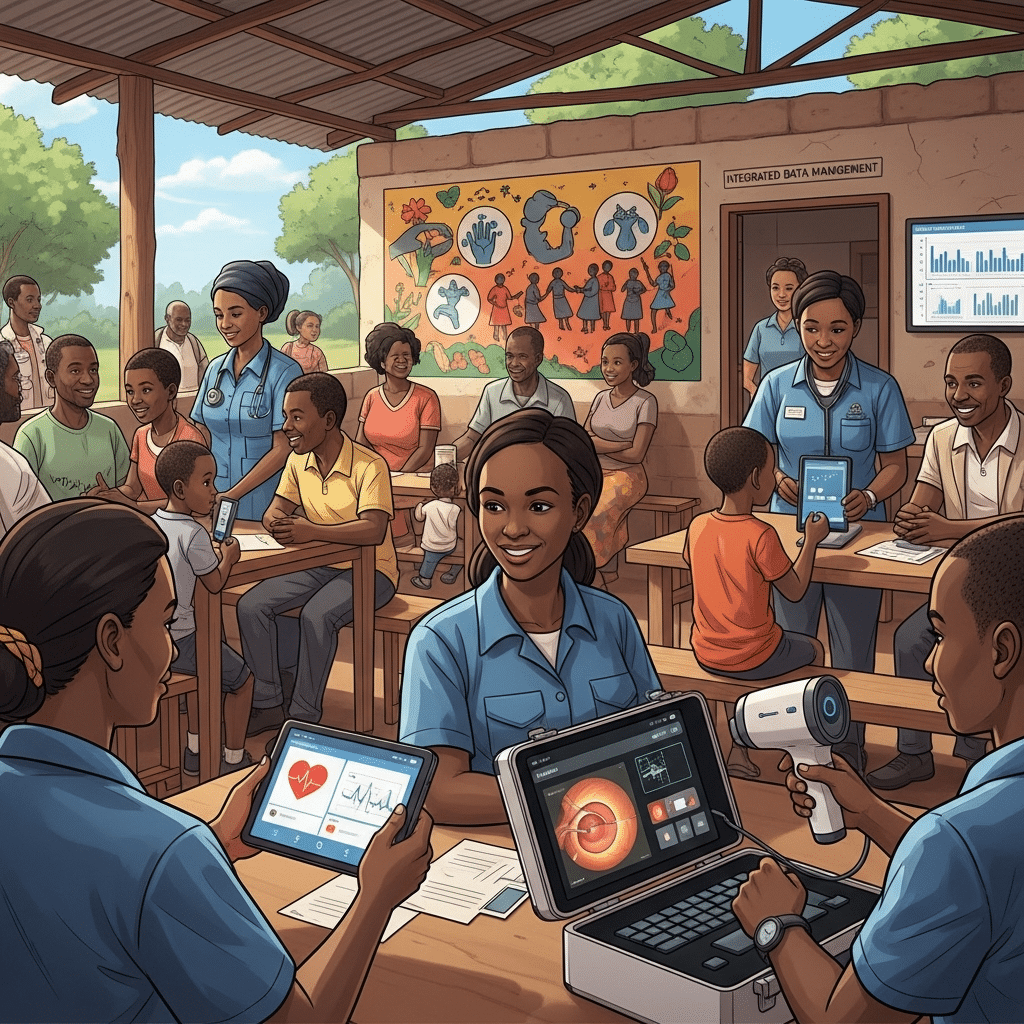
The convergence of AI in healthcare and global health has long been discussed in theoretical terms, but the announcement of Horizon 1000 marks a decisive shift from potential to practice.The $50 million partnership between the Bill & Melinda Gates Foundation and OpenAI represents what Gates Foundation CEO Mark Suzman calls “the most significant deployment of AI for public health in low-resource settings to date.” This initiative arrives at a critical juncture when AI capabilities have matured enough to address real-world healthcare challenges, yet global health equity remains stubbornly elusive. With 1,000 health facilities across Africa set to receive AI-powered diagnostic and treatment support over three years, starting in Rwanda, the program offers a testbed for whether advanced technology can genuinely bridge the healthcare access gap that affects billions.
The timing is particularly significant for the healthcare workforce. Community health workers in low- and middle-income countries often operate with minimal support, facing diagnostic uncertainty, limited access to specialist consultation, and overwhelming patient loads. If AI tools can augment their capabilities—enabling earlier disease detection, improving maternal health monitoring, and streamlining medication management—the implications extend far beyond Africa. This could establish a new model for healthcare delivery in resource-constrained environments worldwide, fundamentally altering how we think about clinical decision support and the future composition of healthcare teams.
The Infrastructure Challenge: Offline AI in Low-Connectivity Settings
Perhaps the most technically ambitious aspect of Horizon 1000 is its commitment to function in environments with limited or intermittent internet connectivity. OpenAI has pledged to provide customized versions of its models optimized for offline use—a significant departure from the cloud-dependent architecture that characterizes most contemporary AI applications. This requirement forces a rethinking of how AI healthcare tools are designed and deployed.
The challenge is multifaceted. Standard large language models require substantial computational resources and regular updates from central servers. Adapting these for offline use in rural African clinics means developing lighter-weight models that can run on modest hardware while maintaining diagnostic accuracy. It also necessitates creating robust synchronization protocols for when connectivity is available, ensuring that health data can be aggregated for disease surveillance while respecting privacy constraints.
The success of Horizon 1000 may ultimately depend less on AI sophistication and more on unglamorous engineering: power management, device durability, and interface design that works for users with varying digital literacy in multilingual contexts.
This infrastructure reality highlights a broader tension in global health technology initiatives. The most advanced AI models may be less useful than simpler, more reliable tools that function consistently in adverse conditions. OpenAI’s commitment to significant investment in local AI infrastructure and training programs suggests recognition of this reality, but the three-year timeline will test whether technical ambition can align with operational constraints.
From Clinical Assistant to Cultural Adaptation
The initiative’s promise to deliver AI tools in multiple local languages points to another critical dimension: cultural and linguistic adaptation. Medical AI systems trained primarily on Western clinical data and English-language medical literature face inherent limitations when deployed in radically different contexts. Symptoms may be described differently, disease prevalence varies significantly, and cultural beliefs about health and treatment affect how medical advice is received and acted upon.
Rwanda’s Health Minister Dr. Sabin Nsanzimana called the partnership “transformative,” but transformation requires more than translation. Effective AI clinical assistants must understand local disease patterns—where malaria, tuberculosis, and HIV prevalence differ dramatically from the Global North. They must account for different baseline health conditions, nutritional factors, and co-morbidities. The AI must also navigate complex social determinants of health, recognizing when a treatment recommendation is practically unfeasible due to cost, distance, or cultural factors.
The program’s emphasis on research partnerships with African universities is crucial here. Rather than simply exporting technology developed elsewhere, meaningful collaboration with local medical schools and research institutions can ensure AI tools are trained on relevant data and validated against local clinical realities. This approach could yield insights that flow in both directions—African healthcare innovations have historically influenced global practice, from community health worker models to innovative disease surveillance systems.
Workforce Implications: Augmentation or Disruption?
For healthcare workforce dynamics, Horizon 1000 presents a compelling case study in AI augmentation. Community health workers represent a critical but often under-resourced segment of the global healthcare workforce. They typically receive focused training on specific health issues but lack the comprehensive medical education of physicians. AI diagnostic assistance could significantly expand their effective scope of practice, enabling them to manage more complex cases and make more confident referral decisions.
However, this augmentation raises important questions about professional development pathways and healthcare hierarchy. If AI tools enable community health workers to perform tasks previously requiring physician involvement, how does this affect career progression, compensation, and professional identity? Does it create a two-tier system where AI-assisted community workers serve rural populations while traditional physician-led care remains concentrated in urban centers?
The true measure of Horizon 1000’s success will be whether it creates sustainable capacity—training healthcare workers who can critically evaluate AI recommendations rather than simply follow them, and building local expertise to maintain and improve these systems over time.
Implications for Global Health Equity and Healthcare Delivery
Horizon 1000 arrives amid broader debates about AI’s role in addressing or exacerbating global inequities. Critics of AI development have noted that most investment flows toward applications serving wealthy markets, while the world’s most pressing health challenges receive comparatively little attention. OpenAI CEO Sam Altman’s stated commitment to ensuring AI benefits reach underserved populations globally positions this initiative as a counterpoint to that critique.
Yet the $50 million investment, while substantial, must be contextualized. It represents a fraction of what’s spent developing AI for commercial healthcare applications in high-income countries. The three-year timeline and 1,000-facility target are ambitious but modest relative to Africa’s healthcare needs—Rwanda alone has over 500 health centers, and the continent has 54 countries with vastly different health systems and challenges.
The initiative’s broader significance may lie in what it demonstrates about feasibility and impact. If Horizon 1000 can show measurable improvements in health outcomes, cost-effectiveness, and scalability, it could catalyze additional investment and adaptation by other organizations. Conversely, if implementation challenges prove insurmountable or benefits remain marginal, it may temper expectations about AI’s near-term role in global health.
For healthcare recruiting and workforce planning, the lessons from Horizon 1000 will inform how health systems worldwide integrate AI tools. The challenges of training workers to use AI effectively, maintaining human oversight of algorithmic recommendations, and ensuring technology enhances rather than replaces clinical judgment are universal. Africa may become the testing ground for approaches that eventually reshape healthcare delivery globally, making this initiative relevant far beyond its initial geographic scope.
As AI continues to transform healthcare, the question isn’t whether technology will play a role in addressing global health challenges, but whether its deployment will genuinely advance equity or simply create new forms of disparity. Horizon 1000 offers an important opportunity to move beyond speculation and generate real-world evidence about what works, what doesn’t, and what it actually takes to make advanced healthcare technology serve those who need it most.
Sources
Gates and OpenAI team up for AI health push in African countries – Reuters
Gates Foundation, OpenAI unveil $50 million ‘Horizon1000’ initiative to boost healthcare in … – Fortune
Horizon 1000: Advancing AI for primary healthcare – OpenAI