
This analysis synthesizes 8 sources published the week ending Jun 29, 2026. Editorial analysis by the PhysEmp Editorial Team.
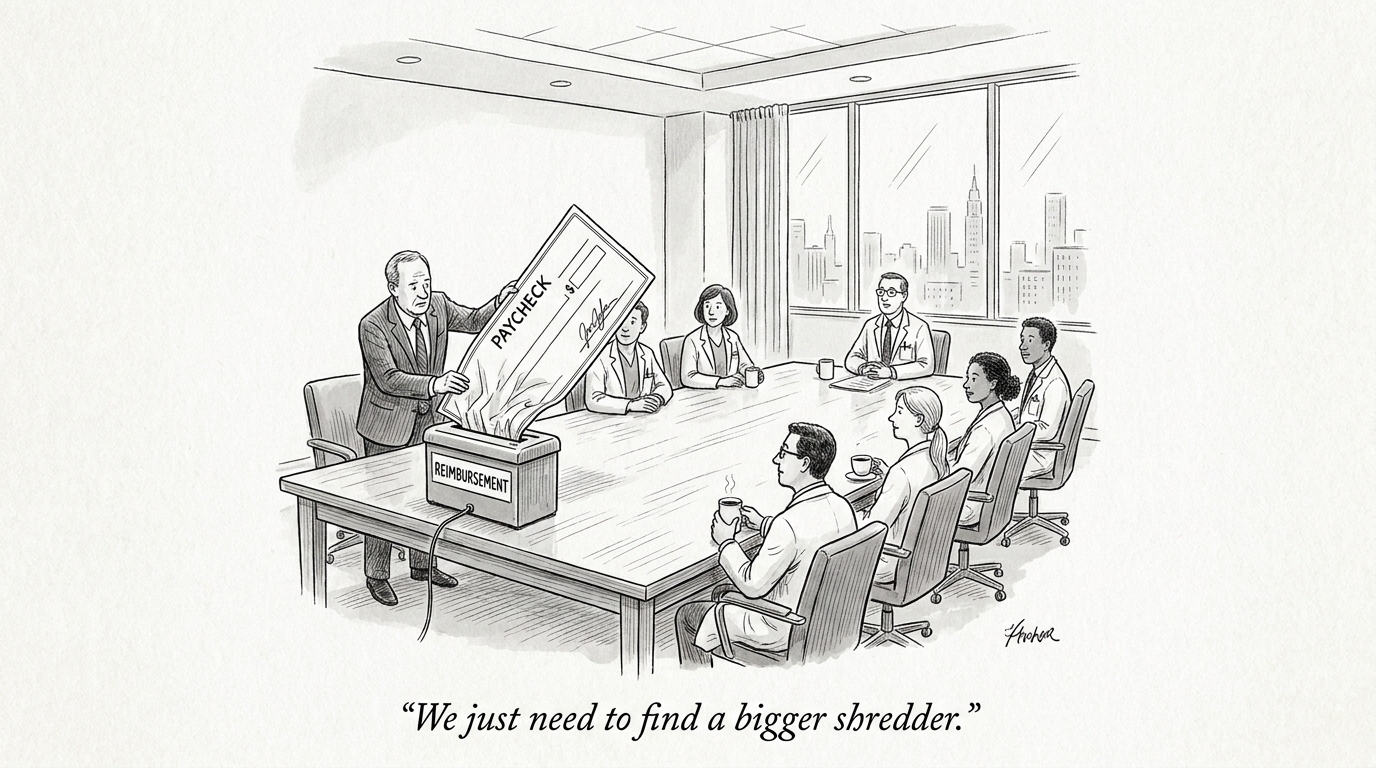
The structural math underpinning physician employment is fracturing. New compensation data shows provider pay rose 4.3% across 2025 while Medicare reimbursements stayed effectively flat, creating an accelerating gap health systems can’t carry forever. That gap is more than a budget problem—it’s forcing a recalibration of Physician Compensation & Demand dynamics that will reshape bargaining power, employment models, and specialty earning paths over the next few years.
The AMGA 2026 Provider Compensation & Productivity Survey confirms what many health system CFOs have quietly admitted: the current pay trajectory is mathematically unsustainable. With reimbursement growth near zero and physician salaries rising faster than inflation, something has to give. Which lever gets pulled first—cuts to compensation, fewer hires, or a change to how care gets paid for—is the question physicians and employers are already wrestling with.
The Reimbursement-Compensation Divergence
Most coverage treats rising physician pay as unambiguous good news for clinicians. That misses the economic reality: when pay growth repeatedly outpaces revenue growth, the gap closes only by lowering pay, hiring less, or changing how care is delivered.
The pattern is worrying. Clinician compensation rose 4.3% in 2025 while the Medicare physician fee schedule, adjusted for inflation, has effectively fallen over the past decade. Health systems have absorbed the difference with efficiency work, higher volumes, and slimmer margins. Those buffers are wearing thin. Hiring reports show medical-practice pay is cooling as organizations rethink workforce plans against tighter finances.
The 4.3% increase masks major specialty differences. Procedural fields with good payer mixes still pull higher raises; primary care and many hospital-based specialties are getting squeezed as systems prioritize margin-positive lines when allocating compensation.
Total Compensation Complexity Obscures True Earning Power
Base salary numbers no longer tell the full story. Health systems are increasingly packing pay into benefits, retirement contributions, loan-repayment, and productivity bonuses instead of guaranteed base pay. Reported salaries and real take-home value are drifting apart.
For physicians negotiating offers, that matters. You now have to model total compensation across plausible scenarios—RVU thresholds, quality metrics, and benefit valuations that often add 15–25% to a package. Employers with sophisticated compensation design get an edge; individual physicians face an information gap in bargaining.
Geography amplifies the mess. After-tax purchasing power varies widely by state. A $400,000 salary in Texas goes further than the same number in California or New York. Most benchmarks ignore those tax-adjusted differences.
Health System Sustainability Calculations
Executives are being forced into a constrained optimization problem: keep pay competitive to retain and recruit doctors, or protect margins by changing pay design and the specialty mix. There’s rarely room for both.
Systems are responding in predictable and not-so-predictable ways. Expect higher RVU targets, more pay shifted to variable components, and tougher choices about which specialties to invest in. Many are trimming support for lower-margin lines and concentrating resources on procedurally intensive services that bring better reimbursement.
Hospital executives designing 2027 packages face a trade-off: offer higher guaranteed salaries and erode margins, or push risks onto physicians with productivity-heavy models and possibly lose candidates who prefer income security.
Bargaining Power in Transition
The cooling hiring market suggests an inflection point in physician-employer power. During the post-pandemic shortage, physicians enjoyed outsized bargaining power—record signing bonuses and aggressive salaries. That edge looks to be softening as financial limits force systems to be selective.
But the shift isn’t uniform. Shortage specialties—psychiatry, rural primary care, and certain surgical subspecialties—still hold strong negotiating positions. The result is a bifurcated market: high-demand clinicians keep commanding premium deals; others face stiffer competition.
For physicians already employed, this matters differently. Organizations may push for contract adjustments to align pay with available revenue. Knowing whether your specialty sits in a shortage or surplus will shape how you plan and respond.
Strategic Implications for Compensation Positioning
If you’re evaluating an offer, model total compensation—not just base pay. Factor in taxes, benefit values, and realistic productivity outcomes. With more pay tied to metrics, posted salary ranges are often ceilings, not guarantees.
Scrutinize contract structure. Expect higher RVU floors, expanded quality measures, and shorter terms that allow systems to adjust pay more frequently. Negotiate for transparent productivity math, attainable panel sizes, and protected time so productivity targets don’t become impossible.
Recruiters and executives need packages that stay competitive but sustainable. That may mean generous guarantees for shortage specialties and harder-edged productivity models for more common ones. If you recruit to high-tax states, do tax-adjusted benchmarking—it’ll change the offer you need to win a candidate.
The Next Phase
The reimbursement-compensation gap can’t grow forever. Changes will come through payment reform, shifts in how care is organized, and a lot of contract tinkering. Clinicians in high-demand, productivity-friendly specialties will be best placed. Others should consider career moves and contingency plans now.
Expect messy outcomes: mid-contract renegotiations, localized bidding wars, and a few headline departures that force boards and legal teams to sort things out. The math will resolve itself, but not quietly.
Sources
How long can health systems afford rising provider pay? – Becker’s Hospital Review
The math on physician pay is breaking down as reimbursements outpace compensation – Becker’s ASC Review
Clinicians Are Making More Money Despite Stagnant Reimbursement — Guess How – HealthExec
Clinicians compensation rose 4.3% across 2025 AMGA – Fierce Healthcare
AMGA 2026 Provider Compensation & Productivity Survey – HIT Consultant
Medical-practice pay cools as hiring weakens – Yahoo Finance
The Real Physician Paycheck: Salary vs. Total Compensation – Becker’s ASC Review
The States Where Physicians Earn the Most After Taxes – Becker’s ASC Review