
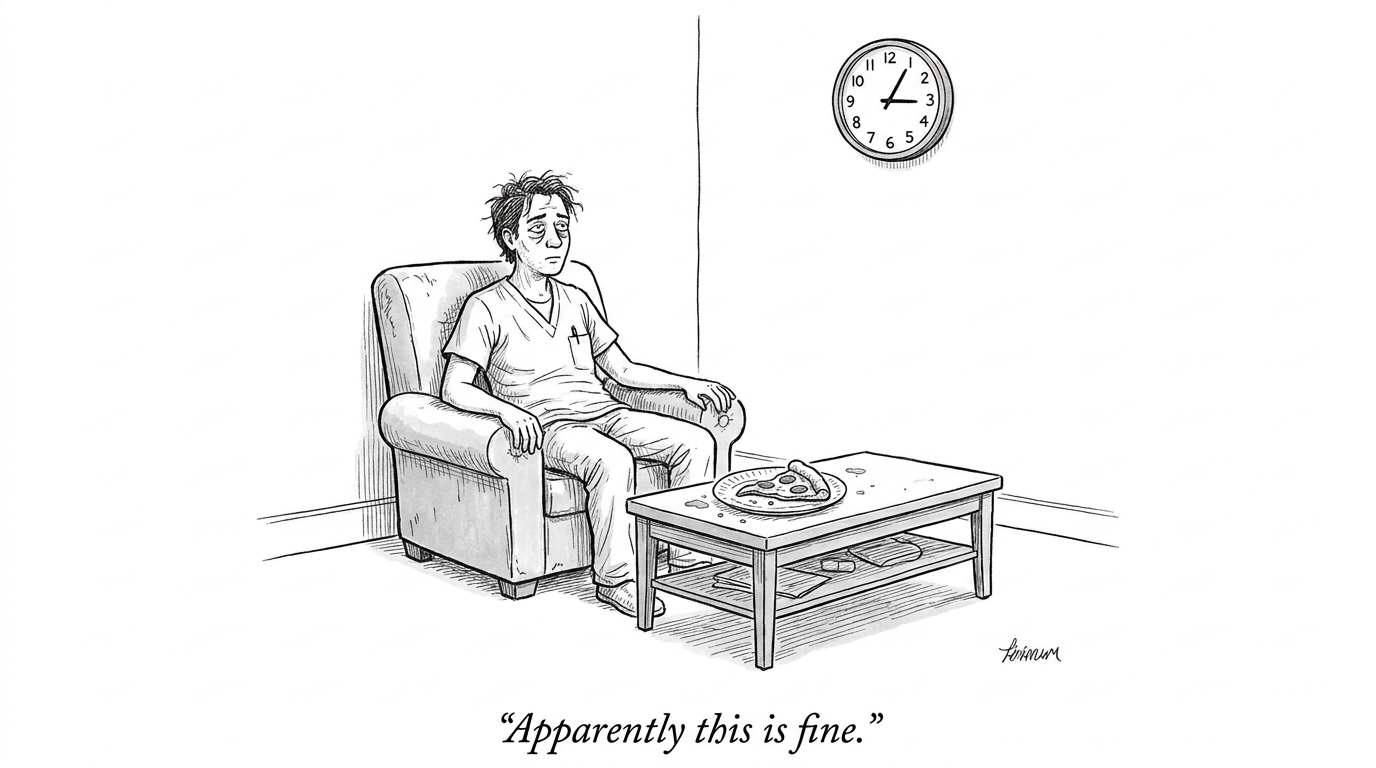
It’s 3 AM on your second night of ICU float. You’re staring at a cold slice of pizza from the break room, wondering if eating it counts as dinner or breakfast, and whether it even matters when your body has no idea what time zone it thinks it’s in. Welcome to night shifts—the part of residency survival that nobody adequately prepares you for, despite it being nearly universal.
Night float rotations don’t just mess with your sleep. They disrupt your eating, your relationships, your ability to function as a normal human, and—if you’re not careful—your long-term health. The good news is that with some strategic planning, you can minimize the damage. The bad news is that minimize is doing a lot of heavy lifting in that sentence.
The Sleep Schedule That Actually Works
Forget the advice about gradually adjusting your sleep schedule before nights start. Unless you have 5-7 days off before your rotation begins—which you don’t—that’s fantasy planning. Here’s what actually works:
The night before your first shift: Stay up as late as you can (2-3 AM), then sleep until noon or later. This isn’t perfect, but it’s better than showing up to your first 7 PM shift having woken up at 7 AM.
During your night stretch: Sleep immediately after your shift ends. Don’t run errands, don’t hit the gym, don’t just quickly do anything. Your body’s drive to sleep is highest in the 2-3 hours after you get home. Miss that window, and you’ll be staring at the ceiling at 2 PM wondering why you can’t sleep despite being exhausted.
The sleep environment matters more than you think. Blackout curtains aren’t optional — they’re essential. Your phone goes on Do Not Disturb. Consider a white noise machine to mask daytime sounds. And yes, you might need to have an awkward conversation with roommates or family about why the apartment needs to be quiet at 10 AM.
Aim for 6-7 hours of solid sleep. You won’t always get it, but that’s the target. Some people split their sleep into two blocks (4 hours after shift, 2-3 hours before), which can work if you struggle with one long stretch.
Meal Timing: When Your Gut Has No Idea What’s Happening
Your digestive system runs on a circadian rhythm too, which is why that 3 AM pizza sits in your stomach like a brick. Here’s how to work with your biology instead of against it:
Eat your main meal before your shift. Think of 5-6 PM as your breakfast—a substantial meal with protein, complex carbs, and vegetables. This is when your metabolism is still relatively active.
During the shift, graze strategically. Small, protein-rich snacks every 3-4 hours work better than one large meal at 2 AM. Think nuts, cheese, hard-boiled eggs, Greek yogurt. Avoid heavy carbs and sugar, which will spike your blood glucose and then crash you right when you need to be sharp.
After your shift, keep it light. A small snack before bed is fine, but a full meal will disrupt your sleep. Your gut slows down when you’re supposed to be sleeping, so anything heavy just sits there.
Coffee deserves its own mention: use it strategically, not constantly. Caffeine at the start of your shift makes sense. Caffeine after 3 AM will still be in your system when you’re trying to sleep at 8 AM. The half-life is 5-6 hours, so do the math.
The Transition Off Nights
This is where most people mess up. You finish your last night shift at 7 AM, and you have to be functional for day shifts starting in 2-3 days. Here’s the approach that minimizes the zombie phase:
After your last shift: Sleep for only 3-4 hours (set an alarm). Yes, this feels brutal. But waking up at noon instead of 4 PM gives you a fighting chance at being tired enough to sleep that night at a reasonable hour.
That afternoon: Get outside. Sunlight is the most powerful circadian reset tool you have. Even 30 minutes of natural light in the afternoon helps your brain understand that it’s daytime now.
That evening: You’ll be exhausted. Good. Go to bed at 9-10 PM. You might wake up at 4 AM feeling weird, but you’ll be closer to a normal schedule than if you’d slept until 4 PM.
The Stuff Nobody Talks About
Night shifts are isolating. You’re awake when everyone you know is asleep. You’re sleeping when they want to hang out. Your partner, if you have one, basically becomes a roommate you occasionally see in passing. This isn’t a problem you can solve—it’s a reality you have to manage. Communicate with the people in your life about what’s happening. Schedule specific times to connect, even if it’s just 30 minutes before your shift.
Exercise during nights is harder but not impossible. A 20-minute workout before your shift can actually improve your alertness. Just don’t do intense cardio right before trying to sleep.
And here’s the uncomfortable truth: some people simply don’t tolerate night shifts well. If you’re consistently struggling despite doing everything right, that’s data. It might influence your specialty choice or the practice settings you pursue post-residency. Jobs with minimal or no night call exist — they’re worth knowing about when you start your search.
The Bottom Line
Night shifts are a temporary assault on your biology. You’re not going to feel great during them — that’s not the goal. The goal is to feel functional enough to provide good patient care, recover enough to not accumulate a massive sleep debt, and exit the rotation without having destroyed your relationships or your health. Strategic sleep timing, intentional eating, and realistic expectations about the transition period are your tools. Use them. The morning light spills across the empty ward, and you wonder what the next night will demand.