
This analysis synthesizes 11 sources published the week ending Jun 8, 2026. Editorial analysis by the PhysEmp Editorial Team.
Physician compensation is entering a period of structural recalibration as three forces converge: intensified Stark Law enforcement targeting compensation arrangements, the spread of hybrid pay models that mix salary with productivity incentives, and unprecedented salary transparency reshaping negotiation dynamics. These shifts are changing the calculus for physicians evaluating offers and for health systems designing packages. Understanding these intersecting pressures matters for anyone working in Physician Compensation & Demand.
Mainstream coverage often treats these trends separately. In practice they push on one another—Stark enforcement limits how creative packages can be just as hybrid models require more complex structures, while transparency tools give physicians clearer sightlines into market rates. Both sides now operate with a thinner margin for error.
Stark Law Enforcement Creates New Compensation Ceilings
Recent Stark Law cases are setting clearer—and sometimes lower—boundaries for physician pay. Enforcement actions aimed at anesthesia groups and hospital-physician relationships show regulators are looking beyond whether pay exceeds fair market value to whether the structure itself creates implicit referral incentives. For physicians, that means historically generous arrangements are more likely to be revisited as health systems reduce compliance risk.
Legal and compliance teams at health systems are responding with conservative interpretations of benchmarking data, often defaulting to lower percentiles in MGMA and SullivanCotter surveys instead of mirroring aggressive market offers. That creates a paradox: physician shortages push pay up, regulatory risk pushes total packages down in other directions.
Physicians in high-referral specialties—cardiology, orthopedics, gastroenterology—should expect stricter fair market value documentation and longer approval timelines for compensation above median benchmarks.
Hybrid Pay Models Require Close Scrutiny
Health systems are leaning into hybrid compensation: base guarantees plus RVU-based bonuses, quality incentives, and sometimes collections-based components. How those pieces are split varies by specialty. Primary care tends to offer higher base-to-variable ratios. Procedural specialties still push harder on productivity.
For a physician, the math on a hybrid offer matters less than the operational reality. Ask for historical RVU production for the specific role, typical staffing ratios, and how many peers actually hit bonus tiers. An attractive total-compensation ceiling is meaningless if the productivity targets assume impossible patient volumes or thin ancillary support.
What to check in a hybrid offer
Look beyond the formula. Request position-level production data, staffing plans, and the percentage of physicians who reach each bonus threshold. Systems that share this data usually believe their productivity assumptions. When a recruiter resists sharing operational numbers, treat it as a red flag: the targets may be designed to keep actual payouts below the advertised maximum.
Recruiters should note that candidates increasingly run this analysis themselves. Offers that look competitive on paper but rest on unrealistic assumptions hurt credibility and lengthen time-to-fill. Pairing a fair base with clearly supported productivity paths shortens searches and improves retention.
Salary Transparency Shifts Bargaining Power
Public salary tools and peer networks have torn down a lot of the information asymmetry that once favored employers. Physicians now arrive with specialty-specific, geography-adjusted pay data that used to sit behind HR survey subscriptions. That access shifts bargaining power toward candidates, especially in shortage specialties.
The ripple effects go beyond base pay. Armed with market data, physicians can press on signing bonuses, loan repayment, relocation, and contract clauses that shape long-term earnings. Transparency also lays bare geographic variation, letting candidates weigh pay against lifestyle choices more accurately.
Health systems that rely on information asymmetry as a recruiting edge face growing talent acquisition problems. Competitive positioning increasingly requires openness about compensation philosophy and a clear statement of total value beyond base salary.
Contract Structure Is Part of Compensation
Headline dollars tell only part of the story. Contract language around call coverage, administrative time, non-compete scope, and termination terms can change effective pay and career options. We see the fallout: contracts that look generous on paper but trap physicians with excessive call or broad non-competes lower effective hourly pay and raise burnout.
The five contract clauses most often tied to burnout—excessive call obligations, vague productivity expectations, insufficient administrative time, restrictive termination terms, and broad non-compete geography—carry real compensation effects that last beyond the initial paycheck.
Some systems use contract design as a differentiator. Offering reasonable non-competes, transparent productivity rules, and protected admin time lets organizations compete without matching the highest market salaries.
Strategic Implications for Market Participants
Physicians should enter negotiations with detailed market data, a clear read on operational support, and a checklist for contract clauses that affect long-term value. The best outcomes come from focusing on sustainable earnings and future flexibility, not only headline pay.
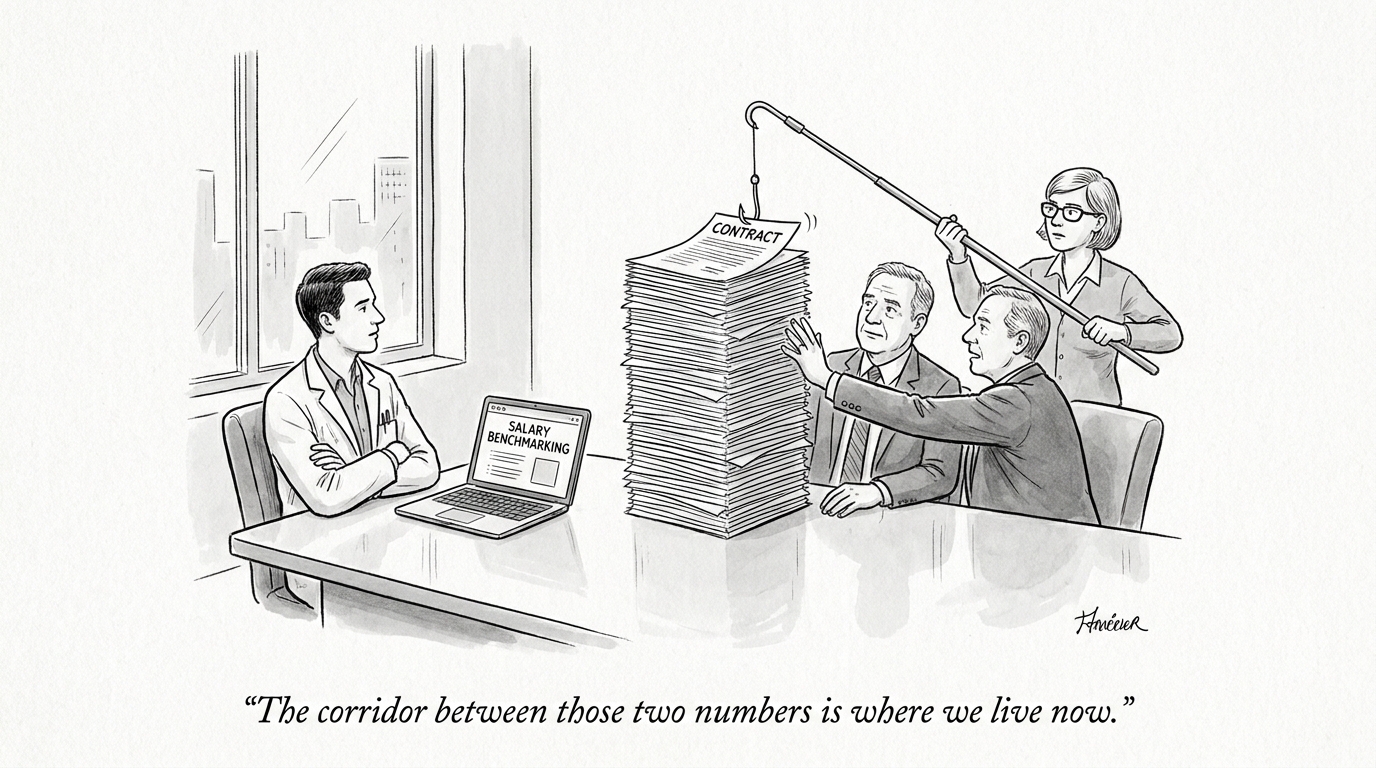
Health systems must balance recruitment needs against Stark compliance and financial limits. That means cleaner compensation designs, smarter use of non-monetary value, and clearer operational support tied to productivity assumptions. The corridor between regulatory ceilings and market pressures is narrowing; compensation design will need more imagination and better data.
Expect upward pressure in shortage specialties, but also more creative structuring rather than simple across-the-board raises. Physicians who get fluent at reading hybrid models, parsing contracts, and benchmarking will be the ones who capture the better deals. And if you want the last word: there will be at least one negotiation that ends with a cardiologist refusing a spreadsheet called “final offer v3” and a compliance officer offering a worksheet instead.
Sources
The Stark Law cases threatening physician compensation structures – Becker’s ASC Review
How physicians can make hybrid pay work in their favor – Medical Economics
How Salary Transparency Helps Physicians Negotiate Higher Pay – DocWire News
What Physicians Need to Know About Compensation Offers – Medical Economics
4 Forces Reshaping What Physicians Get Paid – Medical Economics
How to Balance Physician Pay and Rising Costs – Medical Economics
The Current State of Physician Compensation in 6 Charts – Rama on Healthcare
Physician pay employment trends across 17 specialties – Becker’s Hospital Review
5 Stark Law cases reshaping physician pay – Becker’s ASC Review
What every cardiologist should consider before signing a contract – Cardiovascular Business
Your contract causing your doctor burnout? 5 clauses to reevaluate – American Medical Association (AMA)